Der Spekter needs YOU: 2025 in review
The future of Bundism and how to get involved with Der Spekter.

Dear readers,
You may have noticed it’s been quiet on our end in recent weeks. We have been experiencing a bit of a dry spell in terms of submissions — understandable given the busy holiday season.
So we thought we’d take this opportunity to look back at this year and review our accomplishments and future outlook. We also appeal directly to you, our subscribers, and ask for some help in order to keep this independent project going.
Who are we?
Given our recent abundance of new followers, subscribers, and friends, we thought we’d take a moment to re-introduce ourselves.
Der Spekter was founded in Spring 2024 as an outgrowth of resurgent Bundism among Jews of all ages fed up with the Zionist status quo in our communities. A small team of passionate volunteers established this newsletter separately from the International Jewish Labor Bund, which now has an international steering committee, six local chapters, and varyingly affiliated organizers across America and Europe. As an independent publication, we serve as a platform for production and discussion of Bundist ideas, centered around doikayt (hereness), Yiddishkeit (Jewishness), and socialism (or khavershaft — solidarity — in some circles).
Are we trying to revive the Bund?
At Der Spekter, we firmly believe that Bundist ideas should serve not only as a foundation for rebuilding the Bund, but also as a framework for solidarity organizing on a greater scale. While the board members came together as part of a passionate group who sought a Bund revival back in 2023, that revival itself remains a work in progress.
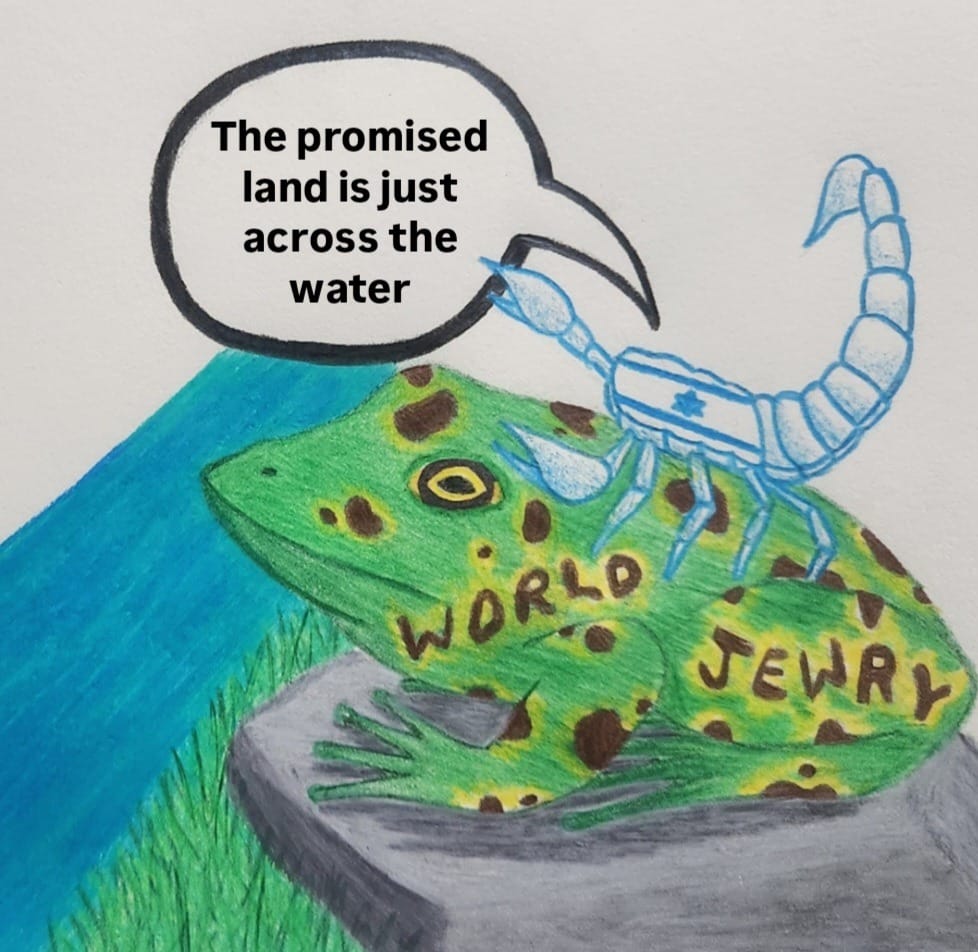
The greatest stumbling block is arguably the state of world Jewry, now more or less assimilated into global society and in many cases aligned with ruling class coalitions. Mainstream Jewry has reconstructed its identity around Zionism and defense of the state of Israel in parallel with this increasing comfort with agents of Empire and elite opinion. Yet the growing popular turn against Israel, concurrent with the increasingly vocal bellicosity of an empowered and ascendant antisemitic white supremacist movement, is rapidly leaving these Jewish communities and organizations isolated among an ever-shrinking circle of elite defenders, effectively self-alienating from the movements that will defend them and us.
With a few exceptions, today’s Western Jews understand themselves to be fully integrated citizens of their societies, not confined to our own insular communities. Our clerics no longer hold sway over our daily lives. We are not bound by a language only we understand. Our jobs no longer depend on the whims of employers from those isolated communities but capitalists writ large. What this means in practice is that the conditions that helped turn the Bund into the largest Jewish movement in Eastern Europe no longer exist.
Yet many in our community retain a politics that embodies a commitment to social justice, solidarity, and human rights. Jews are disproportionately labor leaders, community organizers, muckrakers, and movement builders. Our instinctively self-interested understanding that a tiny minority cannot withstand the tide of nationalism on its own does not go away. And a growing number of us deduce from both the broader political environment and our own history that such dangerous times call for self-defense and organizing that reflects the dramatically different Jewish position within society than we held 130 years ago. So while the impulse for and the necessity of Bundism for today are overwhelming, it is indisputable that it will not look like the Bundism of pre-Shoah Europe.
But what form will this incipient Bundism take? Will it — can it — marshall the energy to form sustainable chapters that can build (new) enduring institutions within Jewish communal life and serve as a foundation for political and cultural activity? Will it serve as an overlay that buttresses socialist politics, fills the gaps with culture and identity, and possibly fuels a transformation and reclamation of our communal institutions? Can it contain the full diversity of Jewish existence beyond its Ashkenazi roots? We don’t know for sure. But to give a short answer to the question we posed above — no, we’re not trying to revive the Bund, but we aim to become a platform for people who are, or for those who want to debate these issues and develop a path forward within our pages toward the ultimate goal of a just future free of capitalism, oppression, and toxic nationalism.
2025 Highlights
In Spring 2024, we started as a tiny volunteer effort with just a few subscribers from Bundist group chats. Today, we’re still tiny and all-volunteer, but we’re proud at how much our numbers have grown — especially in 2025:
- The newsletter you’re reading right now has close to 300 subscribers;
- We have nearly 1,100 followers on Instagram;
- Our Bluesky also has over 1,000 followers.
This year, we published 45 articles: everything from interviews with organizers trying to combat the ADL’s influence in schools to essays exploring the etymology of diaspora, from meditations on what it means to practice doikayt on unceded lands to debates about the place of religion in leftist Jewish life that are ongoing within our pages.
Although we do not represent the Bund, we try as often as we can to publish organizing updates from local Bund chapters and other aligned groups around the world to show Bundist ideas in action. This year, for example, we published a piece from the DMV Bund about their solidarity work with the Bethesda African Cemetery Coalition, and more recently, an update on the IJLB’s accomplishments and challenges by representative Luca Schmidt. Please get in touch if you want to share a story about how your community is mobilizing around doikayt, Yiddishkeit, and socialism.
We’ve started three ongoing series this year as well:
- “Bundism Today,” written by IJLB steering committee and Cafe Bund member Zach Smerin, on rebuilding the Bund in today’s world.
- "Introducing ‘the Tuers’", a translation series by Sam Miller Hirschberg which resurrects the lives of everyday Bundists in the hope of inspiring a new generation of ‘tuers.’
- “Letters on Zionism,” the Bundist leader Jacob Pat’s writings addressed to the burgeoning Zionist movement in the late 1930s, translated by our editor Eyshe Beirich.
Beyond this newsletter, we created a physical magazine for our one-year anniversary that we were able to mail to our American readers. We also opened the Der Spekter shop, where we’re selling stickers with our logo.
Your donations helped us purchase an ad at JFREJ’s annual Mazals celebration, which was attended by M. Gessen and Zohran Mandani and MC’d by the always funny Ilana Glazer.
We also updated our submissions page with an extensive guide on publishing with Der Spekter.
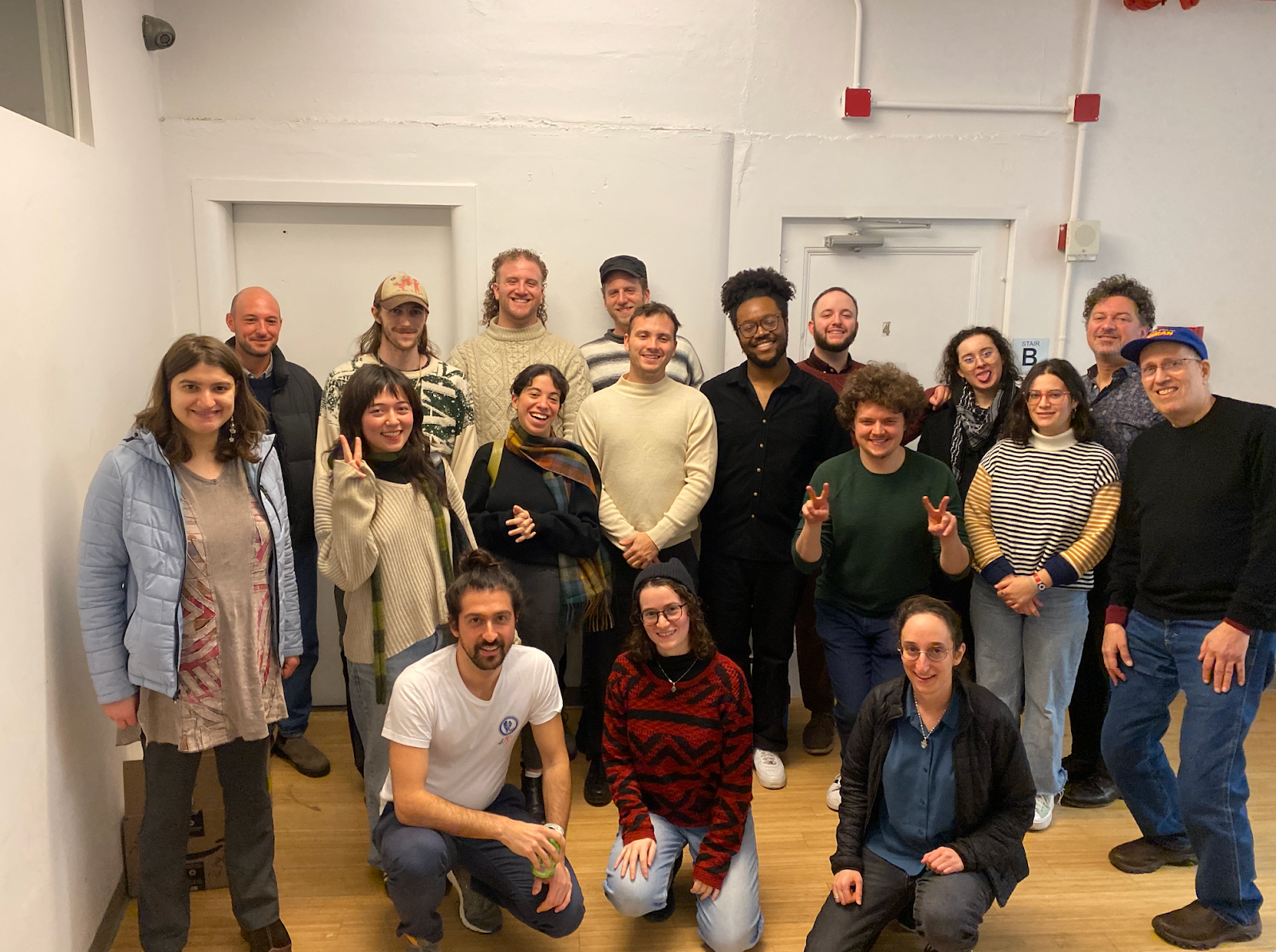
Finally, in November, we had our first in-person meetup in New York City featuring live music from SueAnn Shiah, Jordan Weinstock and our very own Josh Waletzky, kindly hosted by Nathan Tankus of Notes on the Crises. It was a memorable night that reminds us all why we do this work, and we hope there can be many more in the future.
A look ahead
In the new year, we hope to move full speed ahead with new and returning contributors to publish Bundist ideas, translations, and history from around the world.
More concretely, we plan to create a “Bund 101” page on our website for Bund-curious newcomers looking for an introduction to its ideas and history, as well as a “diaspora languages” section for content in Yiddish and other languages. Please reach out to us directly at spekter@derbund.org ASAP if you are interested in helping us out with either of these projects.
We’re also planning a physical 2-year anniversary magazine to issue via pre-order again this Spring, and perhaps even to sell in small bookstores, zine shops, and art markets. Unfortunately, we were unable to provide magazines to European readers due to costs and logistical issues last year. If you want to host our mag in your shop — or if you know of an affordable printer in Europe that does small print runs and could help with distribution — please reach out and let us know!
We aspire to one day be able to get funding to pay contributors, but this requires an incredible amount of work that we simply do not have the capacity for at the moment. If you have experience with LLC/nonprofit formation and/or grant writing and want to help Der Spekter grow, please get in touch by emailing us at spekter@derbund.org.
An appeal
In order to continue all this work, we appeal directly to you, our readers, to help us spread the word about Der Spekter. Here are a few things you can do:
- Tell your friends about Der Spekter and share our newsletter and social media accounts within your networks;
- Keep sending us your submissions of essays, art, music, journalism, and more;
- Get directly involved by offering your editing, management, art, social media, networking, and other skills;
- Let us know how we’re doing — What are your favorite articles we’ve published? What don’t you like? What would you like to see more of? We take all feedback into account; please let us know at spekter@derbund.org.
- Make a donation if you have the means. All funds go directly back into supporting Der Spekter operations such as website fees and other tools that keep this newsletter going.
See you in 2026!