
Diasporism in Unfavorable Demographic Conditions: Thoughts on Joshua Leifer’s "Tablets Shattered"
In his new book, Joshua Leifer argues that the "demographic reality" of Israel has made neo-Bundist diasporism obsolete. Doing so leads to a submitting acceptance of the Zionist 'negation of the diaspora' and an inability to adequately address the reality of Israel's crimes.
In various passages of his 2024 book “Tablets Shattered: The End of an American Jewish Century and the Future of Jewish Life,” journalist Joshua Leifer explains his shift away from the Jewish Diasporist political arena with which he was previously closely associated. Whereas in his early twenties, the Jewish anti-occupation group IfNotNow had been his “primary Jewish and political affiliation,” and he had classified the two-state solution as “impossible,” he later came to argue that, while the “wish to renounce Israel” is understandable, “Israel, more than any other place, is where Jews live.”
Despite attributing this shift in large part to some leftist reactions to the October 7, 2023 Hamas attack, Leifer also offers a seemingly more profound explanation: as the State of Israel becomes the “demographic center of global Jewish life,” a Diasporic reclamation of “hereness” — the Bundist philosophy of doikayt — becomes anachronistic; the central topic within Jewish political life becomes Israel/Palestine, whereas Diasporism appears as a mere reaction of shame and anger towards Israel and thus ceases to be a self-sufficient ideal. Hence, Leifer states, “[t]he ethical task of global Jewish life is now to make the modern experiment in Jewish sovereignty a just one,” abandoning what he sees as a nostalgic attachment to the tradition of the Bund.
The arguments presented in the book certainly mark a departure from his past defenses of anti-Zionism and towards a more mainstream view that could be categorized as “liberal Zionism” (the belief that an end to the occupation of the 1967 Palestinian territories and some domestic reforms will grant the Israeli State a just existence) or a “Zionist realism” (the belief that the existence of the State of Israel, albeit not necessarily in its current form, is necessary and undeniable).
Nevertheless, those who aspire to a radical Diasporist critique of Zionism would err in turning their backs on Leifer’s argumentation, for the analysis that brings him to such conclusions is by no means poorly executed, and the challenge he poses is far from easy to address. The changes in the patterns of Jewish life before and after the Holocaust are considerable, and a Diasporism grounded solely in nostalgia cannot be sustained. In order to respond to Leifer, it is necessary to articulate the contemporary meaning of Diasporism and to show its significance for the present world, and to do so, we should follow his analysis until the point of his misdiagnosis.
Jewish life in crisis, then and now
Leifer’s familial background is similar to that of a great number of American Jews today: his great-grandparents, after fleeing Eastern Europe in the beginning of last century, settled in a new world much less hostile than their own, though marked by some still-existing systemic barriers and economic exploitation. His grandparents lived through the fall of discriminatory legal practices and attained economic prosperity, leaving behind their working-class roots and abandoning Jewish traditions in favor of further assimilation into Americanism. His parents, shaped by post-1967 pro-Israel euphoria, “began to emphasize their ethno-religious roots” in a novel fashion where “Americanism and Judaism fit together seamlessly, perfectly complementary.” It is for this reason that Leifer presents himself as “a product and symptom of nearly all the historical and sociological processes” covered in the book.
These three generations embody the development of Jewish life in 20th century United States, which paved the way, according to Leifer, for the maturing of three “core pillars of mainstream American Jewish identity”: liberalism (voluntaristic and individualistic views that confine religion to the private sphere), Americanism (a belief in American exceptionalism, regarding the United States as a uniquely free and tolerant civilization), and Zionism (a strong sense of identification with the State of Israel, viewed as the ultimate end of Jewish history). Leifer’s central thesis is that these “foundations of American Jewish life that were built in the last century have begun to crumble.”
Today, the individualistic values of liberalism, while surely having initially allowed Judaism to flourish without the perpetual threat of a dominant religious majority, have become incompatible with communitarian life and the obligations set by halacha. The dream of Americanism, which imagined an exceptional America that stood in contrast to the barbarism of the Old World, is now confronted by the growing understanding that American white supremacy is not a cancerous body within an essentially healthy society, but rather foundational to the country. Zionism, which imagines the State of Israel as a miracle that fulfills the historical trajectory of the Jewish people, encounters increasing difficulty in withstanding its ever clearer exposure as an oppressive power.
As it becomes evident in our times that the world of the preceding generations was built on a cornerstone no longer capable of bearing the weight of a Jewish future, Leifer urges renovation. In the midst of this rupture, nevertheless, we should find material to set the basis of a renewed Jewish life. He writes:
“Destruction,” the great scholar of Judaism Gershom Scholem once said, “is both liberation and risk.” There may be opportunity in the collapse of an ossified and fatally obsolete consensus.
The phrase by Scholem that Leifer quotes was proffered during a discussion on secularization, but, removed from that context and placed within the framework of a crisis within Jewish life, it can also be representative of the situation that the young Scholem had faced one century before Leifer and still to the east of northern Atlantic.
Just as Leifer states that “[t]he history of the last century of American Jewish life is the history of [his] family,” Scholem presents himself, in his memoirs, as a fruit of a household that had endured the major developments concerning German Jewry in the 1800s: while his great-grandmother owned a kosher restaurant, his grandfather, having received a traditional Jewish education at home, “incorporated […] the Jew’s entrance in the German civilization”; finally, very little of Jewish liturgy and costume had remained in the lives of Scholem’s parents (the “mission of Judaism,” according to his father, was “to proclaim to the world pure monotheism and a purely rational morality,” and Christmas was supposed to be celebrated by the family “not as Jews, but rather as Germans”). As over the course of the 19th century the Scholem family moved “from the traditional Jewish-orthodox lifestyle […] until the farthest-reaching assimilation into the surrounding [German] way of life,” the young Gershom — then still Gerhard — in the dawn of the following century, revolted against his milieu and upbringing. And as over the course of the 20th century the Leifer family embodied Jewishness in a “perfect compatibility” with “American liberal capitalist culture,” Joshua, like other “young Jews [who] had been abandoning institutional Jewish life for years,” revolted against his milieu and upbringing. His use of Scholem’s reflection on the meaning of “destruction” thus reinforces the similarity of the two situations.

One difference, however, is fundamental: the place that Zionism occupies in each situation. In Scholem’s pre-World War II Central Europe, young, rebellious Jews, animated by Martin Buber’s romantic proposal of a new beginning, turned to Zionism as a revolutionary alternative to dominant assimilationism: building a spiritual center for Jewish life in Palestine was seen as a radical idea, whose materialization would offer a solution to the problems of the European status quo. The evolution of political Zionism, the foundation of the State of Israel in 1948, and its subsequent developments have evidently put an end to such imaginations (Scholem’s incapacity to either reject or accept completely the newly founded country, for the former would deprive his whole life of sense and the latter would concede a bland meaning to his trajectory, cannot be discussed in detail here). In Leifer’s United States, far from being understood as a refusal of the assimilated condition, Zionism became a pillar of the Americanized Judaism:
In the words of the socialist literary critic Irving Howe, Zionism enabled American Jews “to postpone that inner reconsideration of ‘Jewishness’ which the American condition required.” Difficult questions about theology or the adaptability of halacha (Jewish law) to postwar realities diminished in significance or could be sidestepped with the material fact of a sovereign state at the center of Jewish life. If meaning could not be found in liturgy or in synagogue, it could now be found in fundraising for the United Jewish Appeal, the American Jewish Committee, and the American Israel Public Affairs Committee (AIPAC). American Jews imagined […] Zionism as the secular fulfillment of the religious faith in which they could no longer really believe.
Therefore, in the second half of the 20th century, and especially after 1967, Jews willing to leave behind the customs of their forebears in favor of integration into the United States found in Zionism a “new glue for a Jewish identity” that “conformed fully to the liberal voluntarist patterns of American life.” Jewish practices that conflicted with the American way of life could then be substituted by identification with a nation-state aligned with Western interests, and it became possible for Jews to somehow keep their Jewishness without giving up belonging to their beloved home country.
The situation in Central Europe was completely different in Scholem’s early years. There, the expectation that Jews abandon Jewish traditions in favor of assimilation included a categorical rejection of any attachment to Zion. Thus David Friedlaender, a central figure of the German-Jewish Enlightenment, proffered those words in 1812: “Here I stand before God, I pray for my King, for my fellow-citizens, for myself and mine, not for return to Jerusalem, not for the restoration of the old Temple and sacrifices.”
Similar elaborations prevailed among the liberal-assimilated Jewish bourgeoisie. And if Scholem recalls the “mitigation or elimination of almost all passages in which the return of Israel to the Holy Land was mentioned” in the liberal rite, the situation was inverted in post-war USA: there, it was the mention of the passages concerning the return to the Land of Israel that permitted the mitigation or elimination of almost all other passages — for observing the Sabbath, for instance, “entailed a certain separation from the American mainstream,” and “Zionism entailed no such sacrifice.” Whereas the Central Association of German Citizens of Jewish Faith could only assure that German Jews had “no other morality than [their] fellow citizens of different faiths” by disavowing connection to Jerusalem, it was the politicized overemphasis of such connection that granted leading figures of the American Jewish Committee the opportunity of declaring: “We are Jewish and we are American and they’re inextricably linked.”
The attempt to “Germanize” Judaism by reducing it to merely one “faith” among others within the framework of a German nationhood prompted Scholem and his generation to seek for alternative projects that could resonate with them — among which, though certainly not exclusively, was Zionism. For Leifer’s generation, on the other hand, the attempt to “Americanize” Judaism relied heavily on Zionism, which explains why “young American Jews who set out to create new forms of Jewish identity unwedded to Americanism” did so by also rejecting a Zionist worldview. The United States no longer represented to them what it once represented to their forebears, which weakened the sense of identification with Israel that in no small measure enabled Jews to Americanize. The reversal is also true: the sense of identification with Israel that had helped Jews to Americanize became difficult to maintain in this context. It was once possible in the Western World to maintain a concern for justice and human dignity alongside some political connection with Israel. This possibility was made feasible by a number of factors: the context of the Cold War, the suppression of Palestinian voices in Western mainstream media outlets, a more vivid memory of the Holocaust, the fact that Israeli wars were mainly fought against other national armies, etc. These conjunctures are gone, and for younger Jews, “Israel [appears] as the unambiguous aggressor, a nuclear-armed Goliath facing down a divided and enfeebled Palestinian adversary.”
Diasporism, then and now
Among those younger Jews increasingly doubtful about “the justness of actually existing Zionism,” Leifer counts himself. Nevertheless, he criticizes important segments of the Jewish Left for failing to acknowledge “the demographic reality of Israel as the global Jewish center of gravity.” The creation of the State of Israel, he argues, bears no theological significance and should not be regarded as the telos of Jewish history, but it certainly “marks a significant turning point […] in the experience of the Jewish people” that should not be overlooked. A sovereign Jewish center emerged and shall be home to the majority of the world’s Jews within a few decades. To disregard this means, according to Leifer, avoiding responsibility by refusing to engage with the present situation of global Jewry. Therefore, he writes:
[D]iasporism in its nostalgic neo-Bundist form is plagued […] by […] a failure of analysis. It opts for a peculiar kind of conservatism: repulsed by Israel’s actions, it fantasizes of turning back the clock, arresting the historical process that is leading to the diaspora’s demographic eclipse.
These affirmations provide much to consider. The meanings of Zionism and Diasporism today and the (non)centrality of the Israeli State for Jews worldwide are not topics that can be exhausted in a single short essay. The focus will therefore be on the following two points: (i) Leifer is correct in criticizing those who merely bring up Bundist slogans to the present without any mediation, neglecting the conjunctural changes; (ii) however, his blind submission to demography — the idea that the most Jewishly populated location naturally builds a gravitational center around which all other places orbit by compulsion — is rather problematic.
(i)
The discussions across early 20th-century Europe took place in a context in which Zionism — also in its purely political, State-centered form, as opposed to the cultural movement that captivated Scholem — was frequently understood by European Jews as a “messianic dream,” to use the expression of Simon Dubnow, who predicted that not more than half a million Jews would be living in Eretz Yisroel one hundred years from the time of his writing (1898).
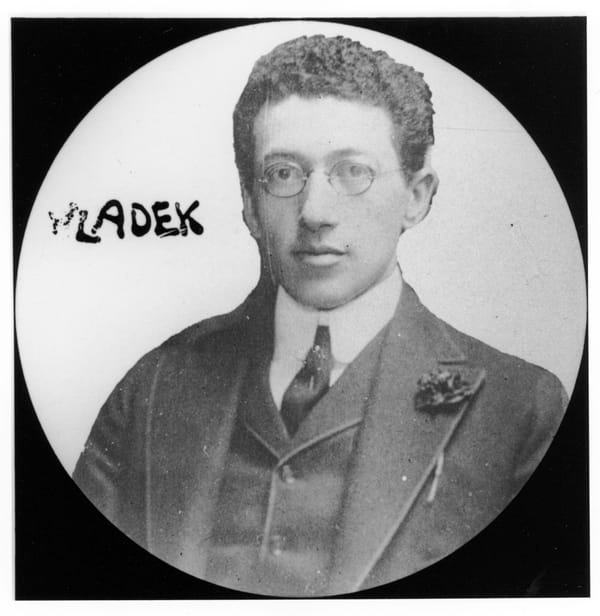
Against those dreamers of biblical sites and pre-exilic times, Diasporists proposed down-to-earth alternatives. This practical approach is visible in the ideas of Vladimir Medem, the great ideologue of the Bund. He cautioned against the “thrust of the earth into the heavens” and favored the fleshy, living reality of his time. His privileging of Yiddish over Hebrew was not based on a beatification of the former, but on the pragmatic consciousness that the latter was not spoken by the masses, there being thus no sense in “[offering] the living language as a sacrifice for the dead.” “Fewer fantasies in the light of the moon, fewer dreams about spirits and ghosts!”, he commanded, “and more living work among living people!”
If Leifer’s criticism of “neo-Bundists” were rewritten in highly abstract terms and presented to Medem, it is unlikely that he would object: we should not “[fantasize] of turning back the clock” (Leifer) or establish a “cult of past things” (Medem). Medem’s proposals were in consonance with the tendencies (also, and perhaps especially, the demographic ones) of his time; we live in a different world with the unprecedented questions that it brings, and are therefore commanded to find solutions to them instead of longing for the answers that old political figures and movements gave to old questions.
A certain nostalgia for the Jewish condition in pre-Holocaust Europe can also consist in a form of detachment from the responsibility that only power bestows. This was already noticed by Yeshayahu Leibowitz in the 1950s, when, condemning the massacre in Kibiyeh carried out by Ariel Sharon’s Unit 101 of the IDF, he wrote that the “[a]ttachment to the Galuth” represented, “in no small measure, a form of escapism reflecting the unconscious fear […] of the loss of religious-moral superiority, which is easy to maintain in the absence of temptation and easy to lose in other circumstances.” The time when Jews, oppressed and othered, thought and acted almost by impulse against a tide of subjugation was morally comforting, for it allowed the illusion that opposition to injustice was an essential Jewish trait. But it turns out that mass murder simply “was not one of the means at [the Jews’] disposal for self-defense or for the attainment of collective aspirations,” Leibowitz writes. The apparent Jewish “control over […] the impulse to communal murder” thus concealed a simpler fact: renouncing the oppression of others is far less remarkable when such oppression is not, in any case, possible. It is only difficult to refrain from massacring, dispossessing, segregating, and annihilating when the means to do so are readily accessible.
Historical conditions granted Israel such possibilities. With successive military victories, support from global powers and, more recently, the crumbling of post-1945 international order, it has shown little restraint in doing what it is able to do. In the face of that, Leifer correctly claims that those who “dream of dissolving the ties between their Jewishness and Israel” — while this is undoubtedly an understandable wish in face of blatant Israeli crimes — are frequently pursuing “exculpation and clean hands through renunciation.” Rather than yearning for a time when Jews lacked even the possibility of conceiving of genocide, we must confront the present situation, in which “Jews with power” can both conceive of and perpetrate it.
(ii)
While Diasporists one century ago denounced Zionism as an unattainable dream, contemporary Diasporism denounces Zionism as an undesired reality. And indeed, a dream exercises influence in the lives of those who do not share it only when they choose to take it into account, whereas reality imposes itself regardless of ignorance. Since the State of Israel became an effective reality, the Israeli question lies at the center of Jewish life. What one expresses in face of that can vary from full support to full rejection, but it remains the question. Leifer calls this “the diasporic double bind”: the fact of a sovereign Jewish State is imposed as a determining reality, and Jews worldwide can “respond to this fact by affirming Israel’s centrality to Jewish existence […] or by rejecting Israel and agitating for its dismantling,” but never by omitting Israel completely from their Jewish worries. Leaving it out of the question is no longer possible.
Until this point, Leifer’s diagnosis is precise. The problem begins when his correct identification of reality extrapolates to a realism-as-inevitability elaboration. It is one thing to recognize the differences of the demographic patterns of pre- and post-Holocaust global Jewry, and it is another to engage in a yielding demographism. Leifer’s recognition of a demographic trend evolves into complete submission to it, and thus he ends up accepting Zionist talking points out of pure resignation. Some pages are spent describing A.B. Yehoshua’s arguments against American Jews and the Jewish diaspora, only to be followed by an acknowledgment that there is no way of rebutting them:
[Yehoshua] compared the Jewishness of American Jews to a jacket, which one can take on and off, while his own Israeli Jewishness was more robust, more permanent. “Israeli is my skin, it’s not my jacket,” he said. “You are changing jackets… changing countries like the Jews have done all the time.” By virtue of his being Israeli, Yehoshua claimed that he had made an eternal commitment to the Jewish future, while American Jews’ commitment was more equivocal. […] In Israel, “Jewish decisions” were made about life and death, statecraft and political economy, “as it was in the time of the Bible or the time of the Second Temple.” In the United States, by contrast, American Jews were “not doing any Jewish decisions… All the decisions that you’re doing are done in the American framework,” their meaning diminished by virtue of their existence outside the Jewish state.
Yehoshua’s voice was stubborn […]. For all the new Jewish left’s talk of reclaiming doykeit and diasporism, we spent most of our time talking about Israel. Seemingly no matter what the issue, domestic or foreign policy, Israel seemed to exert an unshakable gravitational pull.
[…] [T]he consequences of Israeli politics flow with a sometimes-shocking immediacy out of the Israeli political arena and into the American one. […] The relationship is not reciprocal. American Jews must live with the fate that, in part, Israeli Jews impose upon them. But American Jews exert no such power over Israeli reality.
We are on the cusp of a new—and, in Jewish history, unprecedented— demographic reality. The emergence of Israel as the homeland of the majority of the world’s Jews will mark more than a simple demographic shift—it will constitute a revolution in the most basic conditions of Jewish existence. Diaspora defined Jewish life from 70 CE onward. Centuries of exile constituted Judaism and gave rise to the rabbinic tradition, to the chain of interpretation that stretches back to when the ancient sage Yohanan Ben Zakai, borne out of Roman- occupied Jerusalem in a coffin, settled in Yavne to rebuild the faith. By 2050, for the first time in two millennia, most Jews will live in a sovereign Jewish state. It is not just the American Jewish century that will have ended, but an entire era of Jewish history.
Yehoshua, however, was not merely calling attention to shifts in demography or noticing Israel’s preponderance within Jewish diasporic debates, but rather actively negating the diaspora — or, at least, its meaning and importance. To him, the diasporic condition appears as deficient per se: not only are diasporic Jews in the dawn of 21st century weakened by Israeli centrality, the diaspora could never offer the possibility for authentic Jewish politics. Only in the State of Israel, according to him, can Jews act as “in the time of the Bible or the time of the Second Temple.” In his view, diaspora Jews, due to diaspora’s very nature, lack Jewishness to some extent. While Leifer appears in principle to disagree with this assumption, he surrenders to a new reality in which all of this becomes true. He is not affirming Zionism through negating the diaspora, as Yehoshua does, but rather assenting to Zionist dominance as inexorable by accepting the demographic decay of diasporic life. Nonetheless, it is indifferent to Judaism whether its diasporic manifestations are deemed anomalous due to ideological will or due to demographic realism: the detrimental effects appear in either case.
Not only did Judaism survive in diasporic conditions through the establishment of a rich tradition of remembrance, it was invigorated because in such diasporic conditions a decision for time over territory was made. Actions in a given present were guided by remembrance of a past and expectation of a future, and in this temporal mode Judaism could survive and develop—despite and because of the demographic changes caused by the expulsion from the Land of Israel. By affirming, although repelling pseudo-messianic interpretations, that this “entire era of Jewish history” has come to an end, Leifer engages in a realistic presentism that ultimately requires declaring the prominence of territory over memory. Certainly, remembrance should not imply merely an inane repetition of actions or formulations of the past in a fundamentally different present (“a cult of past things”); it should rather be conceived as reactualization. Leifer, however, while being correct in his criticism of those who will to annul the historical changes and live in denial of the present conditions, ignores the power of memory to produce a constellation of past and present in which the image of the past, mediated by present actors, can find its highest degree of actuality. Only in such a constellation can we envision a just alternative for the unjust present, for the present alone is nothing but the unrealization of the defeated projects of the past. The Diasporist project, unrealized, appears as an alternative to the current territorialist politics of Zionism.
By taking as given and accepting as unchangeable the reality in which “a sovereign Jewish state” (i.e., the actually existing State of Israel) “imposes its own logic onto global Jewish existence,” Leifer pays a high price: he becomes troubled to think of justice, and thus speaks practically of harm reduction (if none of the Jewish pre-Zionist past can be of value, the only thing left is to minimize impacts of the Zionist present). Political Zionism since 1948 exists as the non-realization of the other possibilities, which only appear as unrealistic on the basis of not having been realized. But Leifer, proclaiming the utter death of a millenary Jewish epoch, defends that it is only possible to think in the framework of the present Israel: “there can no longer be a meaningfully autonomous Jewish politics outside of it.” Paradoxically, this aspiration to autonomy becomes the grounding for his politics of subordination, since the kind of self-sufficiency that he apparently describes is a privilege of those who accept the dominance of a model against which nothing can be done.
To be clear, the spread of the Diasporist ideal alone cannot cause a demographic impact, but it can build a project that indicates possible alternatives to the dominant one. While such “[d]iaspora politics is […], by necessity, reactive, always a response to a first move made by Israel,” no reason exists to see this as politically problematic: counter-hegemonic politics, in general, is by necessity reactive, constantly proposing, against the current tendencies, alternatives to the given present issues. In the end, complete submission to present tendencies, insofar as it requires relegating the pre-Israeli Jewish past to inactivity, appears incompatible with Judaism itself. It has been held, and many continue to hold, that Judaism is a fossil of the past that no longer finds its meaning today. If this determination of the present is accepted, the very justification for being Jewish is placed under threat.


.IV.jpg?ref=derspekter.org)

