Doikayt in Oakland: Putting the Pieces Together
Bundist ideas inspired new traditions rooted in Jewish culture, history, and values in NorCal.
Editor's Note: This essay is adapted from a pamphlet produced by the Northern California Workers' Circle to introduce their members to the principle of doikayt. We are including a link to the pamphlet at the end of this essay so you can download a copy and enjoy it yourself.
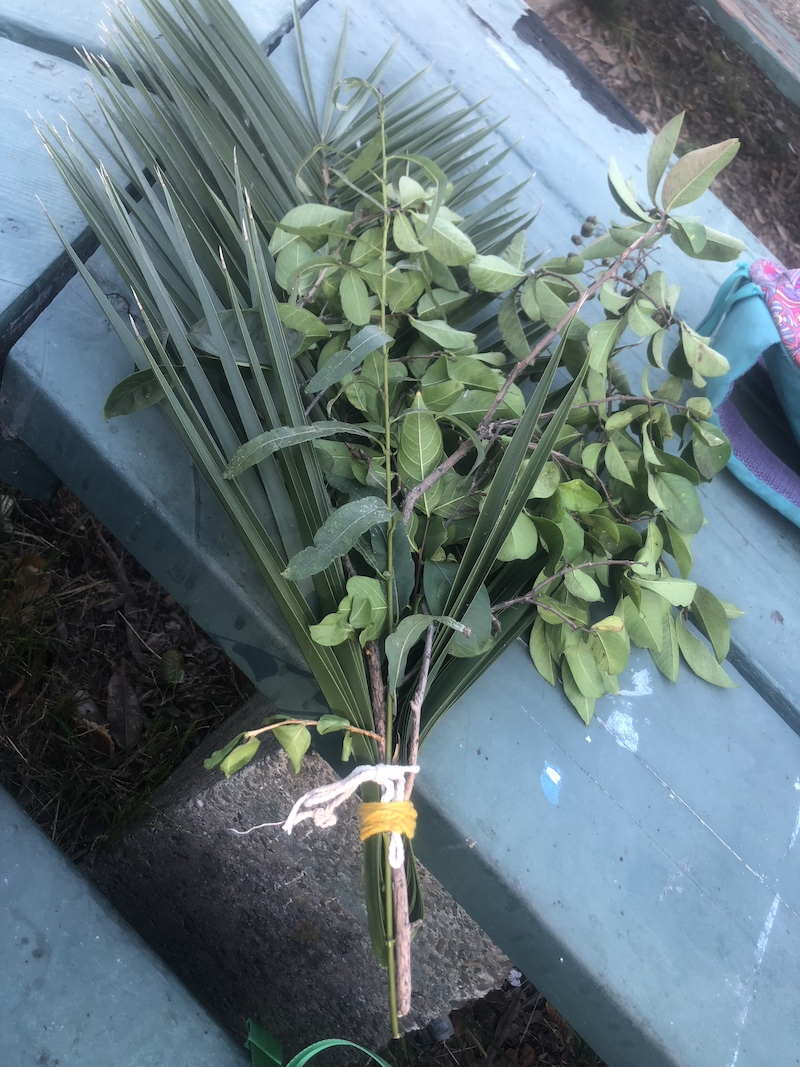
In the Fall of 2024, I organized a Sukkot celebration for Jewish families who support a ceasefire. While preparing for the event, I learned for the first time about lulav: wands made of myrtle, willow, and palm, used by our ancestors to pray for rain in the fall. Summoning rain felt exactly right in Oakland, California in October — the hills were crackling brown, the specter of wildfires looming. Because I'd spent the COVID era running a pandemic forest school, I recognized the plants used in lulav and knew where to find them on my city's land: willow in Sausal Creek, low-hanging palm fronds around San Antonio Park, myrtle right on my block in Fruitvale. My rabbi friend told me that most American Jews use lulav shipped from Israel, wrapped in plastic. But we took our kids right down into the creek bed to harvest willow branches, and tied them into wands ourselves. I watched my 7-year-old gather the fresh cuttings in her hands and wave them in the four directions, to the sky, and to the dry earth.
All this was very far from the workers' movements of Eastern Europe a century ago. But it was my own practice of doikayt, or hereness — a word I had just heard for the first time.
I wasn't always the kind of person who got excited about ancient prayer rituals. Growing up, I never went to Hebrew school or synagogue. But I was raised with a strong sense of Jewish social justice values. My parents had been active in the New Left, and during the Second Intifada, they got involved with Palestine solidarity work. My dad and I traveled from our home in California to serve as human rights observers in the West Bank together.
Though I held Hanukkah and Passover celebrations with friends, I didn't feel at home in Jewish spaces when I was young because I wasn't religious, and because of most Jewish organizations' support for the Israeli occupation of Palestine. I did spend many years as a labor organizer, working alongside immigrant workers to win fair wages and working conditions — the same struggles Jewish immigrants faced a century ago.
For years I've read articles about indigenous language preservation, but until that summer, I never put the pieces together: I am an heir to a dying language and culture! I started imagining other timelines, other ways modern Jewish history could have unfolded.
More recently, as a parent, I tried to give my child a positive sense of her heritage, even though I didn't quite know where I belonged in the Jewish world. Then came the war in Gaza. I was haunted by the deaths of tens of thousands of children. I organized a Families for Ceasefire group to engage children and their parents in emergency action for peace. But I was horrified to see “progressive” Jewish groups in my community staying silent through this moral crisis. My child's hippy-Jewish day camp maintained a “don't mention Gaza” policy to avoid “creating division in the community,” and then fired a counselor for wearing a watermelon earring. Enforced silence in the face of genocide was not at all my understanding of progressive Jewish values, and I wondered how we had strayed so far from our roots.
I had a revelation at a camp Shabbat one Friday that summer. I was watching the kids perform “Jewish folk songs” in Hebrew. I realized that none of these could truly be the folk songs of our great-grandparents, who spoke Yiddish in their daily lives. I started noticing how much of what we know as Jewish culture today isn't actually a preservation of my ancestors' culture, the Ashkenazi culture that Hitler tried to wipe out. It's a language and culture created from scratch as part of the modern political project of Zionism. For years I've read articles about indigenous language preservation, but until that summer, I never put the pieces together: I am an heir to a dying language and culture! I started imagining other timelines, other ways modern Jewish history could have unfolded. What if, instead of putting endless resources toward Israel and its wars, the American Jewish community had focused on supporting Jewish scholars and cultural workers who were fleeing Europe-and then preserving and passing on their language, culture, and radical politics?
How much richness would we have access to now if we hadn't let our culture die out because our resources were going overseas? This led me to the history of the Jewish Labor Bund and the idea of do’ikayt. In my understanding, do’ikayt means fighting for justice alongside the non-Jewish people of the places we live, rather than believing that our true homeland is elsewhere. I see this applying very clearly to the current moment. As American Jews, we face a stark choice. We can prioritize Israel's interests to the point of allying ourselves with outright fascists. Or we can live out the values of do’ikayt, building an anti-fascist movement alongside the people being persecuted just as our ancestors were — immigrants, trans people, student protestors.
Do'ikayt is the gift I want to pass on to my child. As she finds her own place in a terrifying world, I want her to know the stories and songs of her ancestors, who fought for freedom and justice wherever they found themselves.
To me, a 21ist-century understanding of do'ikayt also means connecting with — and protecting— the land we live on. If I consider California my true home, I should know the plants that grow here, and fight to preserve its forests and protect those who work its land. As a parent, I've tried to find ways to root our family life in the cycles of nature. I've been delighted to find that my own cultural tradition offers many tools for this — like my homemade lulav — if we look to hereness instead of Zionism.
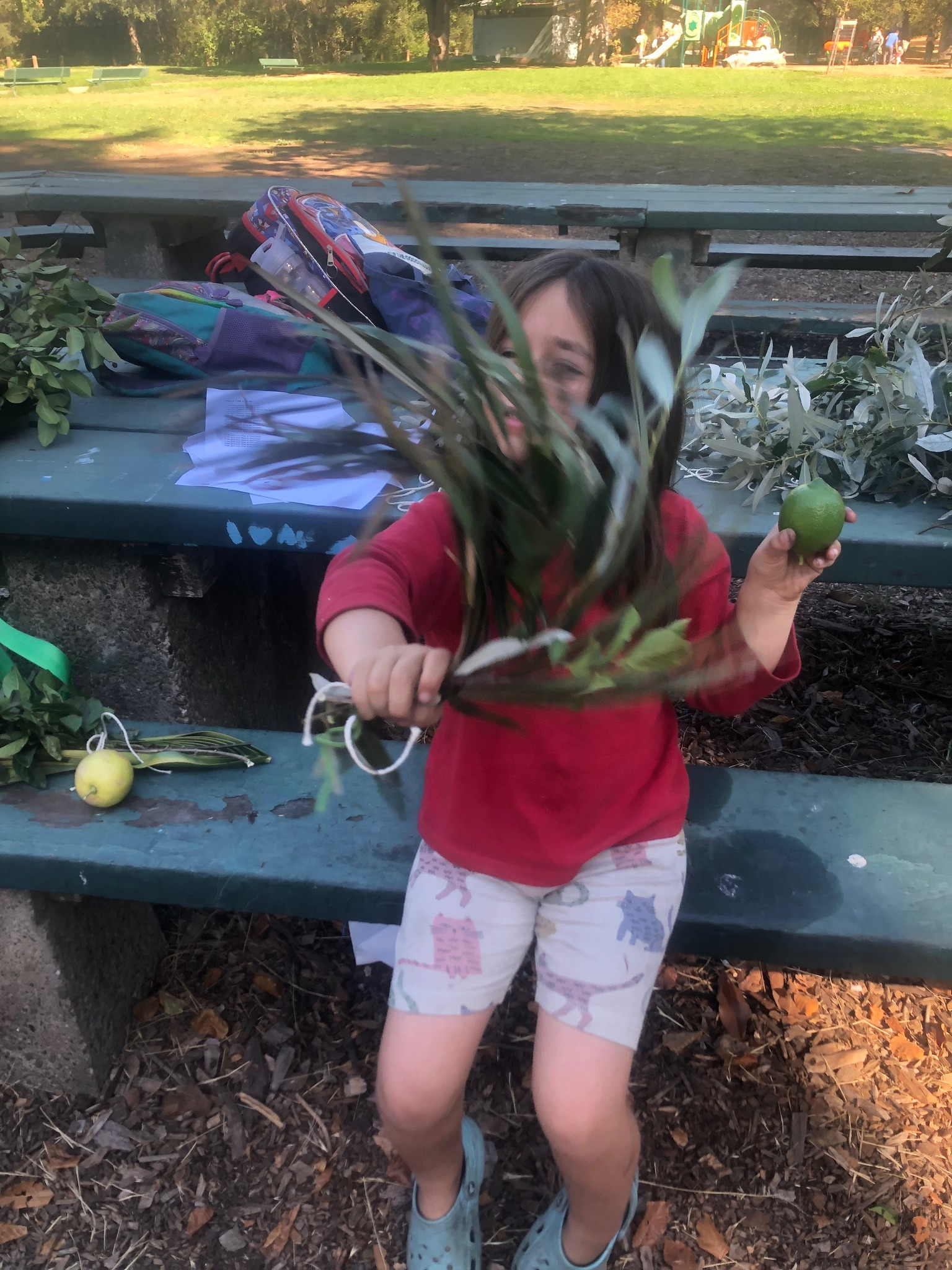
Today I think a lot about how we can prepare our kids for the world of ecological collapse and ascendant fascism they are inheriting. Do'ikayt is the gift I want to pass on to my child. As she finds her own place in a terrifying world, I want her to know the stories and songs of her ancestors, who fought for freedom and justice wherever they found themselves. I want her to work alongside people of all backgrounds and cultures to build communities of resistance. And I want her to connect deeply with the land she lives on, and draw strength from that connection to protect and restore the natural world.
Over the past year, I’ve created a project to put these ideas into action. Acorn Shabbat is a biweekly forest club for kids and families, rooted in Jewish culture, liberation values, and to the East Bay landscape. Together we sing songs, play in the redwoods, link Jewish months and holidays to the plants and animals around us, and make protest signs for Free Palestine actions. (You can follow our adventures on our web site and Instagram). We have a long road ahead of us as we redefine what it means to be Jewish in America — but it feels good to take the first steps, and to watch a new generation play and thrive as we build home together.