How I Rescued Vladeck
A chance encounter with Baruch Charney Vladeck, one of Jewish labor history's most notorious figures.
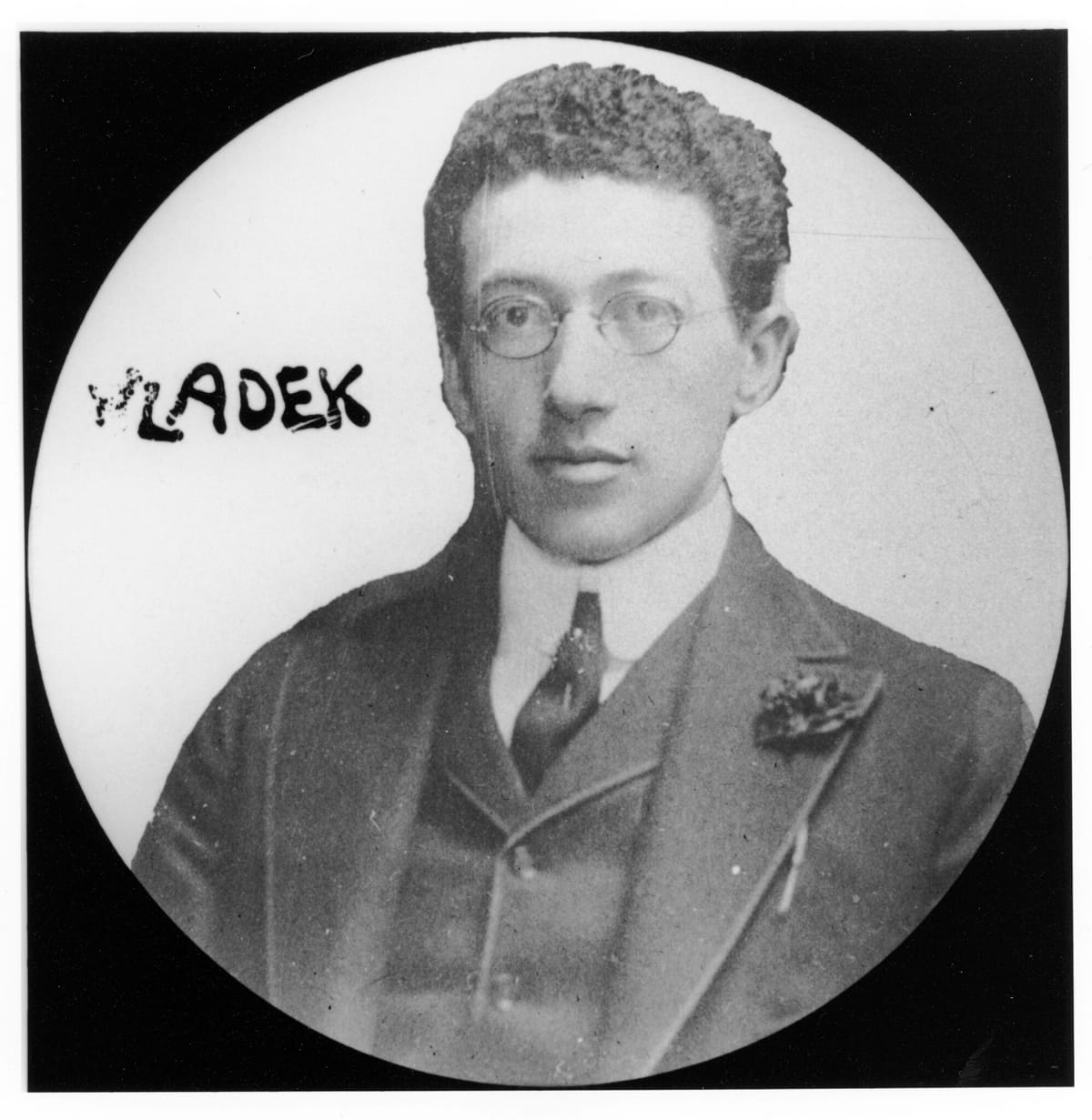
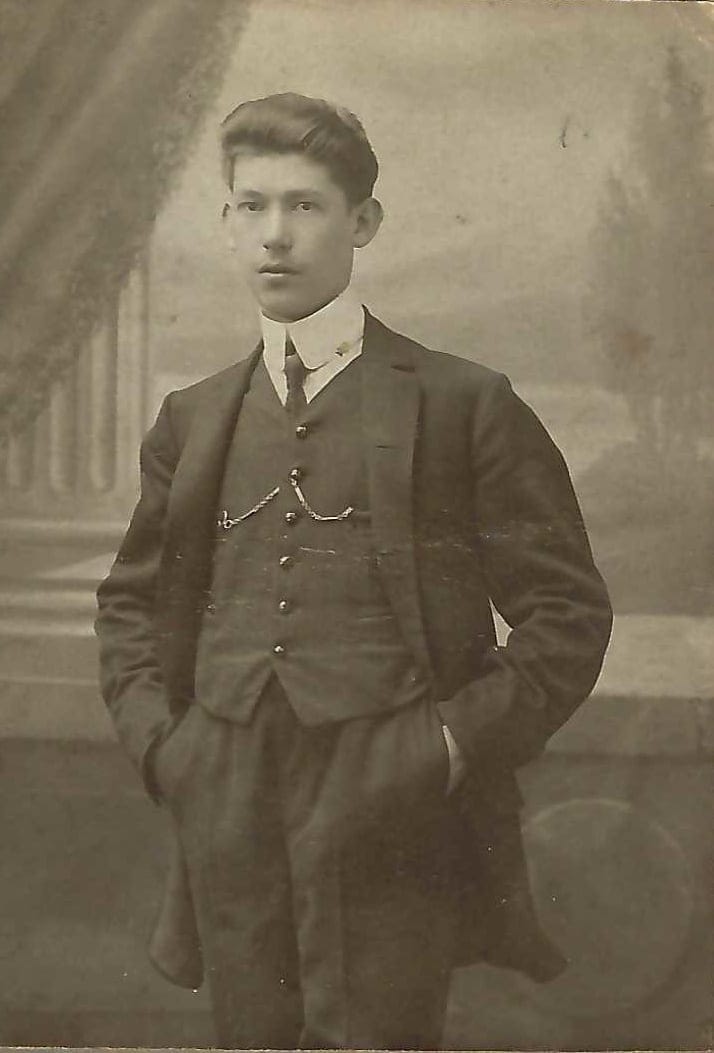
My great-grandfather, Abraham Greenhouse (1889-1968), and Baruch Charney Vladeck (1886-1938), one of Jewish labor history’s most prominent leaders, were born into parallel worlds. Both were raised under the Russian empire and in devout Hasidic families shaped by tragedy, and eventually found themselves dragged into the throes of revolution with the Jewish Labor Bund.
Abraham was born Avram Leyb Grinhoyz in Żelechów, Poland, during the period of Russian rule. His father, Dawid Asher (1859-1944), a tallis weaver and fishmonger, came from a family of working class tradespeople and merchants, believed to have roots in Silesia. His mother, the former Perla Borenshteyn (1858-1936), an orphan at the time of her marriage, was descended from a prominent family linked to the great Talmudic scholar Rabbi Akiva Eiger.
Abraham was one of seven siblings, only two of whom survived past early adulthood (his sister Masza having died in childbirth). As a child, Abraham attended the kheder (religious school for young children) in Żelechów and served as a letter-writer for villagers there who had not learned to write. Entering the workforce at an early age, His first job involved working with his brother Yosef (later known as Joe Green) as a gaiter sewer (by sewing machine), enduring harsh conditions that contributed to his evolving sense that a better world was possible. Abraham went on to become an apprentice tailor in Łódź, where the Bund was becoming a major force.
Originally a member of the Marxist-Zionist Poale Zion, Vladeck (born Baruch Nachman Charney to a similarly large family, his father dying when he was just a toddler) was arrested in a raid on a workers' study circle in January 1904. He spent eight months in prison, where he was exposed to a broader range of the many left-wing ideologies that were becoming increasingly popular among young Jews. Breaking with the Poale Zion, he aligned himself with the Bund, ingratiating himself to the point that the organization paid his bail and facilitated his release from prison in September. Upon his release, he adopted the nomme de guerre Vladeck, a Polish translation of his original surname, although he was also known during this period as “the young Lassalle,” a reference to the German socialist leader Ferdinand Lassalle (1825–1864). Swiftly becoming one of the Bund’s most prominent agitators, he addressed audiences across much of the Western Pale of Settlement throughout the period of the Russian Revolution of 1905-07.
It was at one of the Bund’s gatherings during this period where Vladeck and Greenhouse crossed paths. The following article, written in Abraham’s native Yiddish for Der Tog in 1944 and translated by my grandfather, describes a formative early encounter Abraham had with the Bund and Vladeck in 1905.
– Abraham J. Greenhouse, great-grandson of Abraham L. Greenhouse
How I Rescued Vladeck
by Abraham L. Greenhouse
Originally published in Der Ṭog, 22 October 1944
Translated from the Yiddish by Marvin Greenhouse; edited by Eyshe Beirich
In 1905, I hid Vladeck at our house, under the bed, as the police were searching in the Baluter shul, where Vladeck had spoken and somebody squealed. Lodz is the city, the writer is Abraham Greenhouse of 195 Smith Street, Perth Amboy, NJ.
In 1905, Lodz was a large industrial city with a great Jewish population and a large worker population. A few years earlier, a worker’s organization began and was called ‘akhdes’ or “Unity.”* In every house people spoke of the “Unity”, naturally each group (or person) according to his understanding, or belief. The pious parents spoke with contempt, with anger, and with fear that their children would, God forbid, get drawn into “Unity.”
And, an Akhdes is one who believes in God, wants to overthrow Czar Nicholas, and in general wants to change the world. All this smacks of jail, gulags, Siberia. So therefore it was no wonder that parents were so fearful that their children would get involved with Akhdes and they actually warned their children to not dare to go near that treacherous literature, which was distributed from time to time and handed out.
But warnings did not get heeded – actually they encouraged participation – “forbidden fruit is sweet”!
Not once, but many times we would hear such remarks – “You – rascal! You want to make over the world, that God created? It doesn’t please you that one is poor and another rich. You want that all should be equal’? Or such a remark – ‘these snot-noses want to dethrone the Kaiser, power of the workers is a high ideal, but that is one thing, although with what strength will they do this”?
Among the young folks of the workers’ groups the feelings that a new lifestyle was possible and all would be turned around – not yet comprehensive, but a nicer, a better, a freer (world). Its power (or appeal) every evening pulled to the “Birdzeh” where there gathered hundreds, thousands of young men and women. The boys walked up and down the streets where groups had divided as to crafts – weavers, tailors, shoemakers, brush makers, sock makers, which were the main occupations of that time.
And in the Birdzeh, word was spread publicly but (not cautiously) to one another where and when the next meetings would be held – in whose home or in which field. There one learned about available literature, brochures, books, etc. All of this should have been done most quietly, responsibly so that no informer would squeal to the police who kept an eye on each event.
And not just the Bund was organizing. The Polish Socialist Party as well as the Poale-Tzion sought to continue its solicitation to a greater extent. Little by little, things began to crystallize the difference of the 3 organizing groups. Each party tried to influence even more its followers. And not just once were there conflicts and even fights.
The various parties influenced their followers through agitators, the speakers. And each party had several local as well as central-speakers pool of agitators. The Bund at that time had the upper hand, and among their speakers was ‘Lassalle,’ a brother of (the writer) S. Niger – he was the late B. Vladeck. At every occasion and from everyone he got great enthusiasm.
One time, I don’t remember which month, but it was 1905 when the Czar’s ruling group very solidly stifled the revolutionary uprising, in which Lodz had played such a large role because of its large and well-known working class. Thousands of the revolutionists were shot by the police and soldiers on the barricades, and also workers were badly wounded by Cossacks and were shipped off by the thousands, and the bereavement went on for a long, long time. A lot of the leaders were arrested and where there was even the slightest suspicion, the police kept a tight vigil, so that for a time it was impossible to engage in any revolutionary work.
Around the holidays, the Bund organized a few gathering at the Baluter Shul on Zgierska Street, on a Saturday when they’d gather for davening normally, so there’d be no police suspicion. The speaker was Vladeck (in those days he was called ‘Lassalle’, or ‘the second Lassalle’). The shul was packed. The real devout supplicants were bewildered as to why on an ordinary Shabbos so many people came to pray – and, especially young people.
When it was time to read from the Torah, one of the young ones got up at the bimah, and with his palm smacked the table, requesting those gathered to remain quiet, since there was a very important speaker here, who’d talk about the current situation. At all the doors, young men saw to it that no body got in or went out.
Then onto the bimah, a tall dark thin young man, wearing a wide brim hat and a black cape. He stood motionless for several seconds, waiting for his audience to quiet down, following this surprise appearance. He removed his cape, and in a quiet voice began talking; He described the sad situation of those ‘gutsy’ bold arrested fighters for liberty, and he predicted that such a freedom movement could not be squelched for long with such violence and oppression. Having spoken 15-20 minutes, one sensed restlessness in the audience, and shortly was heard the word – “politsey” (police!).
Noise and clamor of people rushing to the doors and windows. I stood near Vladeck. I removed his cape, took his hand, and said “come with me.” We went out through the window, crawled over a low fence, and we went into the next (second) house of the shul, that was called the Ayzenhendler’s house, and from there to still another house, the 3rd one of the shul, to the cripple Silkele’s house, where we lived.
This had a long yard, with tall three-story homes on both sides, and with outhouses in the middle of the long yard. We lived on the third floor – I quickly ran up the stairs, and he after me, and we got into our house. My mother, in looking at us, understood something had happened and she began questioning as to what happened. I briefly described that the police want this person arrested. She asked him to crawl under the bed, and she drew the bedspread (or blankets) down to the floor.
Momma sat herself down with a taytsh-khumesh (a Yiddish Bible translation) and said, “in my house, no one will arrest a Jew” – and he was luckily not arrested.
Police did circle and criss-cross our long yard, and looked and sought, but a strict revisit they did not make. That is how I rescued the young Lassalle from the police’s clutches.
When I met Vladeck in New York and reminded him of the incident, we both laughed heartily.
*“Unity” or in Yiddish/Hebrew akhdes, refers to grassroots Jewish labor organizations that were appearing in the Russian Empire in this period, which, in the context of the 1905 Revolution, were more and more heavily associated with Bundist organizations.