Purim Offers Us the Power to Mock the Powerful
Satire is one of the great weapons of the oppressed. When employed correctly, it has the power to evict the powerful from their palaces of authority and expose them as the pathetic and paranoid creatures that they are.
|
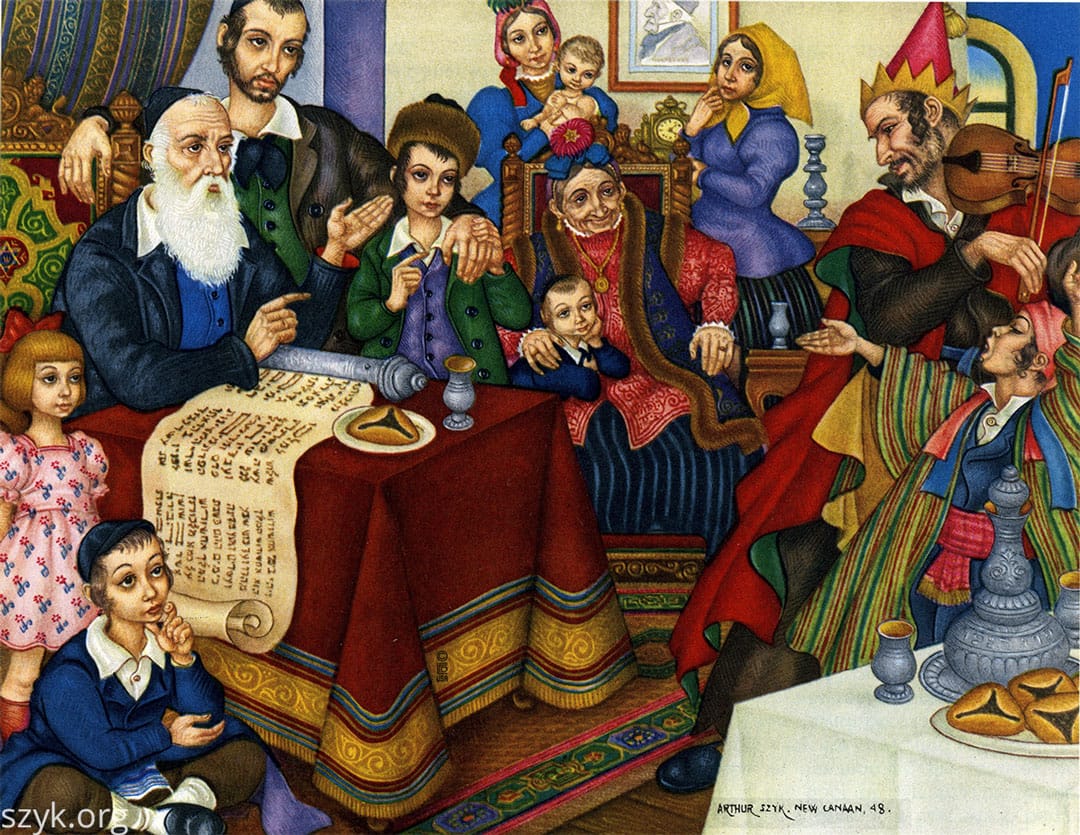
Du bist der meylekh? Ikh het dikh eyer ongezen far eyn vamfm vasher. Far eyn shtrik treger. Far eyn moyshev feger. Far eyn hunt shloger. Far eyn katsn yeger. Meakher dos du yo der meylekh bist, Halt mir der shtekn. In arsh zolst mikh lekn. |
You are the king? You look to me like a guts-washer. Like a rope-bearer. Like a messy corpse. Like a dog-beater. Like a cat-hunter. If you are the king, Hold my stick. And lick my arse. |
We have a weird relationship with Purim. The story of Esther, on its face, is a dark and cruel one. The basic premise is that a crazed tyrant with an empire spanning half the globe is convinced by his scheming advisor to authorize a total genocide of the Jewish people across his lands. Only through the clever scheming of Mordechai and his adopted daughter Esther — and a lot of luck — is the plot eventually foiled, preventing the massacre of the Jews. Along the way, there is fasting, crying, torturous executions, and thousands of deaths. Yet, anyone who has celebrated Purim knows that, of all the Jewish holidays, Purim is the most raucous, the most joyful, and especially the most silly! Somehow, silliness has permeated this holiday for us, from the rabbinic period all the way to the present day.
A closer reading of Megillat Esther, coupled with a sprinkling of Midrashic commentary, reveals a dark story constantly undercut by outrageous camp. The tyrant, King Ahasuerus, is depicted as an alcoholic man-child surrounded by yes-men. He is garish and stupid, and when his wife, Queen Vashti, refuses to obey his command to dance naked in front of his party guests, he throws a childish tantrum that can only be calmed by his sycophantic advisors. His most trusted advisor, the reviled Haman (BOO!), is a perfectly campy villain who delights in torture and cruelty and for whom every one of his lines ends in an implied “Muahaha!” In response to Mordechai offending him by not bowing, Haman resolves to impale him on a pike 50 cubits tall — about 75 feet. Constructing a monumental torture device over a perceived slight is exactly the kind of detail that pushes Haman’s villainy into solidly campy territory. These would-be genociders are transformed by our tradition into objects of ridicule, outrageous caricatures to be mocked and laughed at.
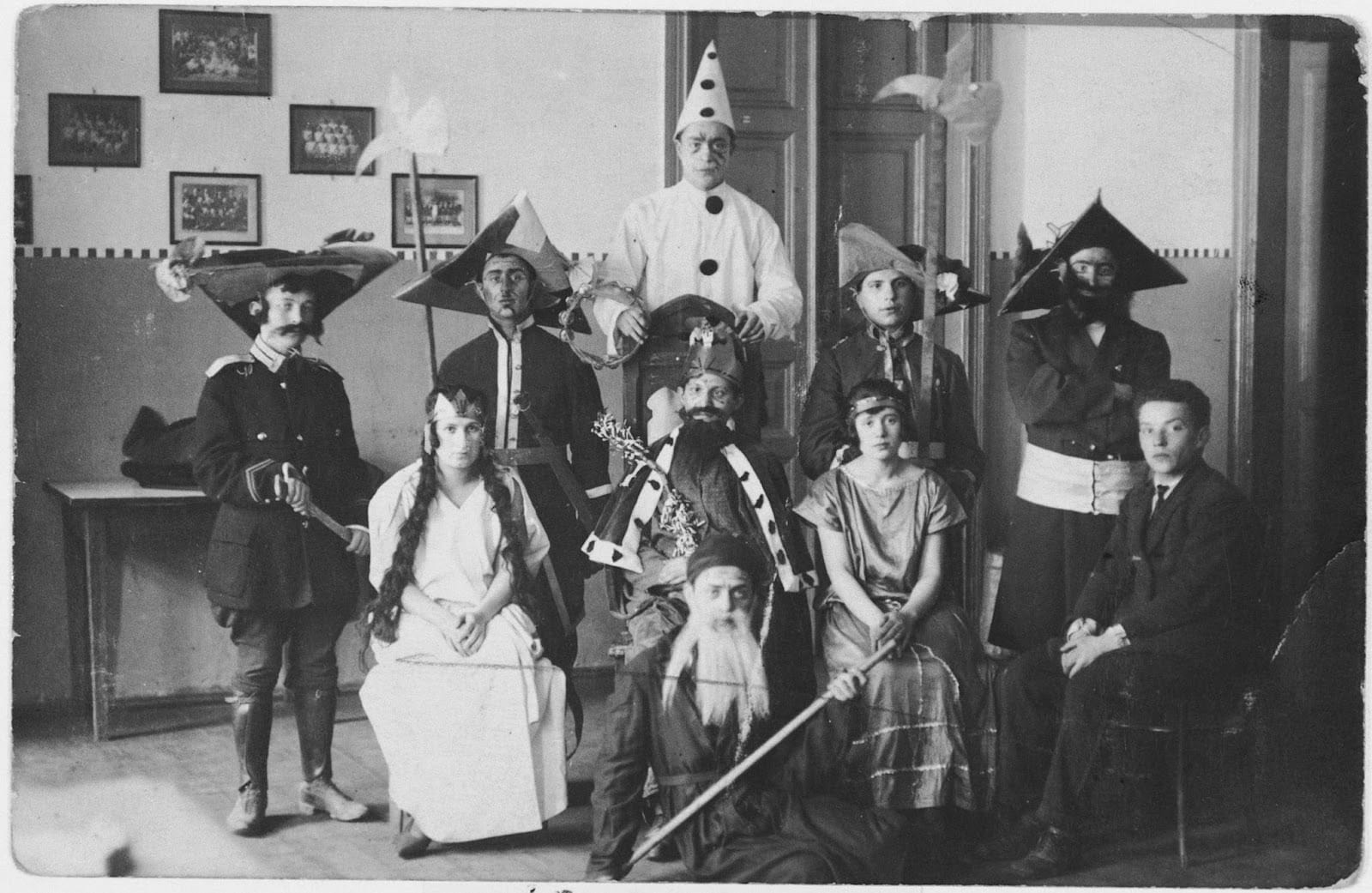
There is no better exhibition of this camp than the Purim spiel, the tradition of folk theater that developed among the Ashkenazim in Europe some time around the 15th century. From its beginning, the Purim spiel was an opportunity to parody and mock anyone and everyone whom the performers wished. The Orthodox establishment was often a target, empowering pre-modern European Jews with rare opportunities to criticize the often overly formal or strict clerical leaders of their communities. It should be noted that the Purim spiel could only be born in the broader context of European folk theater. It emerged from the bottom up, started by marginalized Jewish peasants and students who were inspired by the folk theatrical traditions around them. Originally shunned by the rabbis for its frequent inclusion of obscene material, the Purim spiel eventually transformed into a staple of the Jewish tradition, beloved by everyone from the ultra-Orthodox to the secular. In its local inspirations, ingenious Jewish cultural innovation, and its campy critique of authority and tradition, the evolution of the Purim spiel serves as an example of proto-doikayt and an inspiration for all of us infuriated by today’s Jewish institutions.
To return to the story of Esther, there is also something to be learned by the choice of our ancestors to ridicule their would-be destroyers. Satire is one of the great weapons of the oppressed. When employed correctly, it has the power to evict the powerful from their palaces of authority and expose them as the pathetic and paranoid creatures that they are.
The difficult question now is whether we can find a way to laugh between a genocide in Gaza,another callous war of aggression against Iran, and Israel’s violent expansionism. Witnessing the brutal extermination of men, women, and children is horrifying, crushing, and deeply depressing. Towards the perpetrators, any amount of hatred and scorn is perfectly appropriate. What we might consider, in light of the Purim spirit, is whether there can be space also for mocking.
Mocking of those who are so comically villainous as to make Haman seem like a softie, like Stephen Miller, or those who are racist, like Yossi Klein Halevi, who said he would prefer Jews for Jesus over Jews who vote for Zohran Mamdani, and especially of those who are arrogant man-children, which is a category containing too many people working in the Trump administration to name. This mocking should extend also to journalistic publications such as The New York Times or the Wall Street Journal for their ludicrous coverage of Israel’s genocide and for the unimaginable decision to publish articles written by racial supremacist Bret Stephens on multiple occasions. Certainly, we can poke fun at Zionist influencers, like Hen Mazzig, whose daily job it is to whitewash ethnic cleansing with progressive language, but who is really no different from Roi Star, who posts himself stomping on posters mourning dead Palestinian children and screams that those who care are Nazis. We should mock psychotic Jewish leaders, like Sarah Hurwitz, who complained that Holocaust education has “backfired” because it teaches young people to “fight the big powerful people hurting the weak people,” and Rabbi Shmully Hecht, who created a change.org petition demanding the excommunication of ten prominent left-wing Jews, which I admit I would sign if he added Bret Stephens to the list.
Finally, there might be space even, for those among us interested in religious tradition, to play with our liturgy itself. If you’ve ever davened from an Orthodox siddur, you’ll likely be familiar with a couple of notably controversial morning blessings, thanking God for making us neither gentiles nor women. While different progressive Jewish movements have already altered these blessings in their own ways, allow me to present my own humble suggestion: