
A Winding Path to Jewish Anti-Zionism
Christian Zionism, paganism, Jewish Orthodoxy, and anarchism were my stepping stones.
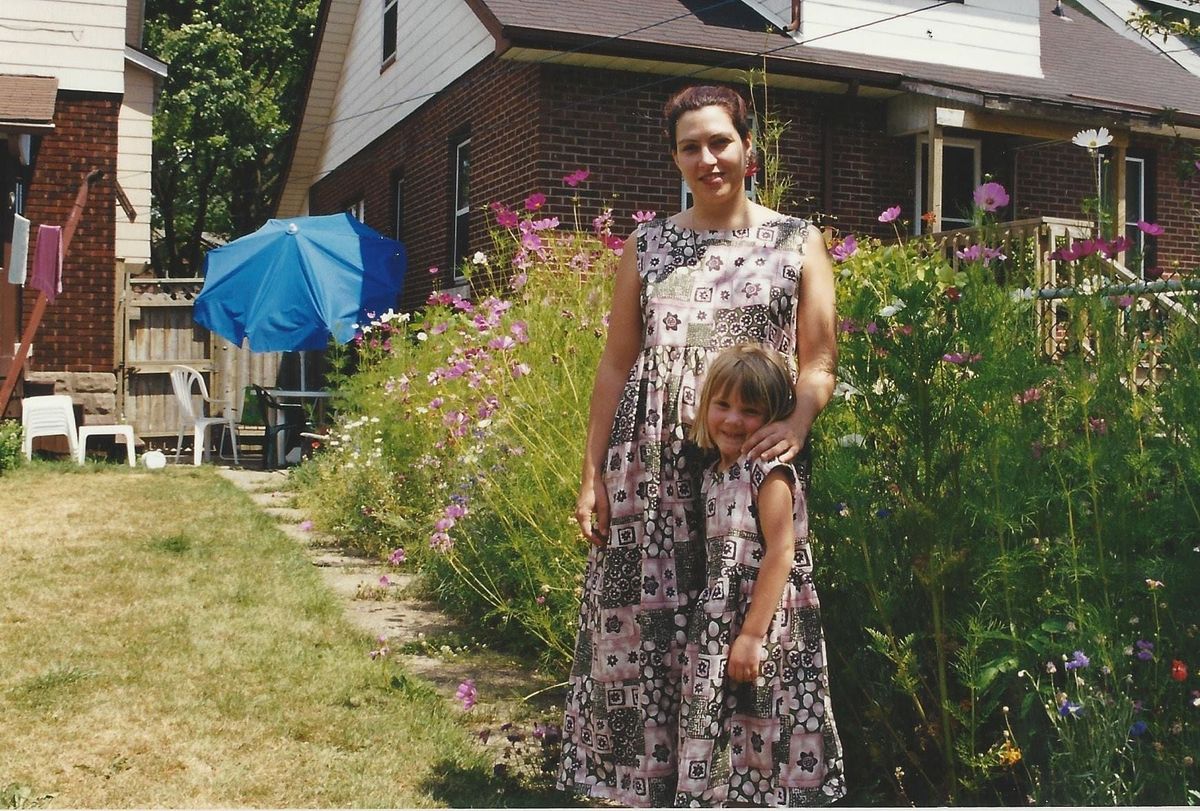
I took my first bite of matzah in the basement of a Baptist church. It was in the context of a Sunday school “seder” meal that was held so we little Christian children could learn about our Jewish roots.
Today I call myself a diasporist, anarchist, post-denominational Jewitch. Spirituality has played a large role in my life, from childhood — when I cried because I was too young to be baptized — to today, when I mark the passing of the moons and seasons alongside celebrations of Shabbat and the Jewish holiday cycle and maintain sacred dietary practices as well.
Politics have been inseparable from that spirituality. Raised to be a (liberal) feminist, in my life I have moved from a small-L liberal and social justice orientation rooted in Christian Biblical teachings to an anarchism and diasporism that is as rooted in tikkun olam, the Torah, and Jewish tradition as it is in anarchist political theory.
But diasporism didn’t come easy. While I’ve been an anarchist Jewitch for decades, I had made an exception in my stance for the idea of Israel as a safe place for Jews. But, as it was for many people, October 7, 2023 was a watershed moment. My wobbly position and the questionable logic behind it could no longer hold. To grasp the weight of that shift, we have to go back to that Baptist church basement and the essential differences between my dad and mum, where my education in Jewish stories, Baptist theology, and feminism began.
I. Upbringings: Conservative progressivism to paganist anarchism
Every year, at Sunday School, we celebrated Passover with matzah. At home, even though my father was an ordained Baptist minister, or maybe because of it, my mother provided me with a steady stream of Jewish YA novels, including Judy Blume’s famous “Are You There God, It’s Me Margaret,” among others. She also gave me “The Diary of Anne Frank.” In my teen years, I took Hebrew classes. I participated in Christian-Jewish interfaith events as a teen and adult, and yes, “I had Jewish friends.”
In fact, I even had Jewish family. A cousin on my father’s side had converted to marry her childhood boyfriend from down the street in her childhood city. Her three kids, my contemporaries, were raised Jewishly, and we met them from time to time at (ironically) Christmas and Easter family dinners.
My mother raised us kids to be activists, and me specifically to be a feminist. I remember we tied ourselves to a tree (with yarn) as part of a protest to stop development of a conservation area behind our home. I sneak-read my mother’s Ms. Magazine issues and her copy of “Our Bodies, Ourselves.” (I only learned later that she purposely left them out where I could find them.)
Despite these signs of progressivism, my family actively supported Canada’s Conservative Party. But we were Red Tories, so-called “progressive conservatives,” aligned with figures like Flora MacDonald and Joe Clark. I know the concept of left-wing conservatism sounds contradictory, but the Red Tory political orientation has to be understood in the Canadian context, especially in that era: Canadian Red Toryism echoed the classical conservative tradition that held that members of the privileged class were obligated to fulfill social responsibilities.
I came into adulthood still believing that the state of Israel, located in the biblical land of Israel, is necessary to the safety of the Jewish people because of how so many had been killed in the Holocaust. It seemed obvious and logical that Jews would return to the land God had given them and that they had a right to reclaim their country. It never occurred to me that there were people there who would necessarily need to be displaced.
It was at university in the early 80s that my activism, Red Toryism and feminism came together. Music and radio had been hallmarks of my teen years, so I became a radio DJ at CJAM FM in Windsor, joined the punk scene (I was a S.H.A.R.P. skin), and began attending meetings of the Communist Party of Canada - Marxist-Lenist. The only action in which I remember participating at the time was a march around the university campus shouting “Better red than dead.”
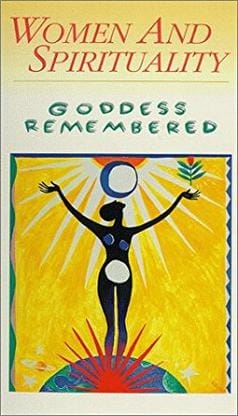
When I later attended broadcasting school in Ottawa, I had the privilege of interviewing feminist filmmaker Donna Read for her 1989 documentary, “Goddess Remembered,” which sent me on the track of feminist and women’s spirituality. That documentary affected me profoundly, and as a result, I rejected male-centred Christianity in favour of paganism.
I continued to be involved in activism (mainly feminist, pro-peace, and anti-war) wherever I lived. In 1989, I moved to New Brunswick, and there, as a result of my activism, I became the founding president of the New Brunswick Young New Democrats and ran for provincial election as a New Democrat.
Shortly after that, I moved to a very isolated rural area of New Brunswick where, in 1992, I had the great good fortune of being exposed to the Internet (or, as they called it then, “The Information Superhighway”) as the result of my work as a translator. I used it to immerse myself in the study of pagan and Wiccan practices, and of politics. It was then that I began to identify as a witch, and my anarchism began to take shape. The internet was my only contact with the outside world. Had I been in a city, I would not have moved so far to the “left” both spiritually and politically, but because of the wide exposure to ideas that the internet afforded, I did.
II. Orthodoxy
In the late 1990s, as a single mother once again living in Windsor, I met Avrum, a Jewish man, through friends. He said I knew more about Judaism than any “Christian” (meaning non-Jew) he had ever met. We began dating, and I swore that I’d never convert, until it became clear that our relationship would not progress because I was not Jewish. So I began to study. We joined a shul and participated in the life of the congregation and the Jewish community.
One of my concerns about conversion was belief in God, and specifically the father-god. When I asked about this in the various learning contexts, I was exposed to the concept of na’aseh v’nishmah. When the Israelites received the Torah, they responded na’aseh v’nishma, “We will do and we will understand.” I appreciated the idea that there was a mystery to be integrated through practice. This appealed to me as a pagan who connected through ritual. I thought, “I can engage in the mitzvot, and eventually, through extended practice and long exposure, I will come to an understanding.”
As an activist, I especially found meaning in the mitzvot bein adam l'chavero, the commitments to ethical behaviour that are between a human and their fellow humans. Avrum had a hand in this understanding. He told me about the two categories of mitzvot (commandments from God to the Jews), with the most outwardly observable commandments being those between a human and God, the mitzvos bein adam l'makom, such as wearing peyot and tzit-tzit, observing Shabbat and keeping kosher, that lead people who behave this way to be perceived as “religious” or “observant.” And yet a person can be as strict or stricter in their observance of the mitzvot governing their relationship with their fellow humans and not be considered observant or Orthodox at all, while "religious" people can ignore this category of mitzvot all together and still be considered religious. In this way, my Jewish practice could be activism and vice versa.
I came to understand the concept of l’dor v’dor (from generation to generation) and why families sit shiva when their children marry out. I understood that I needed to marry in, because to do otherwise would be to contribute to the assimilation and annihilation of the Jewish people. I still feel this way. In a world dominated by the supremacy of white Western racial capitalism, the persistence of non-dominant cultures is to be supported and celebrated.
After the requisite three attempts, I was accepted by an Orthodox rabbi to begin conversion studies. A year and a bit later I passed the conversion examination of the local (Orthodox) Beit Din, and my daughter and I immersed ourselves in the mikveh. With my hair still wet from the immersion, Avrum, whom I had been dating and then living with, and I were married in a hastily-organized ceremony in a room of the JCC.
For the following decade, Avrum and I belonged to a very liberal modern Orthodox community. I was shomerit Shabbat (keeper of the Sabbath), although Avrum was not. I kept kosher and observed the laws of T’harat haMispacha (literally “family purity” but referring to the practice of niddah, separation, and mikveh, immersion). In that community, the state of Israel and its necessity to Jewish safety were never questioned.
To this day, I am grateful that my Avrum introduced me to the writings of Norman Finkelstein, Noam Chomsky, and ideas such as the ones in the film “Don’t Touch My Holocaust.” I saw that there were Jews challenging the political and moral boundary that makes criticism of Israeli state actions difficult.
Avrum and I attended and organized Jewish-Muslim events such as Potlucks for Peace. Because we were both involved in anti-war movements, we took the stance that “we don’t support the actions of the Israeli state against the Palestinians.” We wanted an end to the Israeli war on Palestinians and a political solution where both Israelis and Jews could live well together. But the idea of anti-Zionism was not discussed in these circles.
Through Torah study, I was exposed to Orthodox ideas putting the establishment of a Jewish state in doubt theologically. But I still held that the state of Israel, in the Biblical land of Israel, was necessary to the safety of the Jewish people. But in the liberal communities in which I was by then involved, following my divorce from Avrum, where Jewish law and halacha were not considered relevant, the Orthodox position was considered an artefact.
“It mattered to me to “pass” because this was what anti-assimilation meant to me: to be seen and understood to be Jewish, first and foremost inside and, by extension, outside the Jewish community.”
My daughter — who had converted with me and whom Avrum adopted — attended a Hebrew day school from Grades 1 to 8. She was (as we call it now) indoctrinated by the typical “history” taught in mainstream Jewish educational institutions. The Holocaust education provided by that institution exposed her and her classmates to classic, graphic Holocaust imagery that gave her nightmares. In her words, “They took us to the basement every year and made us watch sad and scary movies.” At the time, long before I ever thought about becoming a therapist, it was clear to me that this educational style was literally traumatizing to her (and probably the other children too).
At the same time as Avrum and I had divorced, our congregation splintered. Spiritually homeless, I joined the local Reconstructionist havurah. I had wanted a religious community that was both politically progressive but also held a reverence for Jewish tradition. The Reconstructionists fit the bill.
Then in 2004, I remarried. My new husband, Ian, was an atheist when we met. I told him that mine was a Jewish home and if he wanted to live with me, he would respect those traditions, and no others would be observed in our home. He agreed. (He ultimately converted to Judaism entirely on his own with absolutely no prompting from me.)
Like me, Ian was an anarchist and an activist for peace and anti-globalization. Unlike me, he had been actively engaged in Palestinian liberation organizing and actions for decades before we met. We dove into reading and discussing the works and biographies of many Jewish socialists and anarchists. But I still held the position that the state of Israel, in the biblical land of Israel, was necessary to the safety of the Jewish people. I would still say “I don’t support the actions of the Israeli state against the Palestinians.”
You may be wondering how an anarchist could support the idea of any state legitimacy. I knew my stance was hypocritical. Yet I couldn’t think my way out of the idea that Jews were not safe, that Jews everywhere are persecuted and killed and therefore needed a safe place in which to take refuge. In my mind that safe place was the state of Israel. I thought that the two-state solution as conceived of by Noam Chomsky was a possible solution. Also, compellingly to me, Chomsky was a professed anarchist who still was speaking in terms of states as a way to resolve the question of safety for both Israelis and Palestinians.
But on the left, casual antisemitism was a regular occurrence. For only one example, on an anti-war listserv, an antisemitic slur was used, and I asked for it to be addressed. I was piled upon and my concern dismissed. There was also nowhere on the left where the complex nature of Jewish oppression could be expressed, understood, compassionately yet clearly examined and unpacked. Jews were members of the oppressor class, and that was that. The antisemitism of the left was hard to bear. Criticism of the State of Israel was common and loud and seemed to outweigh criticisms of other states enacting genocide and colonization. As a result, I did not find a way to wrestle with the contradictions in my thinking.
III. Turning point: toward anti-Zionism
October 7, 2023, was a watershed moment for so many people, specifically Jews, myself included. I was horrified at the actions of the Israeli state and its supposed response to that Hamas attack. It wasn’t defense. It was wholesale slaughter and genocide. The uneasy relationship between me and the state of Israel was over. I could no longer support it. But I didn’t know that one could be Jewish and not support a homeland for the Jews at the same time. I thought I would have to repudiate my Jewishness. This was no small matter. I had made a deep and enduring commitment to Am Yisrael, the people of Israel. I had converted out of love for Am Yisrael and a desire to see the Jewish community thrive and grow. How could I abandon them? And yet, how could I continue to be Jewish if what it meant to be Jewish was to support the state of Israel and by extension endorse and support genocide?
Over six sleepless and tear-filled weeks, I scoured the internet for anti-Zionist Jewish congregations and the positions of progressive Jewish clergy of whom I was aware. Finally, I was able to find an anti-Zionist spiritual director with whom to consult. Apprehensive, my heart pounding and my mouth dry, I said to her, “I’m a convert. But I think I can’t be Jewish any more.”
I barely tell anyone I’m a convert. I took great pride in being able to fit into the Jewish community, in being able to fully participate in the ritual and communal life, never raising a single doubt about my Jewishness. It mattered to me to “pass” because this was what anti-assimilation meant to me: to be seen and understood to be Jewish, first and foremost inside and, by extension, outside the Jewish community.
Part of the desire to pass was a reaction to the rejection of me as a shikse (disparaging term meaning gentile woman) by Avrum’s family and their ongoing refusal to consider me and my daughter as belonging. It was also out of a desire to be welcomed into the wider community where I wanted to be accepted and make my home. I thought that by taking an anti-Zionist position, I would be seen as less Jewish. Even worse, as a georis (convert), I feared I would be seen as betraying my commitment to Am Yisrael. I was already “off the derech” (no longer practicing within the Orthodox tradition). Taking an anti-Zionist position, I thought, would invalidate my conversion.
Saying, “I think I can’t be Jewish anymore,” felt like blowing up the past 25-odd years of my life. It felt like abandoning a commitment that meant so much to me, both spiritually as an activist and as a Jew-by-choice (and by a great deal of effort). It felt like betraying my community. And as a parent, committed to l’dor v’dor, what message would I be sending to my daughter if I repudiated my conversion? Where would that leave her? Would it reveal me to be the undermining, self-serving, gold-digging, unconsciously antisemitic “Christian/false Jew” Avrum’s family had always thought I was? Would I be betraying my principles?
I am so grateful that this spiritual director reminded me of the long tradition of Jewish identity and practice that was entirely unrelated to the state of Israel. She pointed to the many examples of proud Jews who, as Jews, denounced the entire concept of the State of Israel. She said, “You can reject the state of Israel and still be Jewish.” Now I was crying, but from relief. I could now see a way forward for living Jewishly, being Jewish, in integrity with the commitment I had made in that still moment as I hung suspended in the womb-like waters of the mikveh in 1997, yet also rejecting Zionism.
As I started researching Jewish anti-Zionism, I remembered my Torah studies that taught that secular Zionism was a violation of divine will. There are tendencies within the Orthodox tradition (which, remember, is the foundation of my Jewish education) that hold that the establishment of the “kingdom” of Israel must come about only through God and not by human action. By this reasoning, the state of Israel could be considered illegitimate.
In addition, I could see that Jews and Jewish fears were being exploited to manipulate the Israeli state into aggression against Palestinians and to manipulate Jews in the diaspora to support this aggression. Knowing that Britain had had a hand in the creation of the state of Israel, I had come to the conclusion that Britain and other Western nations (and perhaps some of the Muslim states in the SWANA region) were fomenting and using Israeli-Palestinian aggression for their own purposes. Yet I knew that, prior to that interference, Muslims and Jews had lived in harmony throughout antiquity and even into the modern era. According to our traditional stories, Muslims and Jews are cousins because Isaac and Ishmael were brothers.
Furthermore, in a way similar to that of the German and Belgian colonizers in Rwanda (who set Rwandans against each other to destroy one another rather than join in solidarity to resist colonization), I saw the “conflict” between Jews and Muslims, Israelis and Palestinians, as having been created and incited by non-Jewish powers for colonial purposes. But I had yet to see the establishment of the state of Israel itself as a colonial and white supremacist project.
Once I had absorbed the idea that rejecting the state of Israel could be a Jewish act, I started looking for Jewish anti-Zionist groups. As a socialist and anarchist who was also Jewish and took great pride in the Jewish anarchist lineage of which I was a part, I had known of the existence of the historical Bund (now the International Jewish Labour Bund) and Jewish Voice for Peace. When I encountered the movement to revitalize the Bund in November 2023, I joined right away. I also joined JVP, and I started asking questions about what it means to be a Jewish anti-Zionist. I asked for materials that could help me understand the state of Israel in the context of colonialism and white supremacy.
My learning about the Nakba and the Israeli state project as colonialism revealed a direct parallel to the settler-state colonialism in Canada, where I live. White European colonialists came to Turtle Island (colonially known as Canada), considering it uncivilized and uninhabited under the Doctrine of Discovery. They settled it, colonised it, genocided its original peoples, and extracted wealth from the land. In Canada, the settler colonial project is ongoing, continuing to harm the First Nations, Métis, and Inuit people who have lived here since time immemorial. The same settler-colonial harm continues to reproduce itself in the modern era on many lands, including on the modern-day land on which Palestinians live, which in the late 1800s was considered unpopulated (“a land without a people”) and was invaded and colonized predominantly by Ashkenazi (white Eastern European) Jews as an ethnonationalist project, also genociding the people living there and extracting wealth from the land.
Canada’s Truth and Reconciliation Commission (TRC) was established in 2008 and released its final report and 94 Calls to Action in 2015. In response to the TRC’s Calls to Action — and as a direct descendant of the Mayflower “pilgrims” (spell that c-o-l-o-n-i-s-t-s) who used to be proud of that ancestry — I have been learning about my responsibility in relation to those calls. In the process, I learned that reconciliation is relational, requiring the cultivation and maintenance of ongoing respectful relationships between Indigenous and non-Indigenous peoples. This carried my analysis further, connecting reconciliation here where I live with the principle of solidarity in anarchism and also with my responsibilities to my fellow humans, which I am commanded to fulfill as a Jew.
In joining and helping to organize the International Jewish Labour Bund and in conversation with khaveryim, my understanding of what it means to be engaged as a Jew here where I live — in other words, doikayt — deepened. As always, as with every single case of working for the safety and liberation of all people, solidarity is the answer. Building coalitions of working people, class coalitions, will create safety for us, the people, because the danger to Jews is not our Christian or Muslim brother and sister workers, but the structures of power and the powerful people within them seeking to divide us on the basis of the specious concept of race to weaken and ultimately exploit us exclusively and purposely for their own benefit.
In finding my way to anti-Zionism (or as I now frame it, a Bundist diasporism), my biggest question had been, “How can Jews be safe if they have nowhere to go?” and by extension, “Where will I and my family go when, in the words of Martin Niemöller, ‘they’ come for me?”
It was on the basis of that fear that I had made an uneasy exception to my anarchist philosophy. “How can Jews be safe if they have nowhere to go?” was my anguished cry for weeks after October 7, 2023. Once I saw that the state of Israel and its actions were in fact detracting from our safety — Jewish, Arab and Muslim safety — and creating the conditions of harm not only for Palestinians but for Jews as well, and put that together with the millennia-long and well-established anti-Zionist tradition within Judaism, my anti-Zionist, or rather Diasporist, position was sealed.
Now my philosophy and practice of anarchism, of liberation for all, is internally consistent. My position is not that anyone should necessarily move anywhere or leave any land. That’s for the people there to determine, because a key principle of anarchism is self-determination. Anarchism holds that states and governments do not serve people. No state can serve human flourishing. No Jewish state can protect Jews. Ethno-nationalist states are dangerous for Jews as much as for anyone because ethno-nationalism creates a hierarchy based on ancestry, bloodlines, and/or ethnicity that is exploited by the state for more and more exclusion, creating conditions of conflict and scarcity, scapegoating certain groups, purposely dividing workers against one another, weakening us, and further empowering those in positions of power.
My identity as a Jew no longer relies on any reference to the state of Israel. It finds itself in yiddishkayt — the expression of mitzvot through my activism and my observance of Jewish rituals and food customs in my home and in my community. It finds itself in doikayt and khavershaft — in solidarity with workers and with all who are oppressed and all who are seeking liberation here where I live.
Since I came to this position, I have shared with my daughter, now in her 30s, the information and historical facts to which I have been exposed only upon becoming explicitly anti-Zionist. Over and over again, she marvels, “I was never taught this in school.” Even before I shared information about anti-Zionism with her, anti-Zionism was a given. “I’ve never supported Israel,” she says. I’m so grateful that she doesn’t have to go through what I did in order to come to her own anti-Zionism.
.jpg?ref=derspekter.org)