“Average Jews,” the United Front, and the Jewish Labor Committee: A Reply to Nelson Lichtenstein
A major error of the Jewish Labor Bund and JLC, among countless others, was that they gave the lead to parties even more capitulationist and anti-Communist than they.

I, like comrade Lantsberg, was grateful for the opportunity to read Dr. Nelson Lichtenstein's statement from the May 17th "Convening of the Northern California Jewish Labor Committee," (NCJLC) as published by Der Spekter. Given that our representatives from the International Jewish Labor Bund were prevented from attending that meeting, I submit my reply to Dr. Lichtenstein’s statement here.
As Lantsberg’s introduction points out, the new Northern California chapter of the JLC has taken an obviously reactionary course right out of the gate, focused mainly on legislation to suppresses political expression — especially pro-Palestinian expression — in California’s public schools. This comes as no surprise: the JLC’s reactionary program, from WWII to now, is well documented, if not well known.
What is less obvious, as Lantsberg wonders, is how an “organization founded and originally led by a Bundist” ended up on this course. To begin to answer this question, I propose we analyze the history and theory of the Jewish labor movement that Dr. Lichtenstein’s statement outlines.
Indeed, as many Bundist theorists had done in the 1930s, I find that Dr Lichtenstein’s statement revises the Marxist theory of class struggle into a theory of popular unity against corrupt bureaucrats, ministers, and politicians (a theory comparable to those of the MAGA and No Kings movements in the United States). In this theory, Dr. Lichtenstein subjugates the labor movement to a “social democratic, culturally pluralistic social movement,” that is nevertheless amenable to chauvinism. For example, Dr. Lichtenstein’s theory is amenable to the notion that Jews are “strivers who [seek] to educate themselves out of the working class,” more-so than other national, ethnic, and racial groups.
From there, Dr. Lichtenstein casts civilian intellectuals (Jewish intellectuals, in particular) as “essential” protagonists of the labor movement. Thus when Dr. Lichtenstein refers, elsewhere, to the “revolutionary sentiment, that a new Jerusalem could be built in any part of the world,” he exposes the actually bourgeois nationalist and indeed Zionist content of his theory, which I analyze in more detail in the first half of this piece.
To be sure, cooperation with small capitalists and land owners is crucial to socialist government, and to anti-fascist, anti-imperialist struggle. However, we must understand, as Bundist leader Henryk Ehrlich did, that the causes of fascism and imperialism are not subjective causes, such as corruption and sociopathy, but are “inherent, after all, in the capitalist nature of today’s economic system.” Thus, unlike Ehrlich, we must maintain as our imperative, as Marx and Engels write: “formation of the proletariat into a class, overthrow of the bourgeois supremacy, conquest of political power by the proletariat.” As shown below, Ehrlich, like other Bundists, maintained that the class contradictions between the petty bourgeoisie and the workers could be resolved in the framework of bourgeois democracy, and that the contradictions between oppressed and oppressor nations could be resolved by the implementation of “national cultural autonomy” (as distinct from economic and territorial autonomy, from which national self-determination actually proceeds).
It was on this imperative that Mao determined, in the context of a united front against fascism and imperialism, that “every political party or group shall have the right to exist and carry on its activities, so long as it is not in favor of capitulation and is not anti-Communist.” In the second half of this piece, I argue that a major error of the Jewish Labor Bund and JLC, among countless others, was that they gave the lead, on that front, to parties even more capitulationist and anti-Communist than they. Today, as new anti-fascist and anti-imperialist united fronts are emerging, the International Jewish Labor Bund (IJLB) should endeavor to oppose capitulationist and anti-Communist directives within our organization, and to join united fronts along these lines. It is to that end that I have undertaken to criticize Dr. Lichtenstein’s statement and the JLC itself, and urge others to do the same.
I. Jews in the U.S. American labor movement, the JLC’s populism, and its Bundist roots
To begin, let’s analyze Dr. Lichtenstein’s concept of "de-proletarianization,” a concept that undergirds his “all-too-brief survey of Jews and the American Labor Movement.”
How, in Dr. Lichtenstein’s theory, did American Jews make their “pathway out of the working class”? It was not, as other people did, by owning capital, and by exploiting labor, but simply by “striving to educate themselves.” Thus, Dr. Lichtenstein refers to the Jewish “diplo-mania for education and self-improvement.” Elsewhere he writes that Jews were a “people of the book,” with a “facility with words, argument, and textual mastery,” and thus had “a deep-seated reluctance (...) to have their children follow them into manual occupations.”
Early in the 20th century, if certain industries only “seemed, at the time, almost organically Jewish,” (emphasis mine) as Dr. Lichtenstein writes, this was not, in his interpretation, because nations are socially and historically constituted. No, Dr. Lichtenstein supposes, these industries only “seemed, at the time, almost organically Jewish,” because Jews are destined to higher realms of leadership and thought. Thus, the children of Jewish manual laborers simply “migrated” into intellectual and white-collar work, in Dr. Lichtenstein's theory, and into the owning and ruling class. To the contrary, we must insist that Jewish upward mobility is based on the structural and generational oppression of other peoples, especially within the framework of white supremacy.
“Viewed simply in terms of demography,” Dr. Lichtenstein continues, “there was no longer much of a Jewish labor movement in this country after World War II.” Not content to view the labor movement “simply in terms of demography,” i.e. in terms of workers, Dr. Lichtenstein argues that “essential” and “key roles” in this period were played by “a corps of Jewish lawyers and other professionals,” including Jewish economists and publicists. In Dr. Lichtenstein’s view, these Jews “became essential to a mid-20th century labor movement whose existence was deeply enmeshed with the state, with politics, and with a managerial elite.”
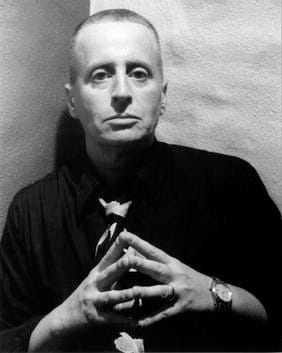
Indeed, in his discussion of the American labor movement after WWII, Dr. Lichtenstein doesn’t name a single Jewish, blue-collar militant, such as Leslie Feinberg (the author of the beloved classic Stone Butch Blues, recently honored for Pride Month by the Workers’ Circle). Feinberg, an ardent anti-Zionist, was a member of UAW and organizer with the AFL-CIO, albeit as a white-collar worker, and made much of her living by heavy-industrial work. No, rather than speak of rank-and-file Jewish militants like Feinberg, to maintain that "the entire American labor movement became more Jewish in the years after World War II," Dr. Lichtenstein conflates Zionism with Jewishness, and conflates union staff and leadership with worker power.
First, Dr. Lichtenstein states that “the big industrial unions, like the UAW and the Steelworkers, whose membership was almost entirely non-Jewish, became what I would call ‘soft Zionist’.” By this, Dr. Lichtenstein means the leaders of these unions (if not their members, such as Feinberg) “validated and celebrated the laborite character of Israel and in particular the power and influence of the Histadrut trade union center” (mind you, the Histadrut barred Arabs from membership until 1959, and from voting until 1965).
Second, in light of the overrepresentation of Jews in union staff and leadership roles, in this period, Dr. Lichtenstein assures us that the imperative to “build democratic rights and power for a multiethnic working class (...) was baked into their DNA.” On the other hand, the sole example of “in-your-face,” working-class activism Dr. Lichtenstein provides is that of a non-white, non-Jewish activist who has definitely fallen from grace: Cesar Chavez, a “charismatic” and “autocratic leader,” Dr. Lichtenstein writes, “hostile to the trade union idea itself.” Thus, Dr. Lichtenstein baits us with Jewish labor aristocracy, away from the rank-and-file, and from working class rule.
If it seemed strange that Dr. Lichtenstein neglected to mention Chavez’s record of sexual abuse (the subject of a March 2026 New York Times exposé that shocked the entire labor movement, and even the city governments and NGOs that had re-named streets and institutions in his honor), perhaps this is the explanation: while Dr. Lichtenstein’s theory is hostile to autocracy, it is broadly amenable to chauvinism.
Indeed, Dr. Lichtenstein’s theory has this in common, to a certain extent, with those of Bundist leaders Wiktor Alter and Henryk Ehrlich.
Like Dr. Lichtenstein, in the 1930s, Alter and Ehrlich theorized the socialist struggle, not as a working-class struggle (lead by the proletariat against the bourgeoisie), but as a popular struggle against authoritarian bureaucracy. It was along these lines, in 1938, that Alter compared the government of fascist Germany, not to that of fascist Poland (where “responsibility before God and history for the destinies of the State” was rested on president Ignacy Mościcki, “the one and indivisible authority”), nor to the Polish Kehillas (Jewish religious councils which “denied women and certain working-class Jews the right to vote,” as Zach Mojsze writes) but to that of the Soviet Union (where all political Parties were consolidated into the Communist Party, “the leading core of all organizations of the working people, both public and state”). Thus, Alter wrote:
“We had envisioned the society of the future as one of fraternal cooperation between the working class and the petty bourgeoisie — a condition necessary to ensure the bureaucracy remained subject and subordinate to the will of the masses. In the Soviet Union, the exact opposite has occurred. All power is concentrated in the hands of the leadership cadres — the bureaucracy.”
Never mind that these were leadership cadres of the working class!
In this same text, Alter clearly stated that “there is no fundamental, direct economic conflict between the proletariat and the petty bourgeoisie.” In 1937 Henryk Erlich made much the same concession, though he traded Alter’s clear indication of the petty bourgeoisie for an abstruse reference to the “large mass of the lower middle-class people in city and country.” In Erlich’s view, there were “no contradictions whatever between the interests of this mass and the interests of the working class.”
What, to Erlich, was the basis for this program of class collaboration? A community rooted in Polish soil. Thus he calls the Jewish people of Poland, to “a community of struggle with the working class, in struggle here on the ground where you live and where your fathers and grandfathers lived.” Despite his proclamations against Polish fascism, and “against one’s own and foreign nationalism,” Erlich’s notion of a community of struggle, premised as it was on "civic feeling,” on "consciousness of duty" to the Second Polish Republic; rooted, as it was, in “Polish” soil, was nevertheless based in bourgeois nationalism.
Similarly, Alter theorized that the “society of the future” was destined to emerge from existing bourgeois democratic states. In Alter’s formulation, this “society of the future” would emanate the “civic coexistence of all nationalities in Poland and the world” that Erlich’s manifesto had proclaimed.
To the contrary, we must insist, after Marx, that the proletariat is the unique and the only class that “postulates the abolition of the old form of society in its entirety and of domination itself.” This is not the postulate of Jewish labor lawyers, as Dr. Lichtenstein supposes, with their social democratic “DNA.” Nor is it the postulate of native Europeans, or of any other super human(itarian) group. Nor, then, was it the postulate of the U.S.A., that multicultural “new homeland of so many Eastern European immigrants,” as Dr. Lichtenstein calls it.
“I know that some of you,” Aime Cesare wrote, in 1950, “disgusted with Europe, with all that hideous mess which you did not witness by choice, are turning – oh! in no great numbers – toward America and getting used to looking upon that country as a possible liberator.” No, “it is a new society that we must create,” Cesare wrote, “with the help of all our brother slaves, a society rich with all the productive power of modern times, warm with all the fraternity of olden days.”
“For some examples showing that this is possible,” Cesare continued, “we can look to the Soviet Union.”
II. The Jewish Labor Committee and the united front
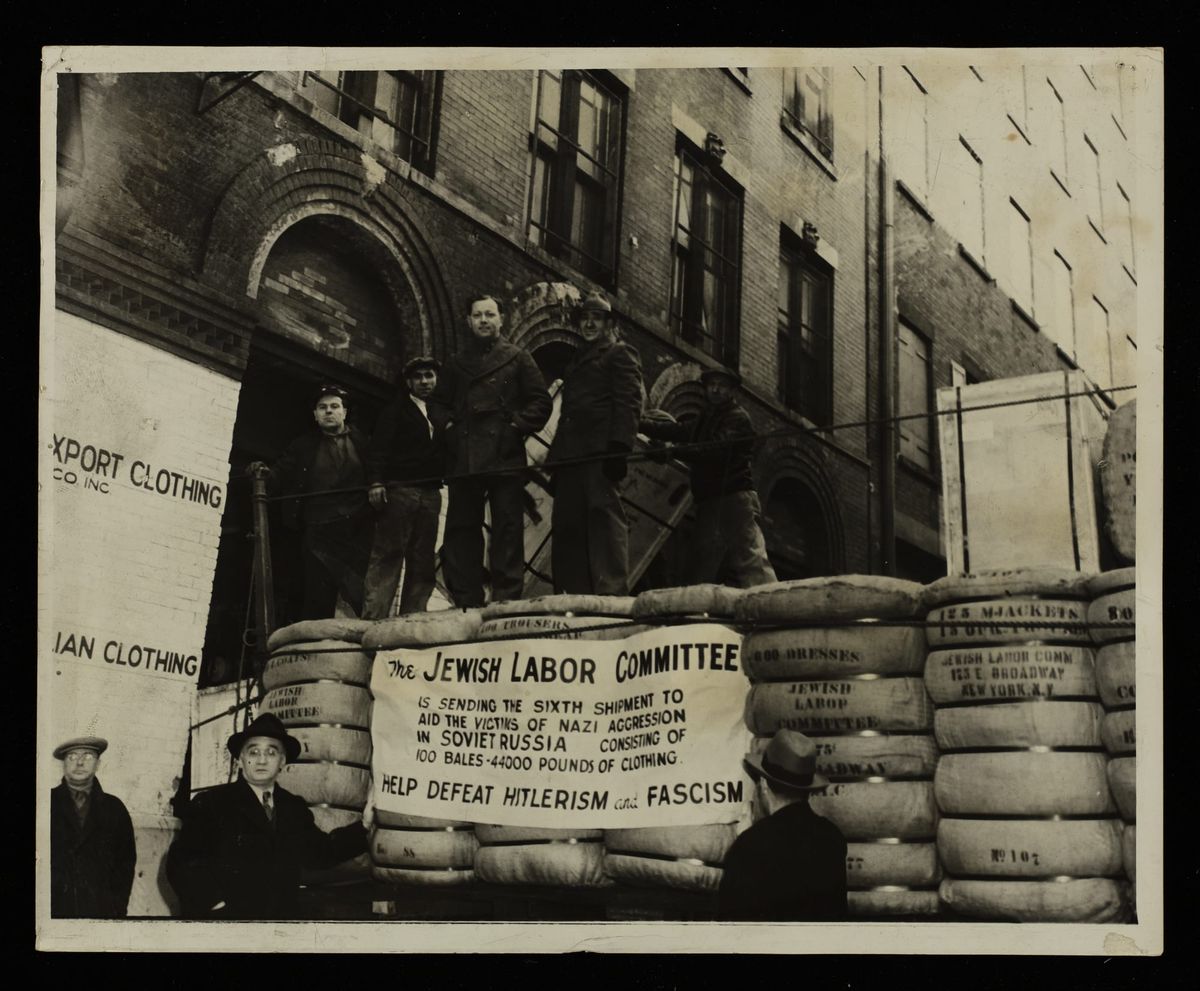
Turning, now, to the Jewish Labor Committee (JLC), I propose we study the early history of that organization. Founded in 1934, the JLC accomplished a great deal in its first decade to aid the victims of fascism in Europe. After the fall of Poland and the U.S.’s entry into WWII, the JLC even worked illicitly to fund anti-fascist partisan and resistance forces, including those of the Warsaw Ghetto. Although the errors of today’s JLC are more glaring, I find the more basic errors of the JLC — those manifest even in its first phase — are those to which the IJLB is prone today. Namely, although the IJLB is resolutely opposed to Zionism, it is prone to the bourgeois nationalist and anti-communist errors of its forebears, and of the JLC.
What does Dr. Lichtenstein have to say about the founders of the JLC? That these men found themselves at odds with the “older and more prosperous generation of German Jews.” Not so much because they were workers, but because they were Eastern European immigrants.
“Unlike the German Jewish bourgeoisie,” Dr. Lichtenstein writes, “which was often fearful that the advancement of a distinctly Jewish cultural and political outlook might spark an antisemitic response, the Eastern European Jews were far more outspoken.” Apart from the cultural nationalist dross, Dr. Lichtenstein’s analysis is correct: the Jewish bourgeoisie — like any bourgeoisie — tends to complacency and assimilation.
Did the Jewish bourgeoisie fear “the advancement of a distinctly Jewish cultural and political outlook?” Indeed, it opposed the cultural advancement and distinct political outlook of every national minority group. To that end, it broadly opposed immigration, including Jewish immigration (as distinguished from Jewish colonization in Palestine).
It was thus in the late 1930s that Rabbi Stephen Wise wrote U.S. Congressman Donald L. O'Toole, on behalf of “representatives of all the leading Jewish organizations” in the U.S., to oppose “a bill which would in any way alter the present immigration laws.” He wrote:
“I have every reason to believe, unfortunately, that any effort that is made at this time to waive the immigration laws, however humanitarian the purpose, will result in serious accentuation of what we know to be a rising wave of anti-Semitic feeling in this country.”
“Strange as it may seem, in capitalist society even the working class can carry on a bourgeois policy,” Lenin once wrote, in reference to Samuel Gompers, president of the American Federation of Labor (AFL). Indeed, Gompers, a Jewish immigrant to the United States from Britain, consistently opposed immigration at least as virulently as the bourgeoisie. Thus, in 1918, he wrote:
“The population of this country consists of many and diverse nationalities. So strong and so rapid has been the current of immigration that there has not been opportunity for the amalgamation nor for the assimilation of these conflicting elements into a nation with common language, ideals, standards of living and customs. America has been termed a ‘melting pot,’ but the influx of elements has been so rapid that the refining fire of common experience and endeavor has not yet melted away affiliations to the Fatherland nor brought about a homogeneous group which could be called a nation. Indeed, it is now but in the making. There exist throughout the country, particularly in large cities, Russian settlements, Polish settlements, Lithuanian settlements, etc., which are really transplanted colonies from the ‘old country’ little changed by American life and experience. Before the war broke out we began to realize that the number of foreign immigrants within the United States had passed the point at which they could be safely assimilated. For that reason immigration legislation was sought and secured.”
What was the main difference between the JLC and the bourgeoisie ideologues, such as these, who were its colleagues in the American Jewish Congress (AJC)? As compared to Gompers and Wise, who insisted openly on the cultural integrity of the United States, the JLC insisted on its economic and political integrity. Much as the Jewish Labor Bund saw Poland, the JLC saw the U.S. as a bastion of National Cultural Autonomy, a program premised on the mistaken belief that national cultures can be extricated from structures of political and economic power.
Thus, the JLC itself was “fearful that the advancement of a distinctly Jewish cultural and political outlook might spark an antisemitic response,” as Dr. Lichtenstein writes of the German Jewish bourgeoisie, though the JLC put the emphasis on politics. It was thus that Baruch Charney Vladeck, founding President of the JLC, wrote in the "Forverts" (June 26, 1937):
“In the old days, when there was still such a thing as a ‘global conscience,’ when there was such a thing as a ‘world opinion,’ and we would cry: ‘wolf! Wolf’ when our enemies would attack us – back then it could help. But ‘global conscience’ is dead today, and the more we cry: ‘wolf! Wolf!’ the more the world reckons that the wolf must be right, if it wants to eat [those people] everywhere [they go].”
Prior to the fall of Poland and the United States’ entry into WWII, anti-fascist mass mobilization in the U.S. and Poland was largely motivated against the bulwark of those states, and against the fascist forces that they armed and sanctioned. Crucially, in the United States this included mass mobilization, in the 1930s, against the rash of anti-Black terrorism, disenfranchisement, and Jim Crow that was part and parcel of the fascist movement. Nevertheless, the JLC, committed as it was to the economic and political integrity of the United States, limited its efforts in the field of mass-mobilization to demanding U.S. legal intervention in Poland. (After WWI, Poland had adopted a system of minority rights only under pressure of the prevailing Allied powers — the U.S.A, Britain, Italy, and France — who did relatively little after that point to ensure those rights were upheld.) Failing that, the JLC focused even more narrowly on condemning and boycotting Nazi Germany.
Having severely restricted its anti-fascist analysis and strategy, the JLC conceded that united and mass action on that front was futile. Thus Vladeck continued to write (Forverts, June 26, 1937) that political delegations, mass meetings, and loud demonstrations would do as little to beat Hitler as camphor had done to beat the Flu. “The average Jew doesn’t have much time to study the matter; to understand it and draw the necessary conclusions," Vladeck wrote. All the average Jew really wants is “something to do.” From there, Vladeck decided that the anti-fascist masses in Poland, much like the aimless, so-called “average Jews” in the United States, though worthy of “spiritual” and “moral” support, were simply too "disorganized" to warrant political and material support from the JLC.
To be honest, Vladeck could have clarified that these anti-fascist masses were “disorganized” exactly by the bourgeoisie. Indeed, in this period many mis-leaders and mis-managers of the labor movement themselves had become “enmeshed” (to borrow Dr. Lichtenstein’s term) with bourgeois states ( in the context of the United States’s New Deal, and the Polish Sanitation, e.g.).
In that vein, the JLC and its allies focused a great deal of energy on opposing communism, among other movements opposed to bourgeois state power. Thus, in the October 1935 issue of the "Brooklyn Jewish Center Review," Vladeck, writing on behalf of the JLC, joined representatives of the American Jewish Committee and the B’nai B’rith to denounce Jewish involvement in communism, and to assert that
“Those who have even an elementary acquaintance with the traditions cherished by our people during the two thousand years since the destruction of the Jewish state know that complete and unequivocal loyalty to the country of one's citizenship is a basic principle of Jewish life.”
Thus Samuel Margoshes, founder of the AJC and editor of Der Tog, wrote in that paper, regarding a protest against Polish fascism and the institution of ghetto benches:
"There is no doubt about it, that the picketing of the Polish Embassy in Washington by a thousand delegates of the Jewish Peoples Committee will be regarded by your government as well as by the American people as nothing but a ‘nuisance’ caused by Jews. This attempt must be smashed and as vigorously as possible, and if necessary with the police."
Founded in 1936, the same year as the JLC, the Jewish People’s Committee (JPC) was dedicated to mass mobilization along the lines of an anti-fascist, anti-imperialist united front (i.e., behind the vanguard of the working class, and against the bulwark of bourgeois state power). At least for the few years before Browderism took hold of the communist movement in the United States, the JPC militated against fascist forces that groups like the JLC ignored, either because those forces were directed against communism, or because they were otherwise integral to US American, Polish, and Zionist power. For example, the Jewish People’s Committee consistently included the release of the Scottsboro Boys and Ernst Thaelmann among its demands, and called for Jewish unity with the Palestinian struggle against the British Empire.
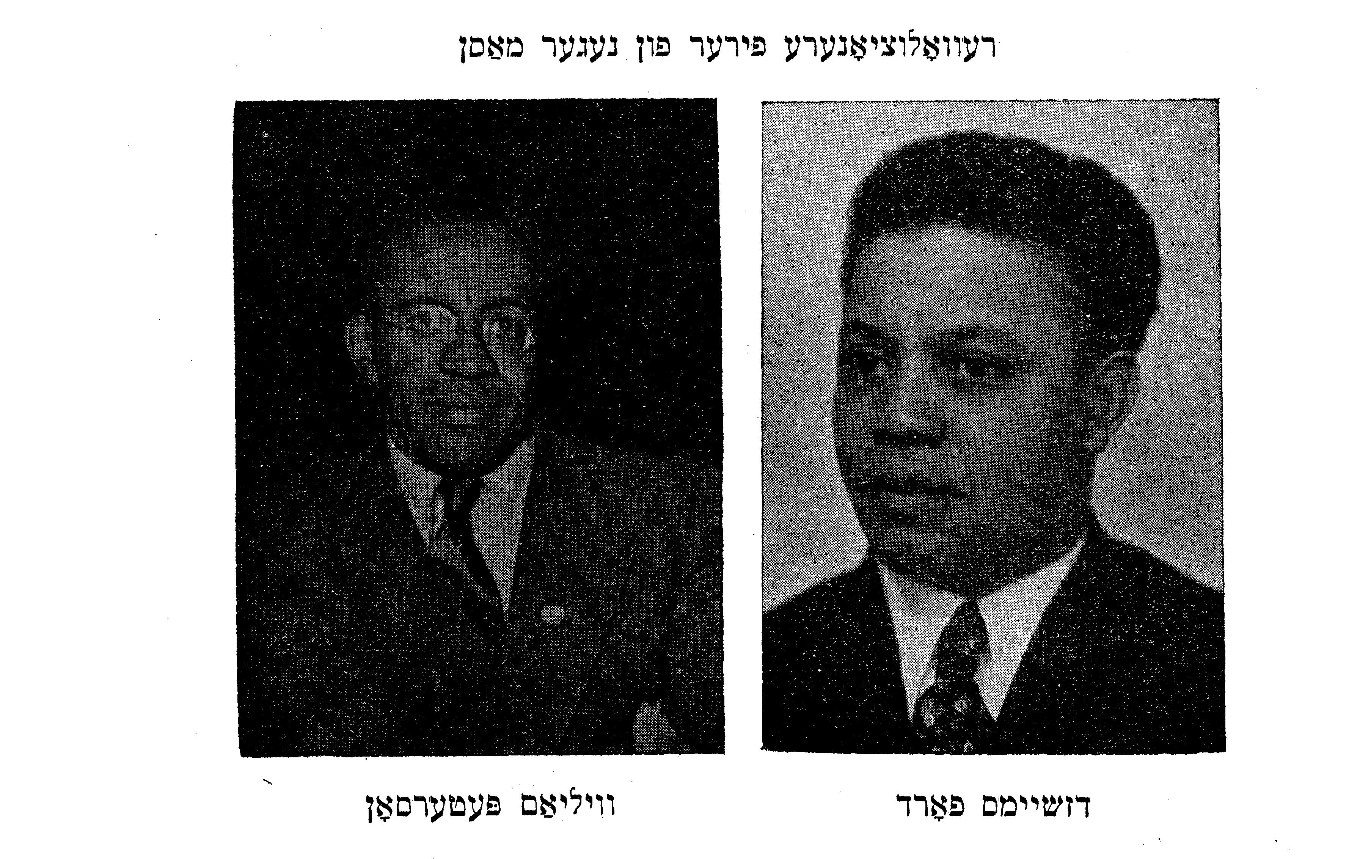
It was in this spirit that James W. Ford wrote that “the struggle against anti-Semitism (...) is the task not only of the Jews but of all progressives, of everyone interested in the defeat of fascism, first and foremost the working class.” Thus Ford asserted that “the defeat of anti Semitism requires the unification of all the progressive forces among the Jewish people, and their alliance with all the forces within the camp of progress, particularly the Negro people.” Further, Ford asserted that Jewish immigration to Palestine could “be carried out only on the basis of a program of equal participation of Arabs and Jewish people, struggle against the penetration of fascist propaganda, the struggle for democratization against the British Tory policy of ‘Divide the Rule’."
Accordingly, the Palestine Communist Party declared, in 1936, in the context of “a Jim-Crow policy on Arab labor (...) similar to that of Jim-Crow policies on the Negro worker in America” that:
"while forming an Arab Peoples' national front against imperialism and Zionism, the party must work actively among the Jewish toiling masses in order to liberate them from the influence of the counter-revolutionary party of the Jewish Zionist capitalists, to draw the toiling Jews into the national emancipation struggle of the Arab masses"
Beyond simply criticizing their united front strategy, the JLC actually organized a boycott of the JPC in cahoots with the World Jewish Congress, the AJC, and the B'nei Brith. Indeed, the JLC, with its roots in the Jewish labor movement, was opportunely positioned to justify and enforce this boycott on the pretense of communist participation in the JPC. However, we must understand clearly that the bourgeois rage against communism is based, not only in the communists’ insistence on worker rule, but on the communists’ unity with the Black and Palestinian masses, among other masses struggling against fascism and imperialism for liberation. It was thus that men like Margoshes endeavored to “have the breach healed” between the openly fascist Revisionist Zionists and the AJC, even as they put the JPC in a cherem.
In the 1930s, these anti-imperialist masses included the peoples of China, Ethiopia, and Spain, who were uniting against fascist and imperialist takeover, and were drawing international volunteers into their ranks. In the 1930s, the time had come for the united front to “rally those vacillating elements (...) which always follow the strongest impulse, and which always look out for the safer side,” as Engels wrote on the art of insurrection. Surely these “vacillating elements” included the “average Jews” so disparaged by Vladeck, waiting, just itching for “something to do.” Among these were “physicians, journalists, lawyers, academics, and cultural workers,” as Dr. Lichtenstein writes, who in the 1930s as today were “subject to exploitation, precarity and all the deformities characteristic of an unfettered capitalism.” It was the task, not only of the communists, but of the JLC and of all progressive forces to unite these masses, and thus as Erlich wrote to “struggle against the despair and alienation from local (...) life which Zionism, strengthened by the seductive Balfour Declaration and the work of the (...) anti-Semites, sowed among the Jewish masses.”
I disagree with Dr. Lichtenstein, in this context, that these masses were “proletarianized.” Rather, they were faced with a dilemma: join the revolutionary united front, or fall in with the fascists? As it turned out, thousands aided the revolutionary forces of the Soviet Union, and even those of China. Others joined the International Brigades in Spain, or fought as anti-fascist partisans throughout Europe. Others joined the bourgeois nationalist forces of the United States and the Zionists, among others, often with naive intentions and to disastrous ends. At great personal and political risk, some nevertheless fought the fascist tendencies within these forces from the very minute that they emerged.
“The average Jew doesn’t have much time to study the matter; to understand it and draw the necessary conclusions," Vladeck wrote in the Forverts (June 26, 1937), as quoted above. All the average Jew really wants is “something to do.” Indeed, it is imperative to act. But it is also imperative that we “average Jews” — we who witness anti-fascist and anti-imperialist struggle from “afar,” as if it was not always already our struggle — “study the matter.” We must study the matter, never as an excuse to hesitate, but exactly “to understand it and draw the necessary conclusions.”
“We must point out that two of John Brown's closest associates were Jews,” James W. Ford wrote, in the above-cited piece. These were “average Jews.” Petty-bourgeois. They were not proletarianized– but revolutionized. It is thus today, as it was then, that support for Palestinian liberation and other national liberation struggles was not merely an effect, as Dr. Lichtenstein presumes, but the very engine and cause of this process.
But aren’t they pretentious, they who theorize with no intent to act? Aren’t they reckless, they who act and never stop to think? Maybe so. Thus “what is required is definitely the reverse – honesty and modesty”:
“If you want knowledge, you must take part in the practice of changing reality. If you want to know the taste of a pear, you must change the pear by eating it yourself. (...) If you want to know the theory and methods of revolution, you must take part in revolution.”