Bikherdik B-tch: How Judaism Became A Religion

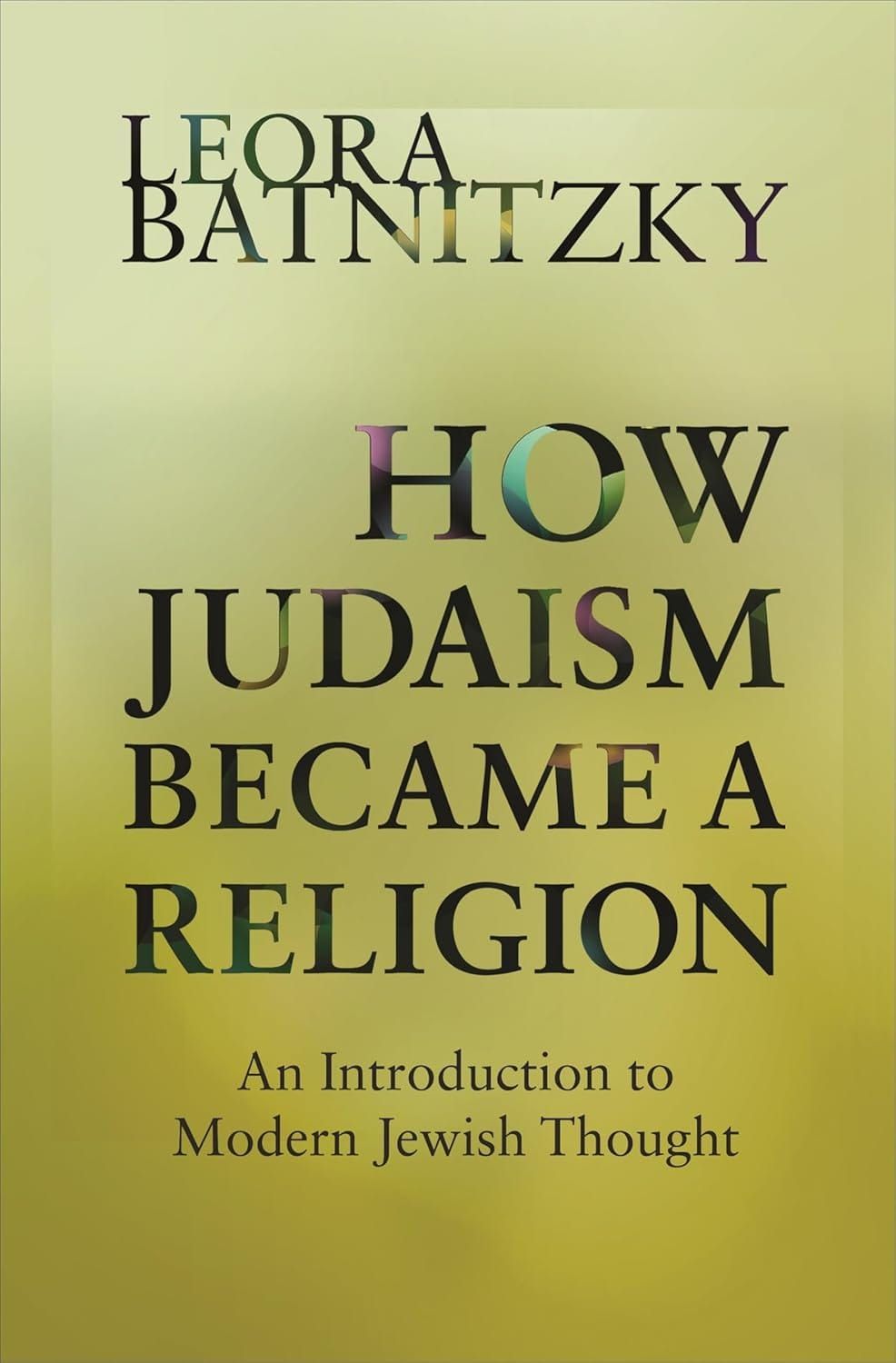
"Has Judaism not always been a religion?" you may be wondering. And yes, in today's parlance, we can easily say that Judaism has been, since its inception, some kind of religion. It has included a centrally faith-based worldview and belief in ritual, higher power, and other traits that are typical of today's "religions." Whether we look at stories from the Torah itself of Abraham, Isaac, Jacob and their descendants or at secular sociology, we understand this to be the case.
Religion is, however, a discourse — just like everything that exists intellectually. The connotations and contexts of what "religion" means change with the winds of time and all of its material and immaterial circumstances. In her book "How Judaism Became a Religion," (2013) Leora Batnitzky cunningly elucidates this point:
"Prior to modernity, which I will define in the pages that follow as the acquisition of citizenship rights for Jews, Judaism was not a religion, and Jewishness was not a matter of culture or nationality. Rather, Judaism and Jewishness were all these at once: religion, culture, and nationality."
In our modern times, the model of nation-state citizenship accounts for the majority of individuals in existence. What came beforehand is hard for the modern brain to conceptualize. The circumstances of low human mobility and slow communications meant that most communities evolved for the longest time in a relatively intense isolation that the modern doomscroller cannot imagine.
As Batnitzky notes, "While a local Jewish community's existence depended on the whims of others, premodern Jewish communities also had a tremendous amount of political autonomy. Jewish communities were self-governing, and each community had its own set of bylaws administered by laypersons." Indeed, all communities lived much more "autonomously," which might make the modern leftist salivate (and no doubt there is inspiration to take from this, which I will touch on).
The reality directly before the modern era, however, was a state of feudal gangsterism. As with any era of history, this included societal breakdowns, holocausts, ruptures, as well as long periods of stability and peace depending on where you were. It was oftentimes a stable feudal relationship of unaccountable taxation and being left alone, which I liken to a mafia movie — paying extortionate "protection money" (il pizzo) to your local mobster for the "security" of being left the fuck alone.
But back to the discourse of religion. When modern times come around, the legal individual starts to slowly get carved out as a reality (as slow as universal suffrage drags its feet). With that, "Judaism" and "Jewishness" are no longer an all-encompassing existence including nationhood, religion and culture, but three modalities you can increasingly "opt in and out" of as individual rights strengthen.
Some Jews move to urban centers, assimilating completely to secular society while retaining a sense of Jewish culture. Some Jews might relinquish the idea of Jewish culture or nationhood while retaining religion such as the many manifestations of "Crypto-Jews" who retained much Jewish ritual while often renouncing Jewish self-identification for their own safety. Some Jews, prominently certain facets of the modern Zionist movement, might have no association with Jewish religion or culture (as Theodor Herzl largely lacked) but see the importance of Jewish affinity and nationhood.
In describing this change, much of the book focuses on intellectual discourse. I personally find this much less interesting than the sociological descriptions often provided, but nonetheless there is much to be gained from Batnitzky's argument that so much of our idea of things "being religions" comes from a framing based on German Protestantism. She spends adequate time in debate with the father of the haskalah (Jewish enlightenment), Moses Mendelssohn, who popularized the intellectual notion that Judaism was a "religion" specifically.
While I find it an unwieldy question to answer in any analytically satisfying way what makes Judaism a definite "religion," the back and forth between Batnitzky and Mendelssohn spells out an important way that Judaism has interacted with Christian hegemony. Much of Mendelssohn's description of Judaism as a religion was fixated on distinguishing it from Christian religious hegemony: "Among the inscriptions and ordinances of the Mosaic law, there is not a single one which says: You shall believe or not believe. They all say: You shall do or not do," says Mendelssohn. Batnitzky, summarizing Mendelssohn, says "Judaism is distinct from and not a threat to universal truth, just as Judaism — and indeed Jewish law — is distinct from and not a threat to state law."
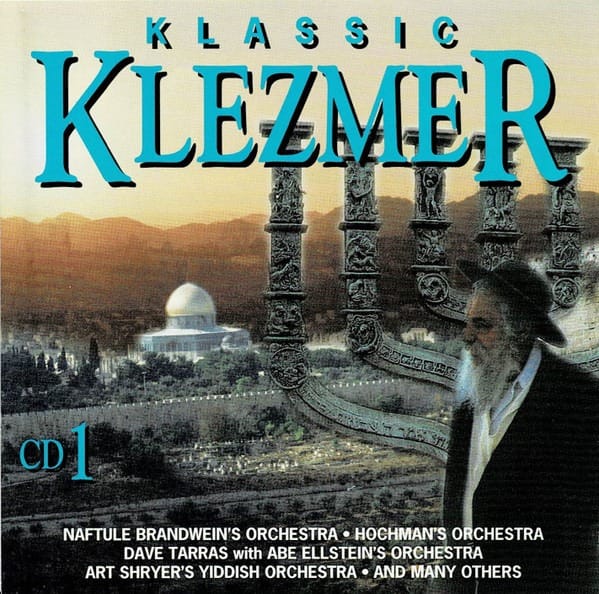
While I won’t go more into the weeds of the discursive definition of Judaism, the point I want to make is that we need to think critically about what our conception of Jewish affinity is in dialogue with and reacting to. This is a realm of thought and identity that so easily falls prey to myth, ahistoricity, as biased by our deepest yearnings, nostalgias and anxious sensitivities. A prime example of this is the modern secular view of Hasidism. As Batnitzky points out, "Hasidim today are often seen (and also present themselves) as icons of Jewish traditionalism and authenticity." The conformist fashion, insularity and conservatism imply a brutally simple notion of traditionalism. It doesn't help that some of the kitschiest Jewish tchotchkes and memorabilia adored by secular Jews feature Hasidim prominently as minstrelized icons of authenticity despite secular Jews generally having little to no access to understanding Hasidic life.
As Batnitzky points out in discussing why the misnagdim (a movement of religious Jews who largely opposed Hasidic thought) were detractors of Hasidism, "Hasidism stressed ecstatic religiosity and communion with God, and not Torah study. While the Baal Shem Tov did not reject the authority of Jewish law, he nonetheless de-emphasized concern with both the minutia of Jewish law and its theoretical study. In this way, Hasidism broke down the distinction between the elite and the masses." There was something revolutionarily individualistic, anti-authoritarian and populist about Hasidism at the time of its founding and it was an affinity that probably could not have coalesced in that isolated premodern world we discussed initially.
Some of the juiciest parts of this book for my money and for a Der Spekter reader might be the descriptions of yiddishkayt and the Zionist movement. I'll leave you all with some tantalizing implications so you might look into this book too. The way Batnitzky describes Yiddish culture and literature in particular is as a sort of OG social media, a vernacular popular form that was more widely accessible and engaged larger more expansive communities across class and location than had occurred before. Batnitzky's analysis of Herzl and the Zionist movement is both damning and near completely devoid of ideological bias in its rigorously honest analysis of the political and economic forces that brought Zionism to the forefront of Jewish life. This is sorely needed in a Jewish world that largely tries to gaslight us and provokes our charged reactions to the idea that Zionism is some kind of supernal norm that must be accepted without thought.
Books like "How Judaism Became a Religion" can be dry. And much of the book is, to be honest. But sifting through them can offer a lot of insight into the many conditions, circumstances, and cycles of action and reaction which brought Judaism to where it is today. This will allow you not just to break out of the cage that is growing up in the system of nation-states, but also to clarify your values and deconstruct the version of Judaism you've been taught. This way you can make Judaism what it needs to be for you and your community.
Album pairing — "Far" by Regina Spektor

It is always with a heavy heart that I recommend Regina Spektor's music to people. Her music holds deep meaning to me personally. It singularly helped me understand my feminine identity when I came out as trans and remains some of the only music with infinite replay value that helps me through hard times. I do not exaggerate when I say that her staunch liberal Zionist beliefs are one of the biggest disappointments in my life. It is my main willful BDS transgression, as her music has radicalized the nuance and emotion through which I see life and understand myself.
I've listened to Spektor's catalog far more than any other musician. Her discography is something of a Talmud of modern life for me. I have particular feelings about many albums and records, but I always find myself returning to the album "Far" from 2009 for emotional and spiritual grounding. The intimate angst, sentimentality and contemplatively existential qualities of the tracks on the album have brought me something new to interrogate or cry about on every listen. Just as an analysis like Batnitzky's helps me peel back the layers of history and discourse towards a greater truth does Spektor's poetic music help me peel back the layers of emotion and perception. Both make existence more complicated and beautiful to wrestle with in terror and awe.
The song "Laughing With" (2009) provides such a direct and irreverently heterodox take on religious belief, one that I have long theorized was a response to the reactionary New Atheism that was so trendy in the 2000s. "Blue Lips" (which I wrote my senior thesis on in college, by the way) to my ears is a parable of the false promises for spiritual transcendence provided by American capitalist yearning. Other tracks like "Machine" prophesize techno-dystopian futures, while a majority including "Wallet," "Genius Next Door," "Folding Chair," and "The Calculation" draw the deeper meanings out of the interpersonal and intimately communal aspects of life.