
Acknowledgement Without Accountability: Why San Francisco Progressives Are Right to Reject Scott Wiener
As some U.S. Democrats pivot on Palestine, San Francisco’s Congressional race shows why winning progressives’ trust requires more than empty gestures

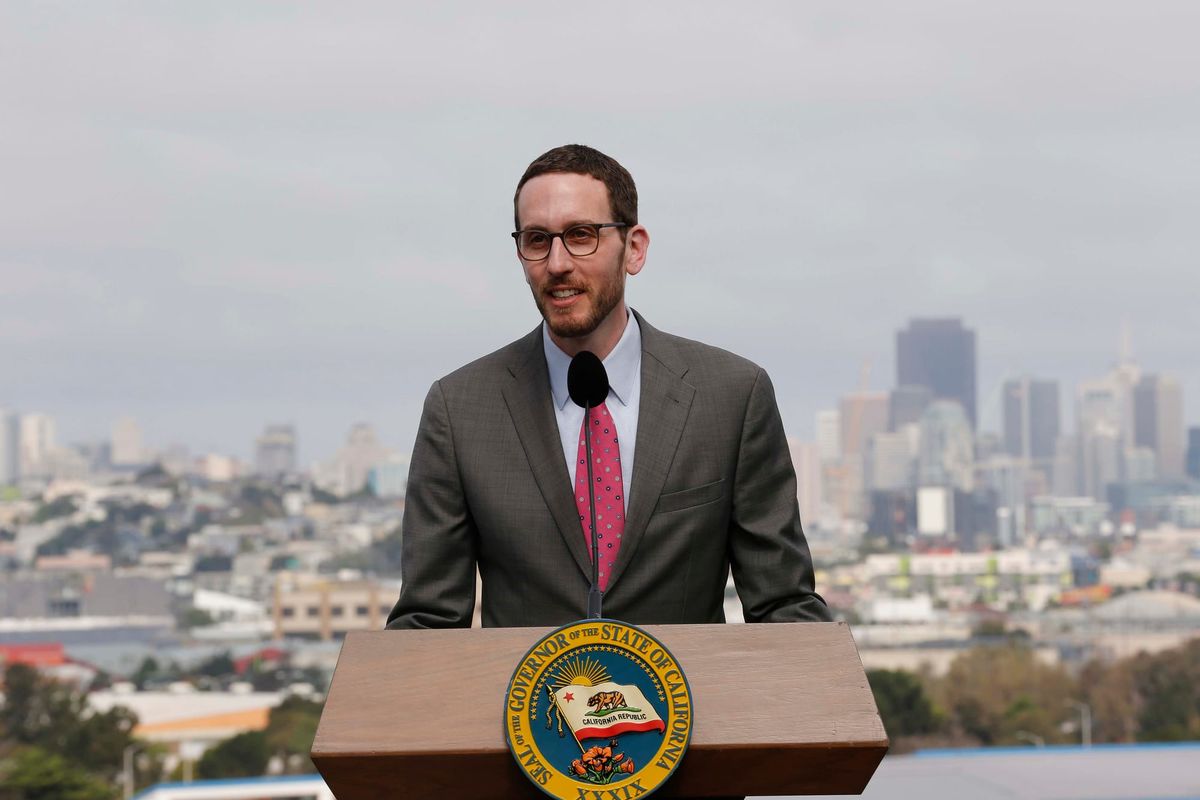
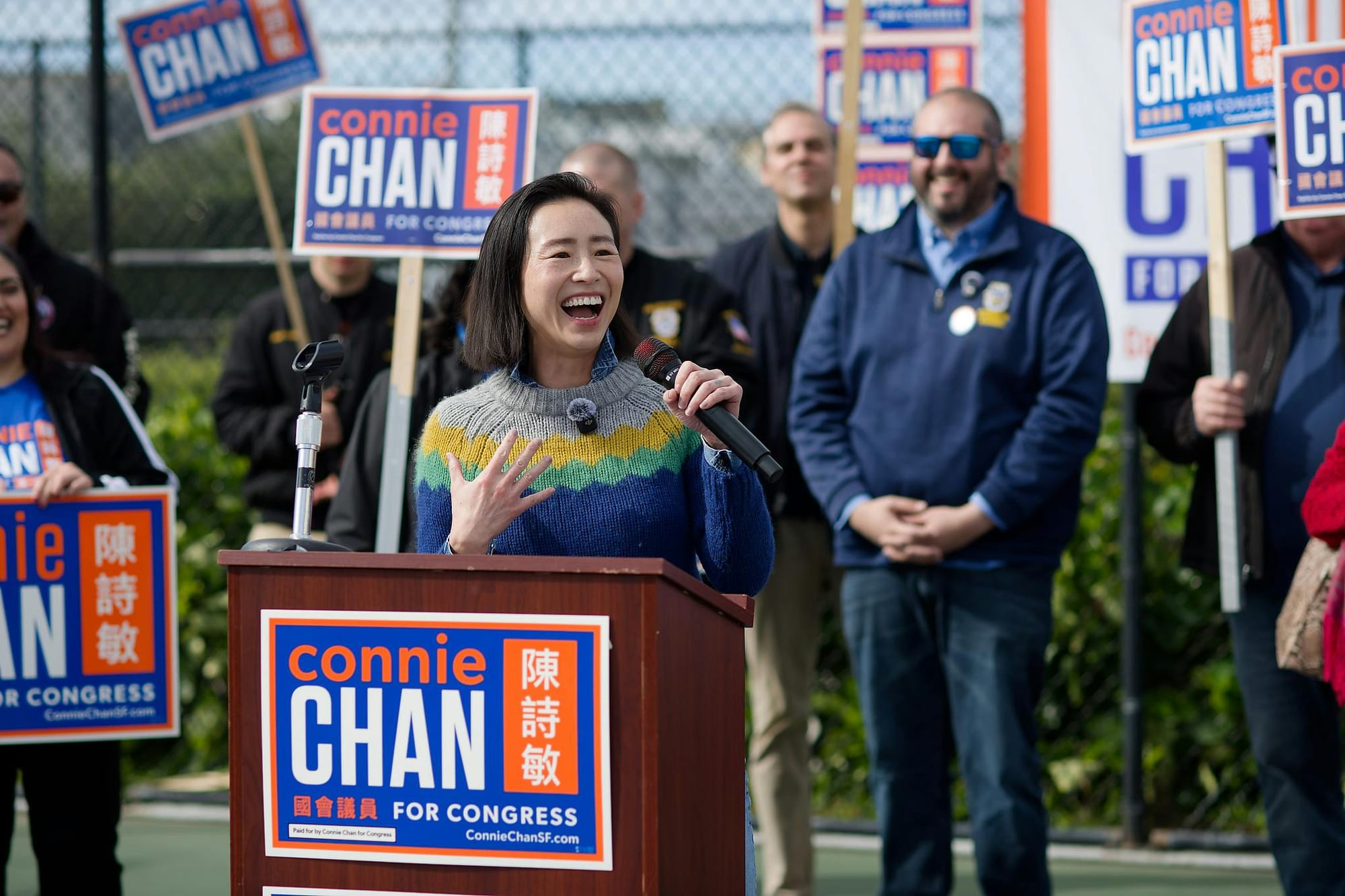
The Congressional race to succeed House Speaker Emerita Nancy Pelosi is a microcosm of the debates roiling the Democratic Party, particularly on Israel. The race pits California State Senator Scott Wiener and his coalition of tech executives, venture capitalists, real estate interests, and liberal Zionists against Chan’s supporters from nearly the whole of organized labor, housing justice organizers, San Francisco’s Chinese-American community, and the pro-Palestine movement. How Jews of conscience, and indeed all who have been incensed by the Democrats’ approach to Israel-Palestine, respond to this race will have implications for years to come.
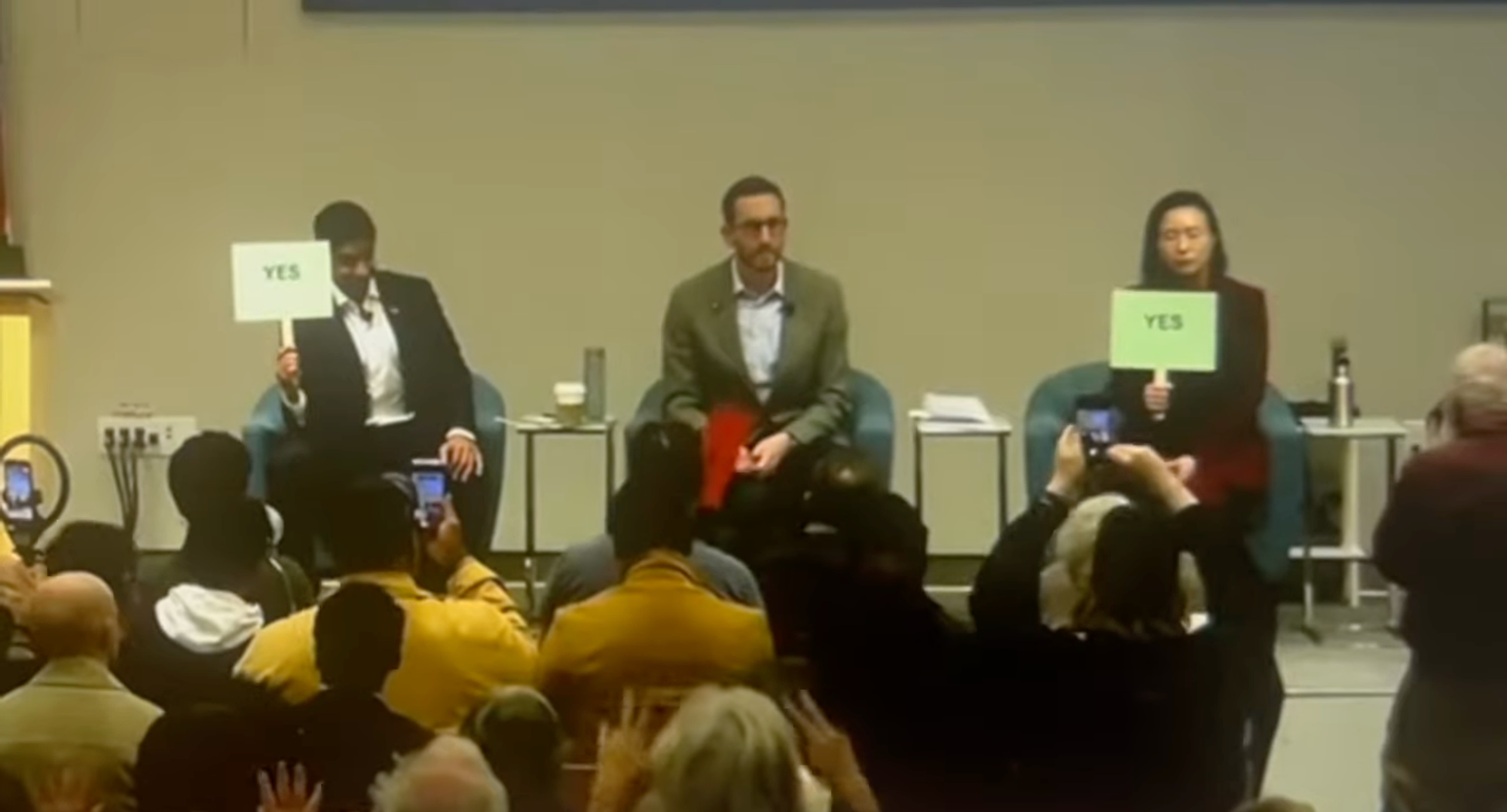
At this point in the race, Wiener appears to be in the driver’s seat. In March 2026, he came in first in a contested top-two primary with about 40 percent of the vote, besting Chan by 10 percent. The most recent poll put him about 5 points ahead of Chan. Wiener’s steadfast defense of Israel’s assault on Gaza, opposition to anti-war protesters, and weaponization of antisemitism have become principal campaign issues, particularly after a widely mocked and condemned moment on the primary debate stage in January this year in which Wiener refused to answer a question about whether Israel was committing genocide in Gaza, instead sheepishly twirling his YES/NO sign. Several days later, Wiener reversed his previous course on the issue in an X post: "I’ve stopped short of calling it genocide," Wiener wrote, "but I can’t anymore."
Last week, Jewish Currents’ Alex Kane wrote about Wiener’s “evolution” on Israel-Palestine. Kane framed the issue of one tactical relationship building: “The risk for local groups that lean left on foreign policy,” Kane wrote, “is that continuing to oppose Wiener could leave them without someone in Congress they can talk to should he win his race.” While Wiener’s newfound position may not be satisfying to the “activist flank,” Kane argued, it should be enough for progressive voters despite his “past transgressions.” In order to defend Wiener, Kane had to euphemize his actions, ignore his past statements, obscure the backgrounds of his supporters, and simply leave out key facts.
By pulling his punches, Kane failed to get at the heart of the issue: As a state senator, Wiener passed laws in direct opposition to a youth-led American anti-war movement that enabled a genocide, funded and diplomatically enabled by American power and a Democratic president. The resulting distrust carries over to issues beyond Israel-Palestine.
Members of Congress don’t simply opine on foreign policy and nibble around its edges. By rising to federal office, Wiener will have the opportunity to set its direction. The prospect of Democratic control of the next Congress and possibly also the presidency makes his ascension all the more consequential. Wiener himself has justified his pivot on Palestine by arguing that “the word ‘genocide’ has moved beyond just being a straight-up legal term,” as he told Jewish Weekly, rather than an objective description of Israel’s actions as acknowledged by international bodies like the United Nations.
For San Francisco progressives committed to a just foreign policy, the true reason behind Wiener’s shift appears clear: it is now more politically acceptable among Democrats than ever before to condemn Israel’s assault as genocide, a stance made all the more welcome thanks to President Donald Trump’s belligerent actions in the Middle East. That Wiener remains willing to sell defensive weapons to the Israeli state — which is continuing its genocidal actions in Gaza and the West Bank — only further casts doubt on his sincerity and raises more questions than it answers.
Since his acknowledgement of the genocide in January, it appears the only real public consequence against Wiener’s tactical pivot has been his formal ostracization from institutional Jewish politics. Wiener himself resigned from the Legislative Jewish Caucus, and some of his Jewish supporters have backed out of fundraising events. But he continues to receive the support of the pro-Israel community, and his supporters are open about the cynicism of the move. Tye Gregory, CEO of the Jewish Community Relations Council Bay Area, said it plainly: “The ways in which the legal definition of genocide has been ignored to fit the description of what’s happening in Gaza is offensive and wrong, and unfortunately, he senator knows better, and he felt like he had to do this for his campaign.”
Wiener has, however, studiously avoided discussing his decision since his announcement with the exception of a friendly interview with the Jewish News of Northern California. In addition to refusing an interview for Kane’s article, Wiener also cancelled a podcast appearance with Jewish Currents’ own Peter Beinart — perhaps the most sympathetic Jewish non-Zionist one could ask for in an interviewer — after being chased from San Francisco’s Trans March by attendees who objected to his pro-Israel actions and pro-real estate industry advocacy.
Very disappointed that @Scott_Wiener cancelled our interview. I had hoped to give him what the hecklers at the Trans march didn't: The chance to thoughtfully answer people critical of his views on Israel-Palestine. On an issue this weighty, avoiding hard questions isn't good…
— Peter Beinart (@PeterBeinart) July 7, 2026
Wiener’s attacks on the livelihoods of genocide opponents and interventions throughout California’s educational system are quickly glossed over. The Senator’s co-authorship of AB715, described by Kane as merely a “controversial California bill aimed at combating antisemitism in the classroom,” elided that this new law didn’t just "risk censoring discussions of Palestine in the education system," but created a bureaucracy to silence educators and create opportunities for Zionist lawfare that has already been taken up by deep-pocketed plaintiffs. Wiener didn't just "criticize" Sonoma State's president, as Kane writes; his public pushback helped bring about his dismissal. Wiener also condemned anti-war protests across the University of California and California State University systems, leveling broad charges of antisemitism while turning a blind eye to attacks on anti-war students. In another instance, when Dr. Rupa Marya, a world-renowned physician, raised questions of Zionism’s structural impact on health equity in light of Israel’s destruction of Gaza’s health care system, Wiener allegedly coordinated with her employer, the University of California San Francisco, to have her fired. UCSF has also allegedly targeted other medical professionals for their anti-genocide activism.
Wiener’s longstanding relationships with AIPAC leaders and the Israel lobby in general get a gauzy treatment in Kane’s article. He quotes a J Street spokesperson who states that “Scott has never been supported by AIPAC.” Although narrowly accurate, Wiener defended his relationship with the pro-Israel group way back in 2015. Furthermore, parsing this statement requires one to know that AIPAC does not typically involve itself in non-Federal races, instead mobilizing its donors to give directly to favored candidates. Sam Lauter, a board member of the Democratic Majority for Israel and a long-time San Francisco public affairs operative, is quoted describing Wiener as “a passionate Zionist,” was AIPAC Board Chair from 2008 to 2010, and donated to Wiener’s local campaign at that time, as did a number of employees at his firm.
What ultimately leaves the impression of uncertainty for wavering progressives in Kane’s narrative is the absence of Jewish anti-Zionist labor voices who are choosing Chan over Wiener. Unions have gone all-in on Chan’s campaign. Her history fighting against austerity budgets that harm working San Franciscans, support for tenant rights and affordable housing, and unwavering support of the immigrant communities from which she herself hails offers a deep reservoir of trust. On Israel-Palestine, Chan proved her bonafides when she bucked political pressure in a district with a large population of pro-Israel ex-Soviet Jews and conservative voters in the middle of a tight re-election campaign, while Wiener rallied against a municipal ceasefire resolution alongside pro-Israel advocates in December 2023. Chan has continued standing with Palestinians throughout her campaign.
The “activist flank” does not trust Scott Wiener because he has demonstrated that he is a politician who cannot be trusted. Israel-Palestine is only one of several examples of the disingenuousness many see across Wiener’s career.
After the George Floyd uprisings in 2020, Wiener made a performative show of rejecting direct police contributions, but now meets with police unions to express his support for their carceral agenda. He talks a big game about tech regulation, but has been generously funded by the same tech billionaires funding Trump. And labor progressives like myself believe Wiener will continue the increasingly untenable "Netanyahu bad" two-step. After all, he has not addressed the supremacist language of Jewish Israeli politicians he would go on to have friendly meetings with, remains silent on credible reports of sexual assault in Israeli prisons while amplifying largely debunked allegations of systematic sexual violence by Hamas, failed to denounce the AI-fueled Islamophobia and biased prosecutorial decisions of his endorsees, and has surrounded himself with policy advisors who dismiss the concerns of anti-war advocates.
Not all liberal Zionist politicians are getting the same treatment as Wiener from the “activist flank.” While Wiener has refused to engage with questions about his political pivot, candidates like Brad Lander have refused to look away. In November 2023, Lander, a self-described liberal Zionist, wrote a blog post elegantly making the same points as Wiener’s own statement on “the war in Gaza” from the same month. But the similarities end there. At the time of the post, Lander had been a longtime member of Jews for Racial and Economic Justice, and in the following two and a half years, he has repeatedly put his solidarity with the Palestinian people on full display. New York’s Jewish progressives responded positively to Lander’s Congressional campaign against Dan Goldman, citing “his long record as a progressive champion and his commitment to ending US complicity in the genocide in Gaza.”
Just before Yom Kippur this year, Lander, who is now the presumptive Congressman, published a piece on his personal blog considering what t’shuvah, or repentance, truly means in the context of Israel’s destruction of Palestine. Addressing liberal Zionists, Lander asks, “How can you not join me in seeing the wanton destruction of Gaza, the famine exacerbated by lack of aid, the land-thefts and murders in the West Bank, at the center of our transgressions?” After naming these crimes, he continues:
“T’shuvah is not simply given. It must be earned, starting with an honest accounting, cheshbon ha’nefesh, an accounting of the soul, with accepting responsibility for harm we have caused, or enabled, or failed to stop.
And then, t’shuvah requires us to do the serious work of change – to make those harms cease.
Many of us on the Jewish left have come to our anti-Zionist positions after living lives steeped in Zionist indoctrination by our families and extended communal networks. Combatting Zionism is a choice we have made after a process of observation of the reality before us, research into the history of what brought us to this moment, and reflection about the ethical and moral precepts under which we live. Our paths to anti-Zionism have been our own cheshbon ha’nefesh irrespective of our religiosity. And Scott Wiener has made no indication that he has made that journey.