Kehillah Manifesto
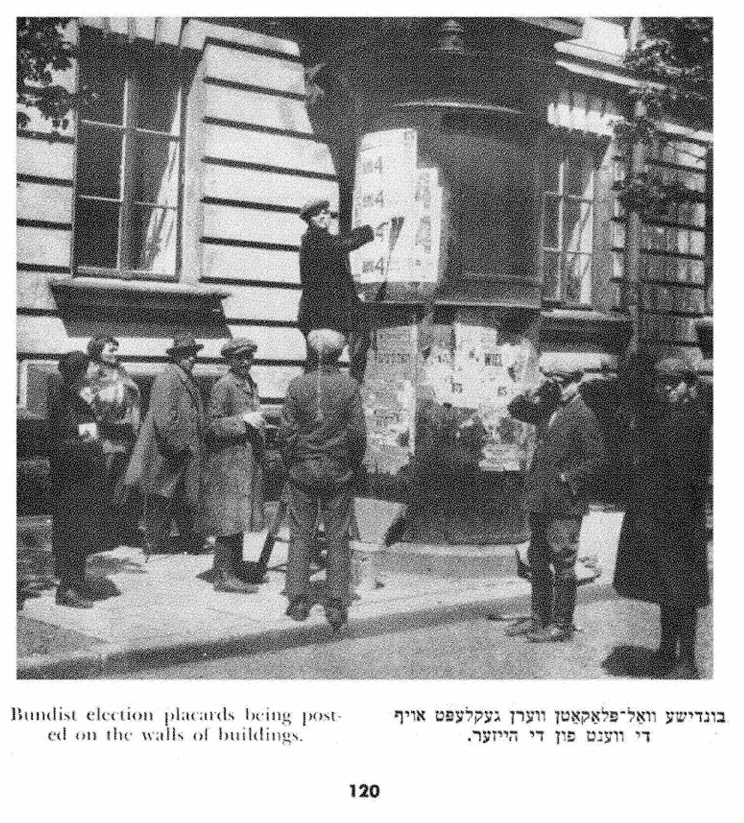
Through Kehillah elections, the Bund aimed to represent the socioeconomic interests of the Jewish working people.

Editor’s note: This translation is a companion piece to the author’s recent article, “Bundism Today, Part 3.”
Introduction to the translation
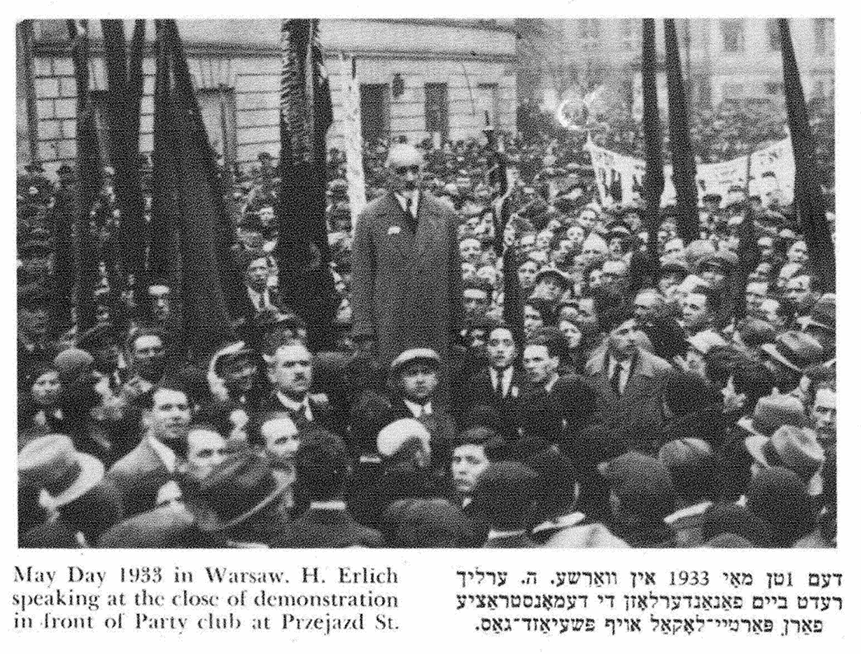
As a political party operating under semi-legal conditions during interwar Poland, the Jewish Labour Bund saw contesting national and municipal elections as a crucial part of its organising. Even if it held strong reservations regarding the possibility of a purely electoral road to socialism, the possibility of spreading its message and testing its strength was usually taken up. The results were mixed, especially initially, but in a country where Jews comprised a tenth of the national population and were concentrated in urban areas, running as a specifically Jewish party was able to produce real results.
But the Bund’s “electoralism” was not limited to state elections. It also competed with other political parties in elections within non-governmental organisations, such as trade unions and social insurance funds. And given that it sought to claim influence over the broader Jewish working masses, it also looked towards the slowly democratising Jewish communal institutions, known by their traditional name as the Kehillas.
This Bundist manifesto, produced for the 1924 Kehillah elections, can be found in the Yiddish original in the Polish State archives. It has been cited in some past works on the Bund, but never fully translated. Its role as a galvanising tool for elections naturally gives it a specific tone, which doesn’t necessarily lend much for nuance, or even necessarily the practical reality of Bundist presence in Jewish communal or municipal councils.
One word in the translation requires some clarification. The term “Kehillah,” used generously in the original and not completely alien in an English context, has been kept the same. It is difficult to translate, since depending on the context, it can refer to the leadership council of the Jewish community, the Jewish communal leadership organisation as a whole, or even the Jewish community as a whole. This is further complicated by the fact that although municipal Kehillah elections took place more or less at the same time across independent Poland, there was no election for a “national” Jewish community council.
There are undeniably many aspects of this manifesto that no longer represent the current reality of Diaspora Jewry. State secularisation loosened the grip that religious community organisations (including Jewish Kehillas) once had on matters of marriage, divorce, insurance, pensions and burial, which make membership largely compulsory in them. Today, membership in Jewish communal organisations is largely voluntary, and in some places even a majority of Jews are not affiliated with a synagogue or another institution. This makes any potential matter of “taxation without representation” far less incendiary than in the 1920s.
Particularly interesting is the audacious statement that religious Jews should effectively pack their bags and go make their own religious communal organisation. This does not leave much room for consideration whether a Jewish communal organisation could hypothetically have religious and cultural departments. The line between supporting institutional secularism and anti-clerism and an outright anti-religious attitude is blurred by repeated use of “shtreimel-wearers” as an insult, or the belief that Rabbis should have “no say at all” in the secular Kehillah. This can be partially attributed to the extreme hostility Bundists faced from Jewish religious authorities and the lack of a more diversified religious landscape in interwar Poland. Today, it would be extremely alienating to a significant section of the Jewish community that does not consider itself militantly anti-religious.
Importantly for Bundists, Yiddish is clearly cast as the “living language of the Jewish masses.” Whether we like it or not, this is obviously not the case today. If anything, Hebrew has a strong claim to that title, and the question of whether there even should be a single Jewish language in a globalised and diversified Jewish world is worth examining.
Yet despite many of these differences, there are also many aspects of the manifesto that clearly correlate with our times and should serve to inspire Bundists and all others on the Jewish left desiring systematic change within our communities.
The Bund recognised that the voting franchise was incredibly reactionary, denying women and those under 25 the right to vote, with additional aspects of voter registration that in practice constituted “a further restriction of general suffrage” (something that should resonate particularly with American readers). Nevertheless, “despite all these restrictions, a part of the Jewish masses will have access to the ballot boxes. For the [Bund] that opens up another field of battle against the Jewish reactionary forces hostile to the common people.”Although the Bund had long-term ideas for transforming the Kehillah, it also viewed as its immediate task “to obtain as much as possible that is of use to the Jewish masses from the existing communal institutions and, as far as possible, weaken their harmful effect.” This tendency to “think globally, act locally” can be understood as a key aspect of doikayt — to be rooted in the here and now, not stuck in the past or impotently dreaming of an ideal future.
Perhaps most crucially, the Manifesto made absolutely clear that for Bundists to “be able to achieve all those short- and long-term aims” will only be possible “if the broad Jewish working masses stand behind them.” Whether or not it engages with certain specific institutions or not, the Bund can never be successful if it represents a narrow marginalised sliver of the Jewish community. It has to aim to represent the socioeconomic interests of the vast majority of Jewish working people. To do that, it has to engage with them where they are, hear and understand their daily concerns, and speak to them with a language they can understand.Thank you again to Barry Smerin for his translation work!
Central Electoral Committee of the General Jewish Labour Bund in Poland
PLATFORM FOR THE COMMUNAL COUNCIL ELECTIONS
To the Jewish workers’ masses!
For the first time, the Jewish community in Poland is facing elections to the Jewish Communal Council in which it will be possible, in addition to the cohort of communal taxpayers, for some of the Jewish masses to take part. Not the Jewish masses as a whole, nor all members of the community, will be able to vote in the coming elections. From the outset, the government has taken care to ensure more favourable voting rights for wealthy and rabbinic reactionaries. It has accordingly excluded all women from the voting process and restricted voting rights to men aged 25 and over. In addition, it has introduced an electoral registration system that in practice constitutes a further restriction of general suffrage. Nevertheless, despite all these restrictions, a part of the Jewish masses will have access to the ballot boxes. For the General Jewish Labour Bund that opens up another field of battle against the Jewish reactionary forces hostile to the common people.
Who has been running things in the Jewish commune?
For generations the Kehillah has been run by a small group of rabbis and wealthy elitists. The membership of the Kehillah is the whole Jewish population. The Kehillah has the right to tax its members and to collect those taxes with the help of the state apparatus. Every Jew must apply to it in all important personal matters. The Jewish poor are particularly dependent on it, but to this day the only people with a say in the Kehillah are a small clique of the wealthy elite. They have appointed themselves as the representatives of the Jewish people and exploit the communal set-up in their own interests. They have turned it into a means to rule over the wider popular masses.
In the course of their generations of existence, the Jewish communal authorities have amassed very considerable financial holdings. Compulsory taxation of the Jewish population puts large sums of money in their pockets. The communal organisation could have done a great deal for the wide popular masses. It could have embellished their life and enriched its content. It could have become a major support base for the Jewish masses in their fight for the new, modern Jewish culture.
But the members of the small elite group that has been running things in the Jewish commune until now are completely indifferent to the needs and interests of the Jewish masses. They seek only to dominate the masses. They know that free, enlightened people do not allow themselves to be dominated, and they have therefore turned the Jewish communal organisation into a network of darkness, dominated to this day by shadows of the Middle Ages – a forum for trade in rabbinical approvals.
Instead of schools and libraries, the communal organisations built ritual baths and opened religious schools in which the children of the poor are crippled mentally and physically. Instead of spreading education and enlightenment, they have put all their strength into maintaining obscurity and superstition in the Jewish community. And wherever the communal leaders have indeed engaged in material assistance to the Jewish poor, the recipients have experienced the bitter taste of upper-class charity.
The General Jewish Labour Bund, like socialists throughout the world, protests against any compulsory religious organisation. We protest against compelling any persons – whether believers or freethinkers, whether requiring a rabbi, a priest, a pastor, or not – to belong to a specific religious organisation and sustain the clergy out of their own pockets!
The believers of every religion – those who need rabbis, rabbinic judges and ritual slaughterers – should unite voluntarily in separate religious associations and pay for their clergy themselves. And all free and freethinking persons should be liberated from the clergy’s brutal interference in their personal lives. We demand that the state not involve itself in religious affairs. It must not put its power apparatus at the disposal of religious leaders, thereby enabling a bunch of clerics to exploit the religious feelings of the masses in their own mercantile interests.
Just look at our religious leaders’ shameless financial trading in matters of Torah, faith, devotion and piety. It’s possible only because the clergy can rely on the organised power of a religious commune and the state’s enforcement apparatus. They use that power to maintain and deepen the obscurity and blind obedience of the backward masses, because obscurity and obedience are the basis of their rule.
The marriage of the rabbis with the wealthy
In the process we have just described, you will always find the rabbis and the wealthy working hand in hand. No matter whether a rich man is pious or a heretic, he sticks by the rabbi and the rabbi sticks by him. And both of them preach to ordinary people a religion that is in the interests of the rich and not the poor. Just look, for example, at the Łódź rabbinate’s recent ruling that protection of tenants is contrary to the Jewish religion, contrary to the spirit of the Jewish faith.
That gang of rabbis and plutocrats exploits the religious nature of the Jewish commune to reinforce its rule over the masses. That it is why we are striving to finally put an end to the religious Kehillah. The Jewish Kehillah in its present form must cease to exist and be replaced by a secular institution in which rabbis and rabbinic judges have no say at all.
What should be the role of the secular Kehillah?
The Kehillah is a self-government body of the Jewish population. Today it concerns itself with religious matters. We wish to replace the religious commune by a secular Kehillah that concerns itself with Jewish cultural affairs.
The credo of the General Jewish Labour Bund is the international unity of all workers, not the national unity of a community with its own plutocrats. Wherever general questions of political, economic and social life are at issue, whenever the protection of workers and the needy is on the agenda, you’ll always find on one side all the poor, without distinction of nation or religion, and, on the other, all the rich, likewise without distinction of nation or religion. And the bigger and more solidly united is the camp of the abused and exploited, the quicker and more easily will they be able to defend their interests. The Bund therefore strives to ensure that all matters concerning the whole population of the country remain in the competence of the general state institutions, and that the task of the secular Jewish commune be to deal with matters which have to be settled separately, namely the cultural affairs of the Jewish masses.
The General Jewish Labour Bund fights for national-cultural autonomy for the broad Jewish masses.
The Jewish masses have their own language, Yiddish, and their own Yiddish culture. Given their national specificity, those masses themselves should administer their own school system and cultural life. And that should be done by a process of secular self-administration.
We shall demand that the living language of the Jewish masses be the official language of the commune, and that all the business of the Jewish commune be conducted in Yiddish.
Through the commune, we shall fight for state recognition of the public right to use the Yiddish language in schools, in the administration, and in the courts.
We shall demand that the state finance the whole school system and cultural life of the Jewish masses out of its own budget.
For the secular Jewish commune, which will administer Jewish educational matters, we shall demand the rights of a state institution – first and foremost, the right to tax the wealthy members of the Jewish community to enable it to satisfy the cultural needs of the masses as broadly as possible.
We shall demand a proper level of remuneration for all the commune’s officials and employees, as well as full insurance cover and pension rights for those who spend their whole life working for the commune and its institutions.
And in putting forward that programme, we assert with pride that the Jewish working class remains to this day the sole builder and bearer of modern secular Jewish culture.
The Jewish working class is building the new secular Jewish school system with great effort and sacrifice, and in that work it continually encounters obstacles and barriers put in place not only by the antisemitic forces of Polish reaction, but also by wealthy businessmen and religious hypocrites in our own community, Zionists and orthodox Jews. All of them hate the Jewish secular school like the pest, considering it a poisonous outgrowth on the body of the Jewish people. They are not ashamed to vote against state subsidies for Jewish secular schools, because they feel in their bones that the new school system is creating free people who will not willingly bow their necks under the yoke of the shtreimel-wearers and capitalists.
What will we fight for on the communal council?
Our aim is abolition of the religious Kehillah and the creation of secular self-administration institutions of the Jewish masses dealing with national-cultural affairs. But until that aim is achieved, our representatives on the communal council will endeavour to obtain as much as possible that is of use to the Jewish masses from the existing communal institutions and, as far as possible, weaken their harmful effect.
The representatives of the Jewish Labour Bund in the communal institutions will fight for an equitable taxation system that places the whole financial burden of maintaining the commune and its institutions on the wealthy section of the Jewish population.
The Bund representatives will fight for spending the whole of the commune’s budget on cultural and educational matters – and not on rabbis, rabbinic judges and ritual baths.
We shall strive to ensure that the commune builds schools, children’s homes and libraries, and supports already existing institutions of the Jewish masses which provide education and training in art, drama, music, etc.
Insofar as the present commune engages in aid for the Jewish poor, we shall fight to ensure that such aid does not have the demeaning and demoralising character of charity, but is productive and expeditious, and respects the human dignity of the needy population.
We shall fight to root out the commune’s prevalent pitying attitude to the Jewish poor.
We shall fight against the bureaucratism which so greatly afflicts all members of the masses whenever they apply to the communal authorities.
In every case, we shall always defend the interests of the impoverished labouring classes of the Jewish population against the power-hungry Jewish plutocrats, merchants and manufacturers.
We shall fight any attempt to use the commune and its means for Zionist purposes. We shall not allow the communal apparatus to become a means of extracting the pennies from the pockets of the Jewish masses to pay for Zionist dreams.
In day-by-day struggle with the shtreimel-wearers and their lackeys and accomplices, we shall strive to clear Jewish life of all the rubbish, obscurity and empty superstitions which generations of clerical rule have bestowed on us and which help to maintain the intellectual slavery of the Jewish masses.
*
The General Jewish Labour Bund is fully aware that its representatives will be able to achieve all those short- and long-term aims only if the broad Jewish working masses stand behind them, and if their struggle in and around the Kehillas is closely tied to the great general liberation struggle which the Jewish working class is conducting, and can only conduct, hand in hand with the whole class-conscious proletariat of the country. The Jewish proletariat’s fight against rabbinical and wealthy reaction is part of the general fight against clerical-capitalist reaction in this country and throughout the world. For the General Jewish Labour Bund, the communal council elections are a means to gain a new position in that struggle. The aim of the broad enlightenment campaign which the leaders of the Bund will conduct both within and outside the community council will be to liberate the broad masses of the Jewish working class from the influence of the clique of rabbis and wealthy magnates, bring those masses under the red flag of socialism, enlist them in the battle for a social order in which there are no rich and poor, no oppressors and oppressed; in which no one has an interest in another’s blindness or ignorance, people do not create for themselves gods in the far heavens to rule over them through the intermediary of earthly Cossacks, but where each person is free and their own lord and master, and the supreme commandment for every individual is the happiness of all, of society as a whole.