Enough With The Past, Let Me Deal With the Dead
A reckoning with Jewish belonging and alienation, from Poland to Tennessee.

Listen to the audio recording of this poem in Yiddish:
Author's commentary
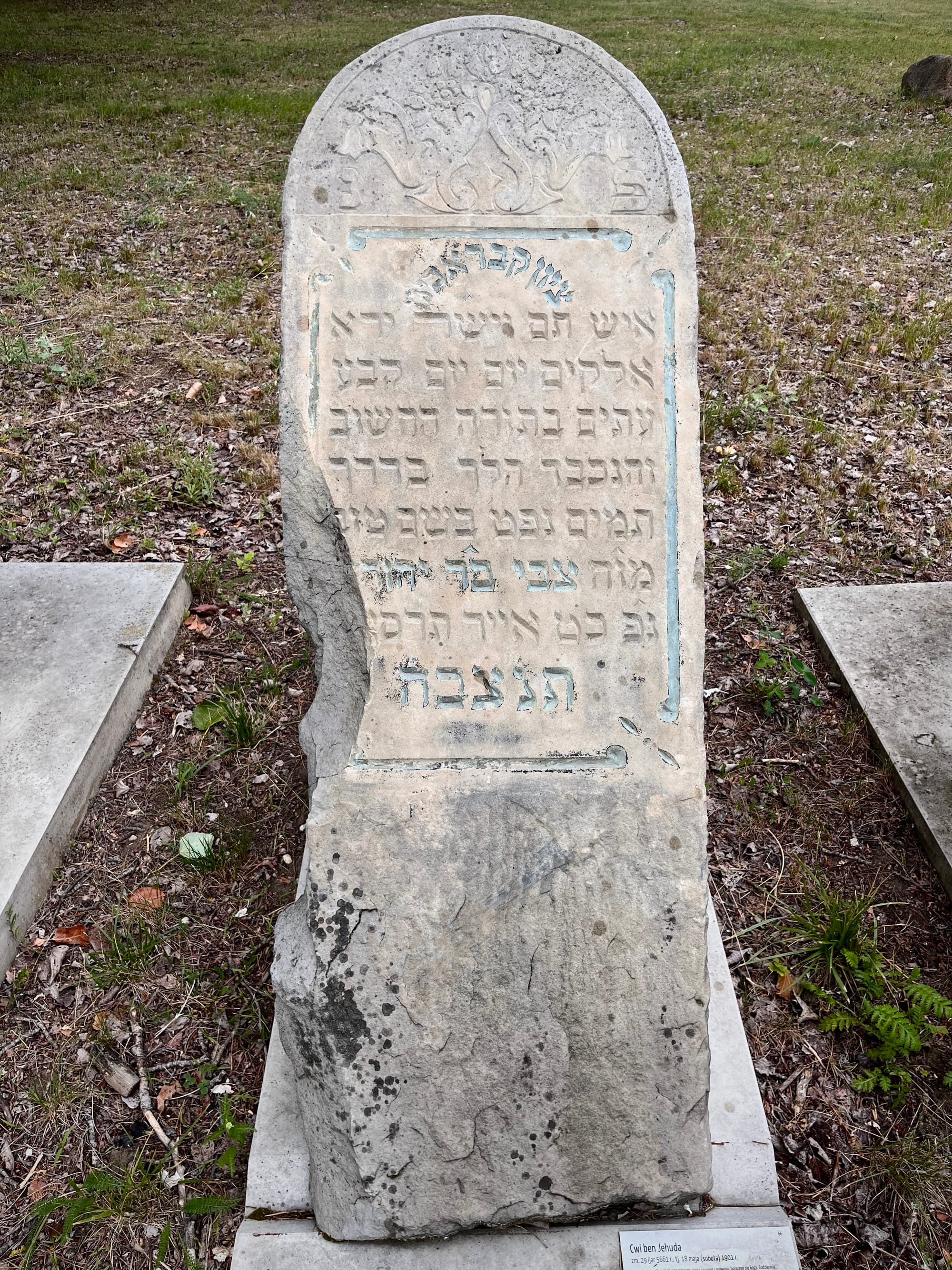
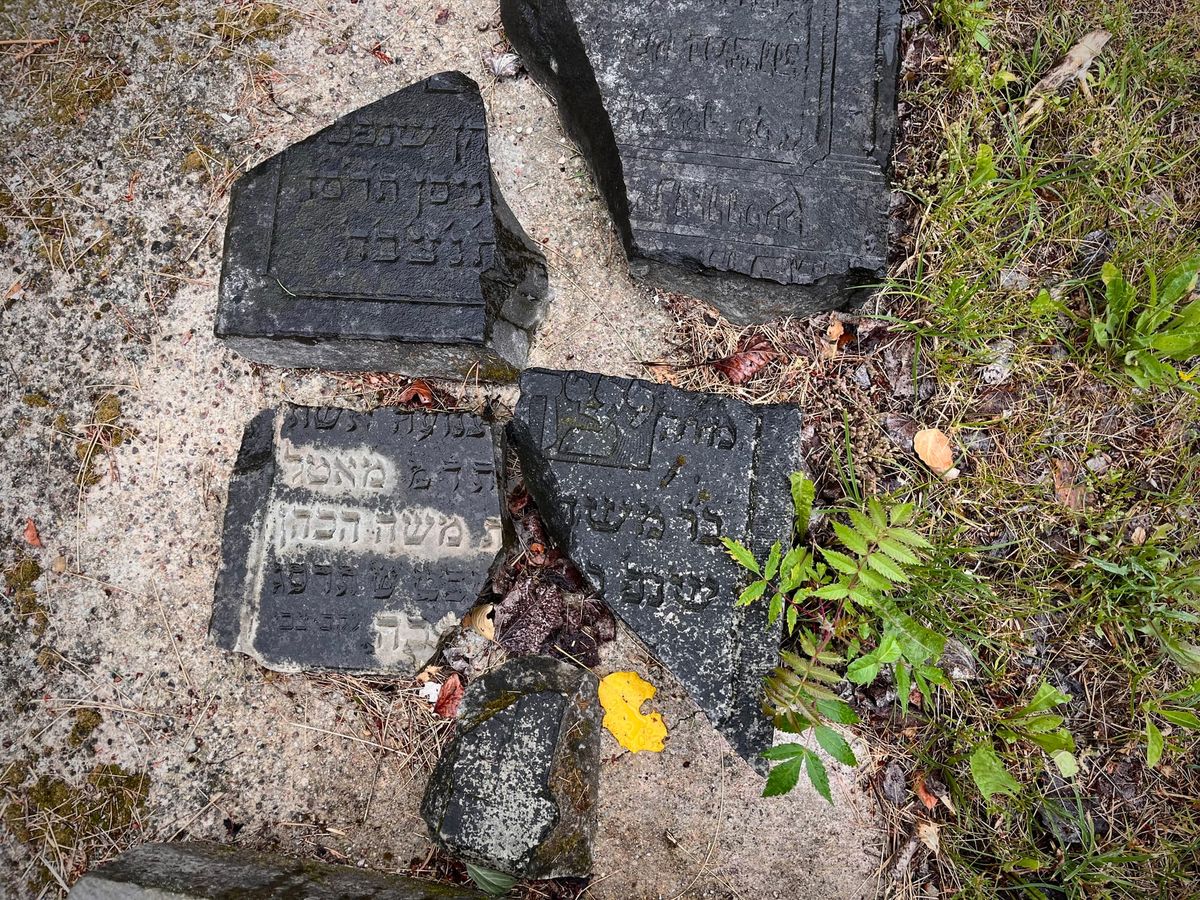
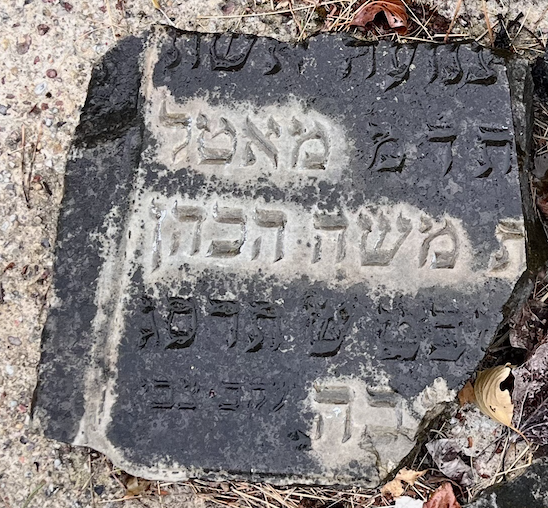
In July 2026, I visited the Jewish cemetery in Serock, Poland, and walked a path lined with fractured headstones. They were propped up at an angle, like an exhibit, stripped from their bodies — bodies that, according to the placards, were no longer there. As my feet sank into the Polish mud, I remembered the old section of my Memphis temple's cemetery, stones crowded close, stones whose bodies had also been stripped of their names.
Four years into learning Yiddish, the language my father’s parents didn’t teach their children, the matzeyves in Serock made me reconsider those in Memphis. I’d already written a poem inspired by that cemetery. I translated my own words in a fervor, compelled to knit together the bodies' abandonment and the communities’ responsibility to our dead when our burial rituals become fractured.
The English version of “Enough with the Past, Let Me Deal with the Dead” appears in Dear Memphis (River River Books, 2024), my debut collection, which reckons with the alienation and belonging of my maternal Jewish family throughout our five generations in Memphis, Tennessee. On a religious school field trip to the old cemetery, I remember rubbing charcoal over butcher paper to capture the texture of the oldest stones. In translating the poem, I searched for the word for “grave rubbing” in Yiddish and couldn’t find it anywhere. Yiddishist and teacher Annabel Gottfried Cohen told me “we have to invent one,” and offered matzeyve-araynraybung, or מצבֿה־אײַנרײַבונ. A beautiful thanks to her, for the reminder that we make the Yiddish we speak and for her generous edits.