Bundism Today, Part 4: Af der Yidisher Gas
Jewish communities need to play an integral part in resisting trends of social alienation, with the bare minimum being the development of livable, walkable cities and neighbourhoods.

This is part 4 in the author's Bundism Today series. Please read the Introduction, Part 1 (Bundist organizing principles), Part 2 (Yiddishkeit), and Part 3 (Doikayt) on our website.
What keeps Jews together, geographically, today?
Living in the diaspora, we are accustomed to seeing Jewish life and community as existing within enclosed walls. You have the Jewish home, the Synagogue, and a handful of other institutions such as the kosher supermarket or the retirement home, depending on the size (and organisation) of the community. Synagogues in particular may act not only as places of worship or Torah study. Many de facto secular Jewish families belong to synagogues for less spiritual reasons, just to have their wedding or burial concerns taken care of. Synagogues also often act as regular communal meeting spaces, even if this happens tangentially to the actual religious services. And while they have always played this role, singling them out as the only community spaces diminishes the extent to which the wider city fabric itself was historically considered the primary arena in which Jewish communal life existed, and through which the Bund was able to organise so effectively.
In the Bund’s early years, if you wanted to ask about what was going on in the Jewish community, you would likely ask what is going on "on the Jewish street" (af der yidisher gas). The street was where kids played, where things were sold, where you spoke to your neighbours. Much of the Bund’s underground organising physically took place within the birzhe, a part of town, such as a square or street, where Jewish workers met to discuss job opportunities or trade goods. Jewish socialist anthems, such as In Ale Gasn or In di Gasn, Tsu Di Masn echo the importance of the street towards political and social organising.
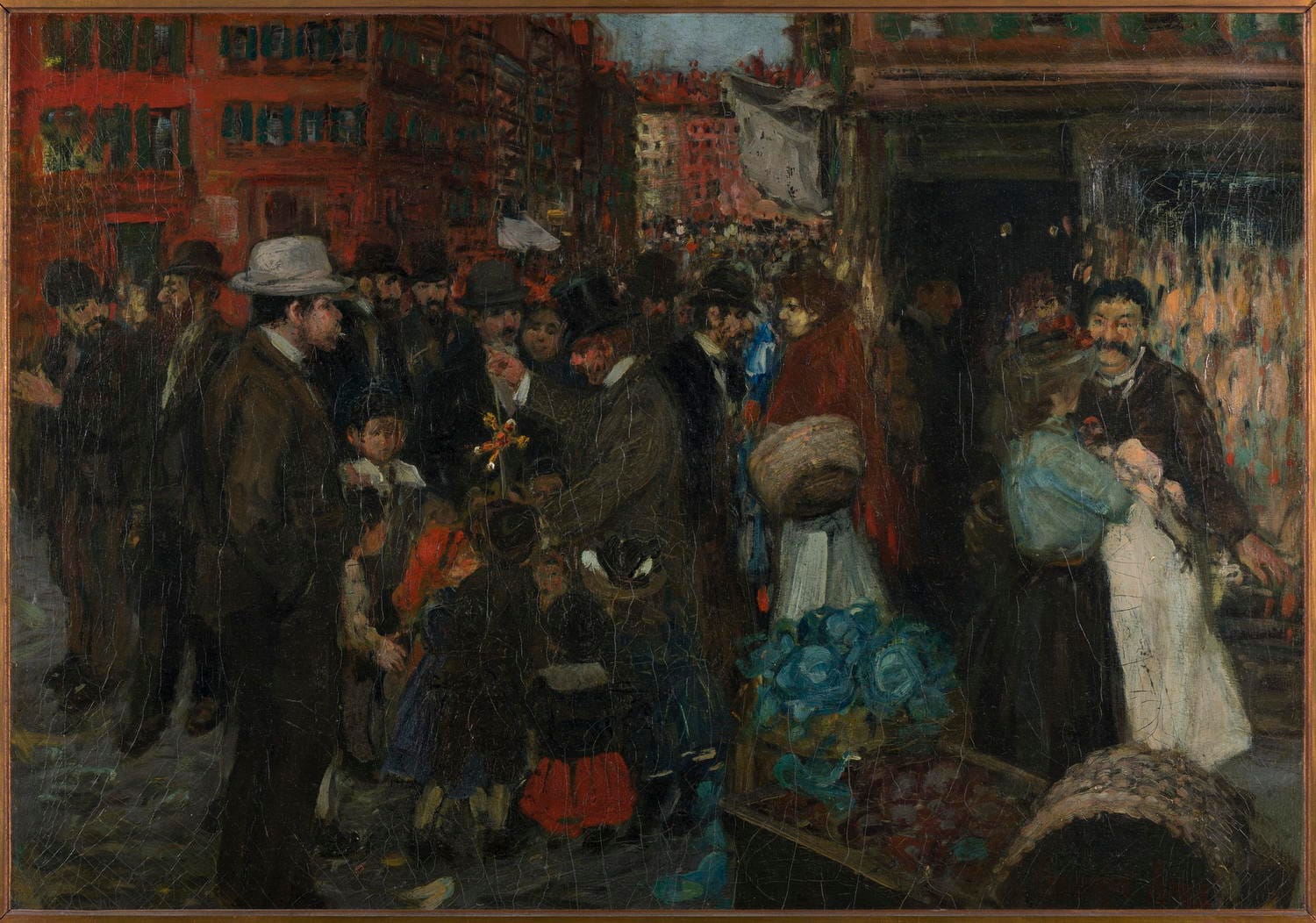
While we have made undeniable technological and social progress, we have also created a much more alienating social fabric — paradoxically, much of this coincides with an incredible development of instant global mass communication. We need to work towards a world where the trends of social alienation are reversed, with the bare minimum being the development of livable, walkable cities and neighbourhoods. As members of broader Jewish communities, we need to be an integral part of this change.
Orthodox Jews today know well the benefits of geographic proximity. Even in the age of instant communication, it fosters a sense of togetherness, and is particularly important due to significant restrictions in what they can do on Shabbes; most importantly, they must walk to synagogue. Since visibly Orthodox or Haredi Jews are also more likely to be victims of violent antisemitism, there is a sense of seeking strength in numbers. While having to live in a specific part of town might pose a financial challenge, religious Jews often see poverty as less relevant than community, which may foster forms of mutual aid for its members. Larger and more organised communities, such as the Haredi community in Stanford Hill in London, may have the power to negotiate certain conditions for its needs with local authorities, such as laxer zoning regulations or allowing for housing charities to only rent to members of the community.
On the other hand, given that we are not forced to live in ghettos anymore, a society where all Jews live packed together could only come together today through mass social engineering, and would be neither practical nor desirable. Even most Orthodox Jews wish to be connected to the outside world in some fashion, or would be worried about Jews being so concentrated in a geographical area that one could describe a process of self-ghettoization. Here, the Reform perspective allows for more flexibility. When you can drive to shul on Shabbes, and you’re less fussed about Kosher certifications, there is less immediate need to live within walking distance to fellow Jews or Jewish institutions. For more suburbanised and atomised Jewish households, the importance of the Jewish school, youth group, or summer camp becomes proportionately greater as a means of continuing the membership of the community, albeit with limited forms of geographical proximity.
Of course, we are largely not going to be building new cities and neighbourhoods from scratch, though ambitious projects attempting to undo the racist and classist legacy of many urban “development” projects wouldn’t be such a bad idea. Therefore, we need to take a look at existing Jewish neighbourhoods, which can broadly be divided into two categories: historical Jewish quarters, which exist in many European cities, and more modern, low-density, often suburbanised areas, dominant in North America. Let’s start with the former.
Unliveable Jewish quarters
If there is any ideal case study for a ‘historical’ Jewish quarter that is completely unsuited for living today, in which the local population is reduced to second-class status, it is the Jewish quarter of the city I grew up in.Kazimierz, the Jewish quarter of Kraków, is under permanent outside occupation. After the war, the district was considered a rundown, scary, dirty area, in some ways haunted by its Jewish past and the Holocaust. The situation has changed dramatically since the 1990s, when Poland democratised and opened up to the outside world. The quarter was turned into a centre for tourism, gastronomy and night-life. It is filled with empty lots (where buildings used to be), abandoned buildings (ruins that might as well be empty lots for practical purposes), or short-term rentals (which are far more profitable to maintain than regular housing). If there is any new housing being built, it is luxury apartments or hotels.
Naturally, this has a massive impact on rent prices. Even if you are lucky enough to find a place you can afford, it is likely that the vast majority of the other flats in your building will not be permanently occupied. A Jewish couple I know lived in a building with 20 apartments, of which two were permanently occupied. Enforcing quiet hours after 10pm? Keeping drunk English stag parties inside clubs? Forget it.
This in turn has an impact on local commerce, work opportunities and services. There are an untold number of restaurants, kebab stands, cafes, clubs, bars, and food trucks catering to tourists, but next to no gastronomy geared to the local population. About 20 corner shops, mostly Żabka or Carrefour, are very convenient for tourists who would like to have an 11pm ready meal or who are used to prices in Euros, Pounds or Dollars. They are far less convenient for people who would like to cook something more than pasta with tomato sauce.The pre-war market is now only a flea market, where supposedly authentic Jewish, Polish, Soviet, and Nazi memorabilia are freely mixed together. The vast majority of non-tourist commerce has been taken up by a shopping mall, a former factory located a 15-20 minute walking distance away, with no public transport access. Restrictions on car movement and parking are completely inadequate in Kazimierz in general. This is what the only playground located in the heart of the Jewish quarter looks like.
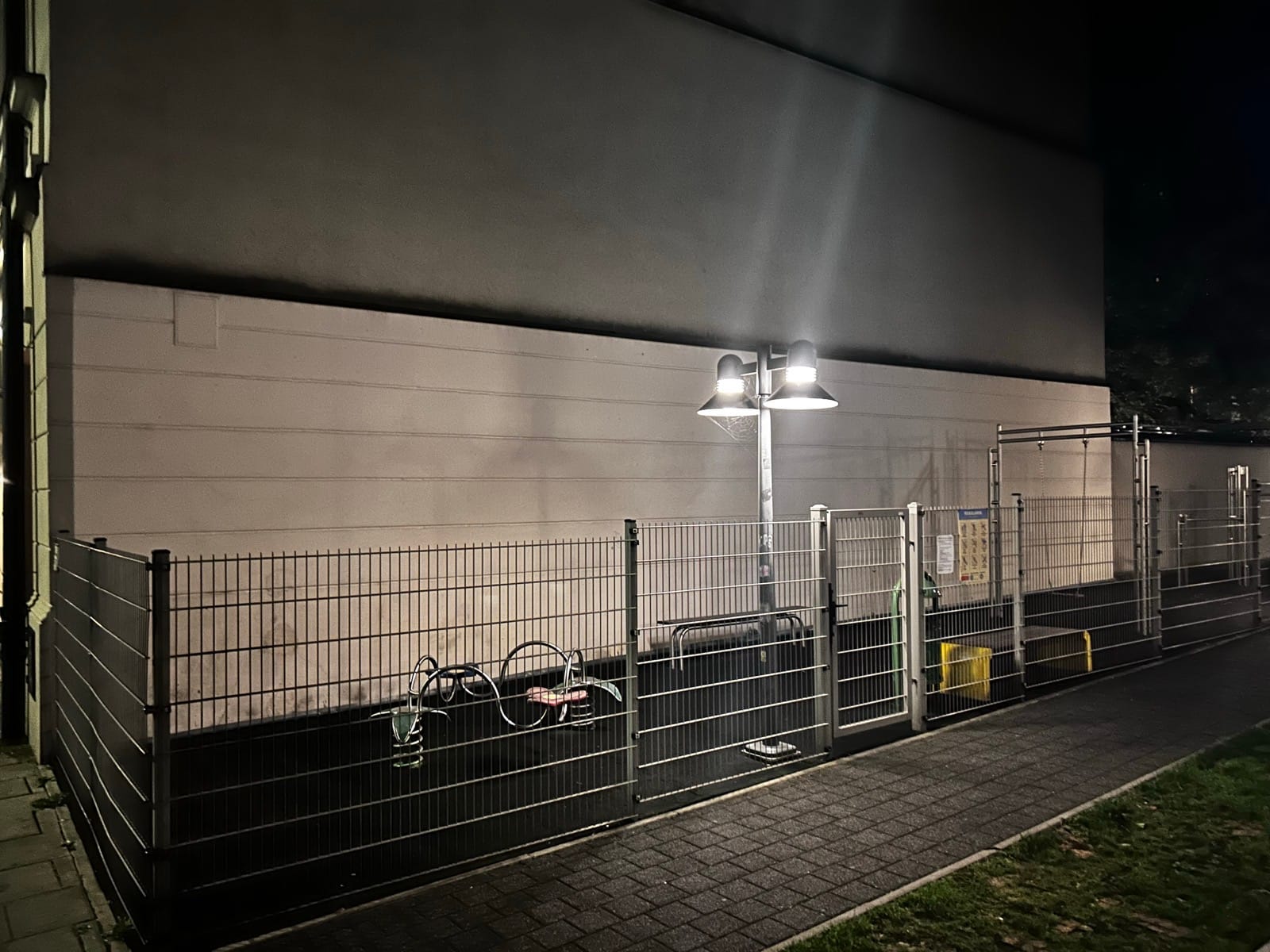
How are locals, Jewish or not, supposed to live in a place like this?
And yet we have to try and fight. About two years ago, a sympathetic activist told me for most of the Kraków leftists who care about “urban issues” in particular, Kazimierz is considered territory that is already “lost,” and that the “frontline” struggle against gentrification has moved to other parts of the city.
But Kraków’s Jews do not have anywhere to “retreat” to. This is where our history is, this is where our communal institutions are, this is where many of us would want to live, if we could. As such, it is not the “old” Jewish quarter — it IS the Jewish quarter, which is a sentiment that has no inherent need for demographic fixations. A Jewish quarter can also be a Polish, Turkish, Arabic, Italian, Roma or Chinese quarter.
As such, the actions of which Bundists took part in the last few months were extremely important. An attempt was made by the local Catholic Church to allow several of its buildings to be developed into yet another fancy hotel, resulting in the expulsion of many elderly residents and several businesses (some more tourist-oriented, some not). In response, tens of thousands of people signed a petition against the move, and hundreds turned out in demonstrations. The story broke into the national news, and a temporary band-aid solution was proposed by the mayor. The fight is not over, but it has already accomplished an important goal. It proved that Kazimierz is not yet lost, that people can be mobilised, that people can imagine a better future. Over time, we may hope to go beyond such defensive actions and go on the offensive — to take back the quarter street by street, to make it a space where residents of all backgrounds, Jewish or not, can feel comfortable calling home. That is Doikayt.
Where houses used to be, they can be rebuilt.Where buildings are ruins, they can be renovated.
Where there is no shade, trees can be planted.Where there are foodtrucks, there can be consumer cooperatives.
Where there are parking lots, there can be parks.
Demonstrations in Krakow against evictions by church-owned properties to develop luxury hotels in the city's historic Jewish quarter (February 2026). Video courtesy of the author.
Suburbanisation
The story of Kazimierz is not completely unique. “Historical” Jewish quarters in Prague, Amsterdam, Budapest and Paris suffer from similar problems — though the latter two in particular have “modern” Jewish quarters, as the Jewish population of these cities is relatively much larger. That being said, the case of London and many American cities proves that the size of the Jewish population is not the only thing that matters in order to guarantee a vibrant “Jewish street.”
The drive towards suburbanisation that accompanied Jewish communities after the Second World War was pursued through a combination of push and pull factors. Ownership of a standalone home, connected to the outside world by car, was seen not only as a matter of upward social mobility and fulfilment of the American Dream, but also as a method of escaping racial “othering” and a (conditional) ascension of Jews into the category of whiteness. Those Jewish communities that stayed behind were at risk of the same processes that affected African Americans on a much larger scale — the destruction of their neighbourhoods for the benefit of mass motorisation.
American-style suburbs are today easily recognised as carrying with them severe socioeconomic problems. They are horrible for the environment, substantially drain municipal resources, and cause disproportionate challenges for the physical and social health of their residents. If access to the car is removed, while public transport opportunities are nonexistent, they are effectively urban deserts of alienation. This in turn facilitates the perseverance of the city as an area dominated by elite commercial and business districts, dilapidated multi-storage housing, and streets and would-be public areas under the domination of the car.All of these issues are horrible for everyone. But they are disproportionately horrible for a minority ethnic group whose communal well-being is dependent upon the existence of a vibrant social fabric, walkable cities, and affordable travel. If these are not present, and the community withdraws inwards — to guarded buildings, suburban houses, and isolated summer camps — the community loses.
Am I painting American Jewish life with a broad brush, exaggerating certain aspects from a European perspective while downplaying the role of urbanised communities in Brooklyn or the Upper East Side? Maybe. Am I hoping to touch a nerve with readers who grew up in suburban areas of Los Angeles, Miami, Houston, Montreal or Seattle? Absolutely.
And it’s not like this is a phenomenon completely isolated to one side of the Atlantic, or which can be blamed solely on American Reform Jewry refusing to stay within walking distance of downtown synagogues. Similar observations could be made in areas of London's Northwest boroughs. Unlike an urban environment with a grid pattern of commercial and industrial development, London’s suburbs such as Wembley are often concentrated around single High Streets with side roads largely made up of uninspired semi-detached copy-paste housing, in which originally intended front gardens have long been replaced by bricked-over parking spaces. It is thus no surprise, and deeply saddening, that Brent Cross shopping centre — a soulless building completely surrounded by urban highways — holds a certain kind of social value for the Jewish community, who deserve so much more.
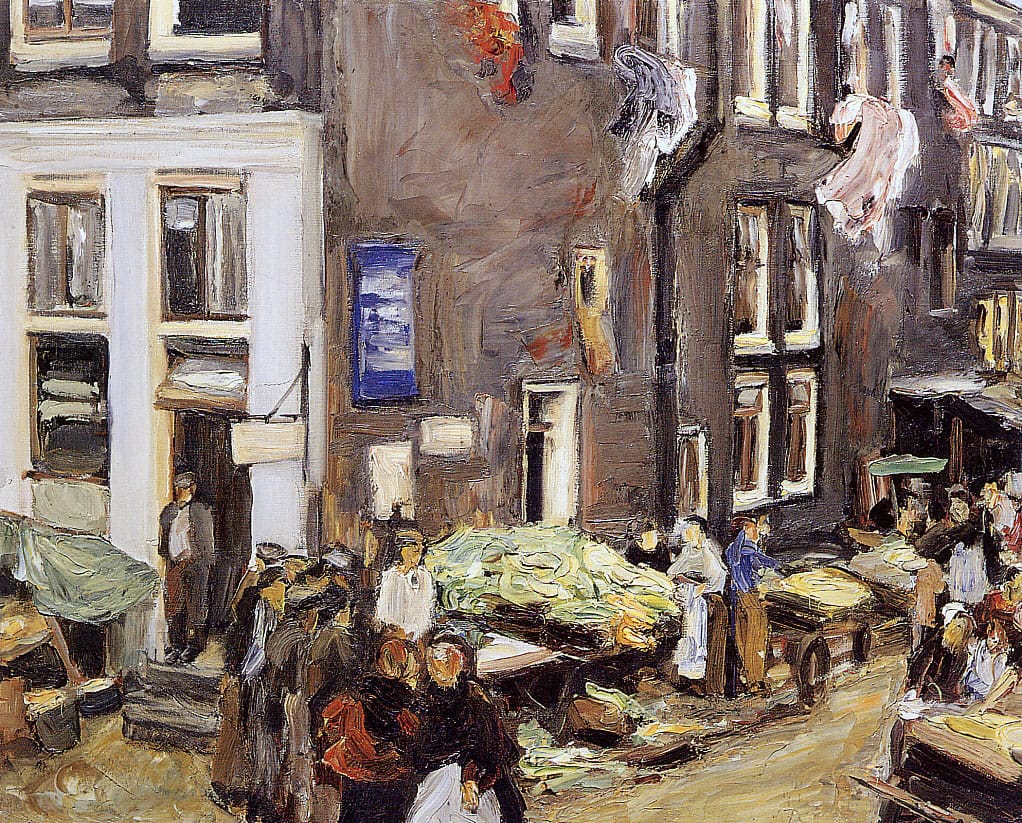
Is the situation in London different from that of Jewish communities in Houston, Los Angeles, Boca Raton, Montreal, Bethesda, Sydney, Newark, or Buenos Aires? Much more systematic study needs to be done on the matter, but a broad overview doesn’t leave much room for optimism.
In effect, the phenomena taking place in Europe and North America are two sides of the same coin: the gradual and continued disintegration of communal life under neoliberal financialised capitalism, leading to an enormous waste of resources and contributing to an escalating environmental catastrophe. While damaging to everyone, it is particularly damaging to Jewish people. Why? Not just because we are a small community, even relative to many other minority groups. It is also because while the visibility of a minority group often leads to discriminatory treatment, there are also disadvantages that arise from the invisibility of a minority community, and most importantly, for the members of the community itself. The fact that most Jews outside major communal centres are unlikely to notice other members of their own community in the public arena (not because they don’t exist, but because they are unwilling or afraid to show their Jewishness on a general everyday basis) likely leads to feelings of alienation or isolation that are not felt by, for instance, communities of colour who form 5-10% of a municipality’s population.
Of course, non-Orthodox Jews can engage in voluntary anti-assimilatory forms of showcasing their Jewishness through the clothing they wear or the language they speak. But the largest, shiniest Magen David necklace won’t address the question of alienation that comes from living in isolation, not knowing any of your neighbours (let alone Jewish ones) and where the street outside belongs to the cars, not to the people.
There’s a lot to complain about, and a lot that Bundists living on both sides of the Atlantic can work on together. But are there any existing positive alternatives, where we can see any glimpses of a better world?
Mazzesinsel
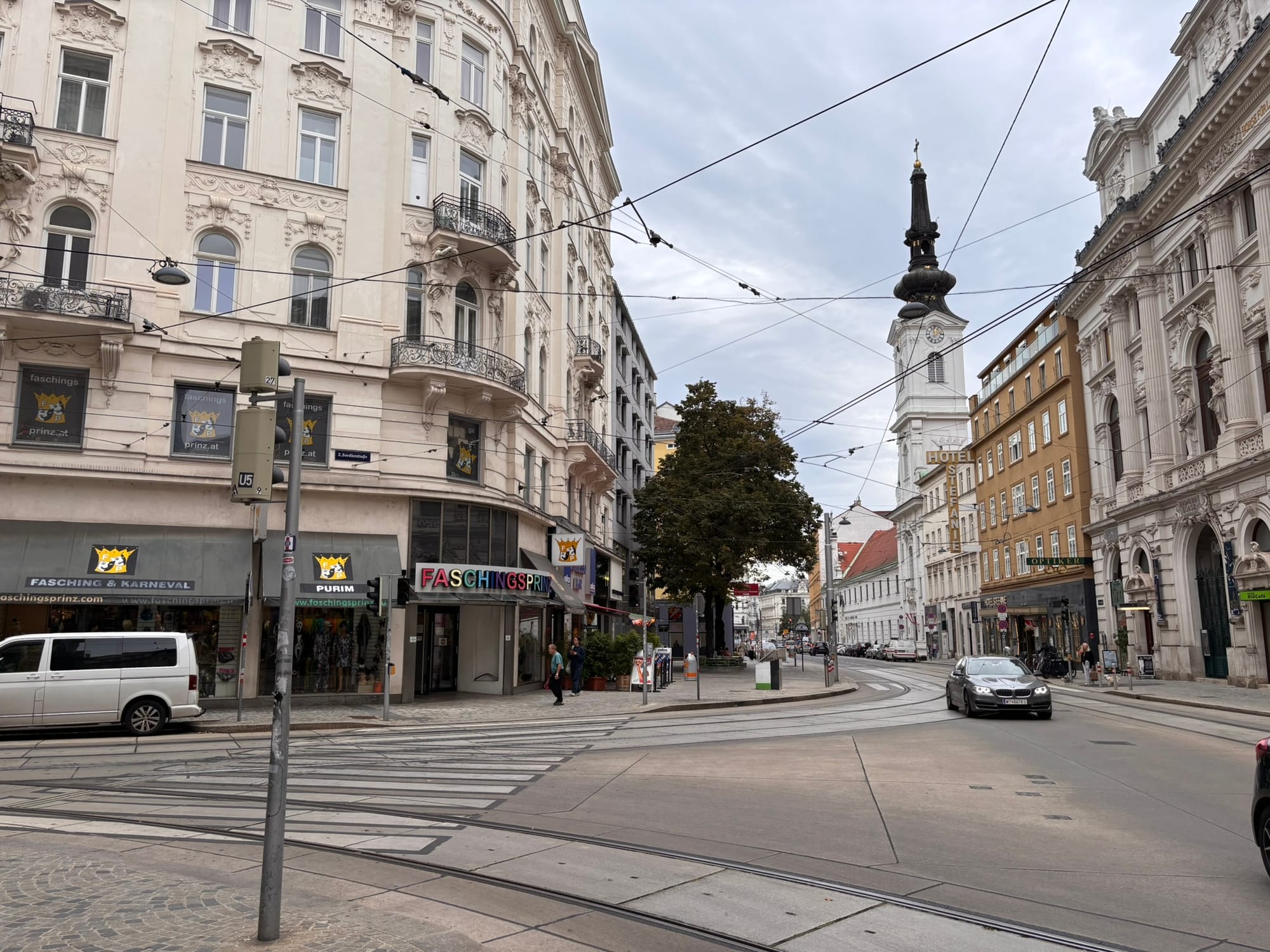
The Jewish population of Vienna numbers officially about 8,000 people, largely concentrated in its historical 2nd and 20th Districts (Leopoldstadt and Briggitenau) together referred to as Mazzesinsel (Matzoh Island). Even if that number is doubled to count in the unaffiliated and those with Jewish background who might not consider themselves Jewish, the sheer level of institutional organisation in the community is extremely impressive.
Just to give a few examples, Vienna has:
- About twenty active Synagogues and houses of prayer,
- Four day schools and eight youth movements,
- A Yeshiva and a university,
- A centralised, nominally democratic community council with eight political associations,
- An uncounted and continuously growing number of kosher food establishments, most recently a new kosher kebab shop,
- A mental health centre, retirement home, two sports clubs, and a Yiddishist space.
Seemingly, the only thing missing is a wedding hall.
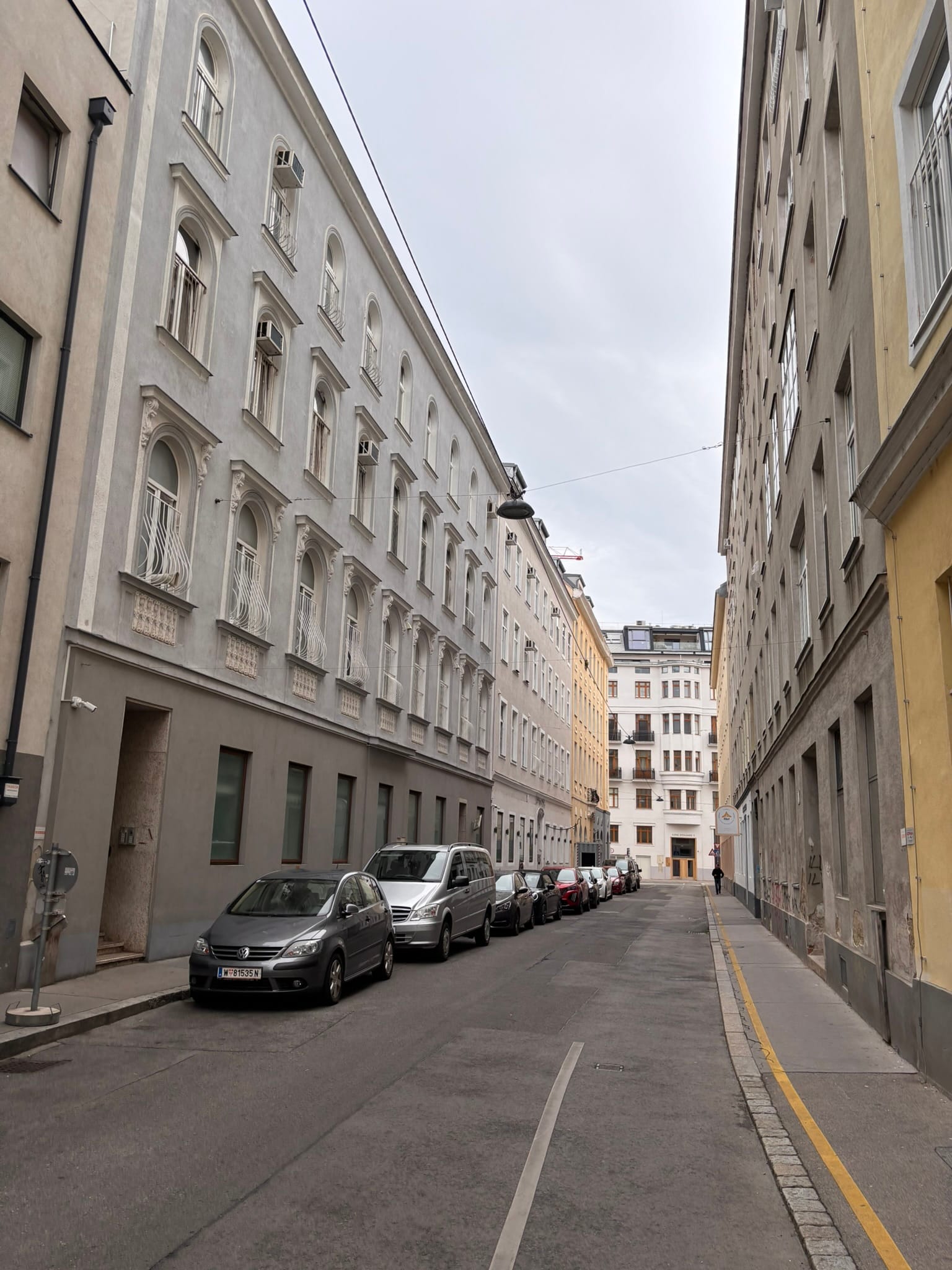
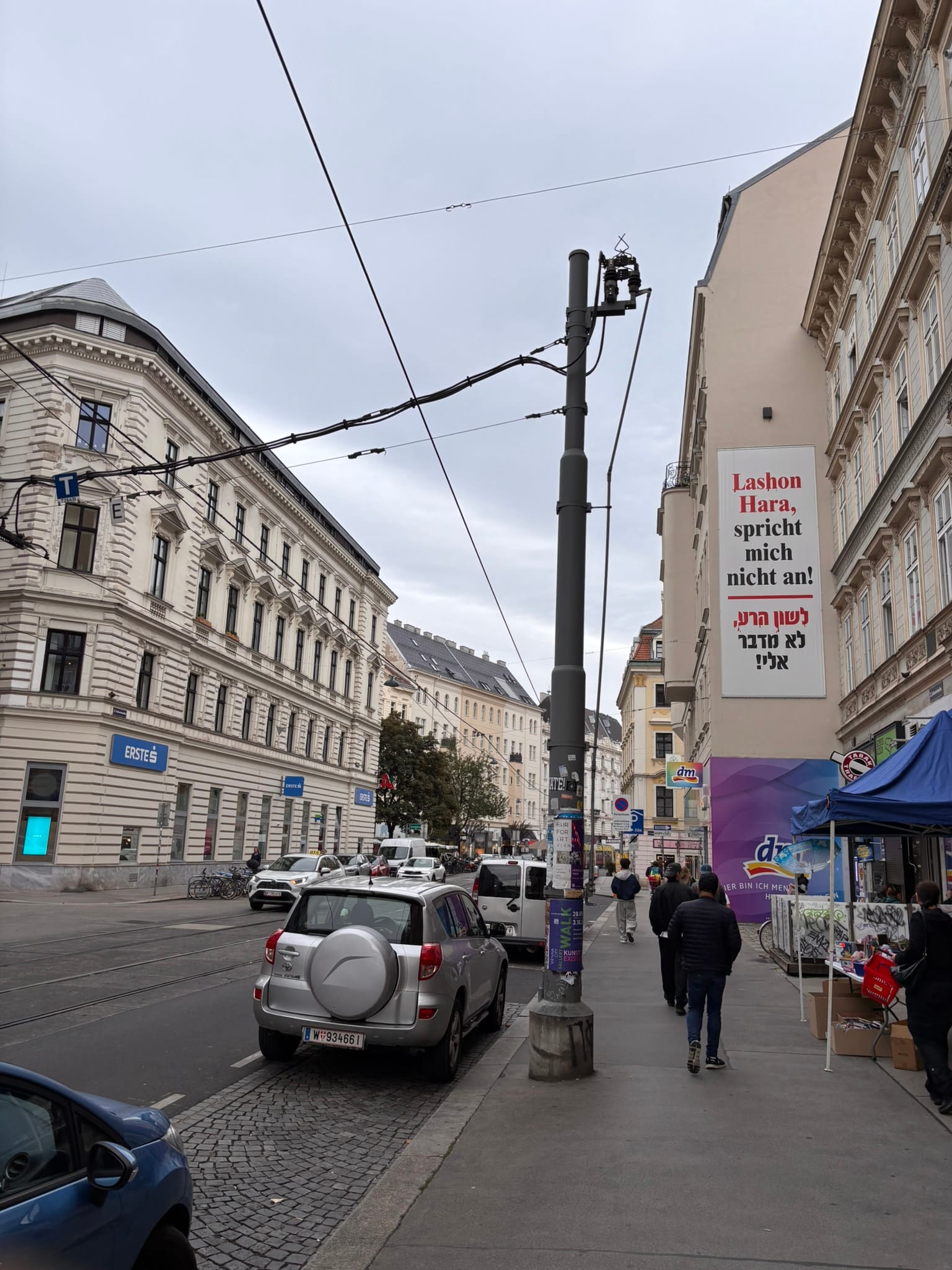
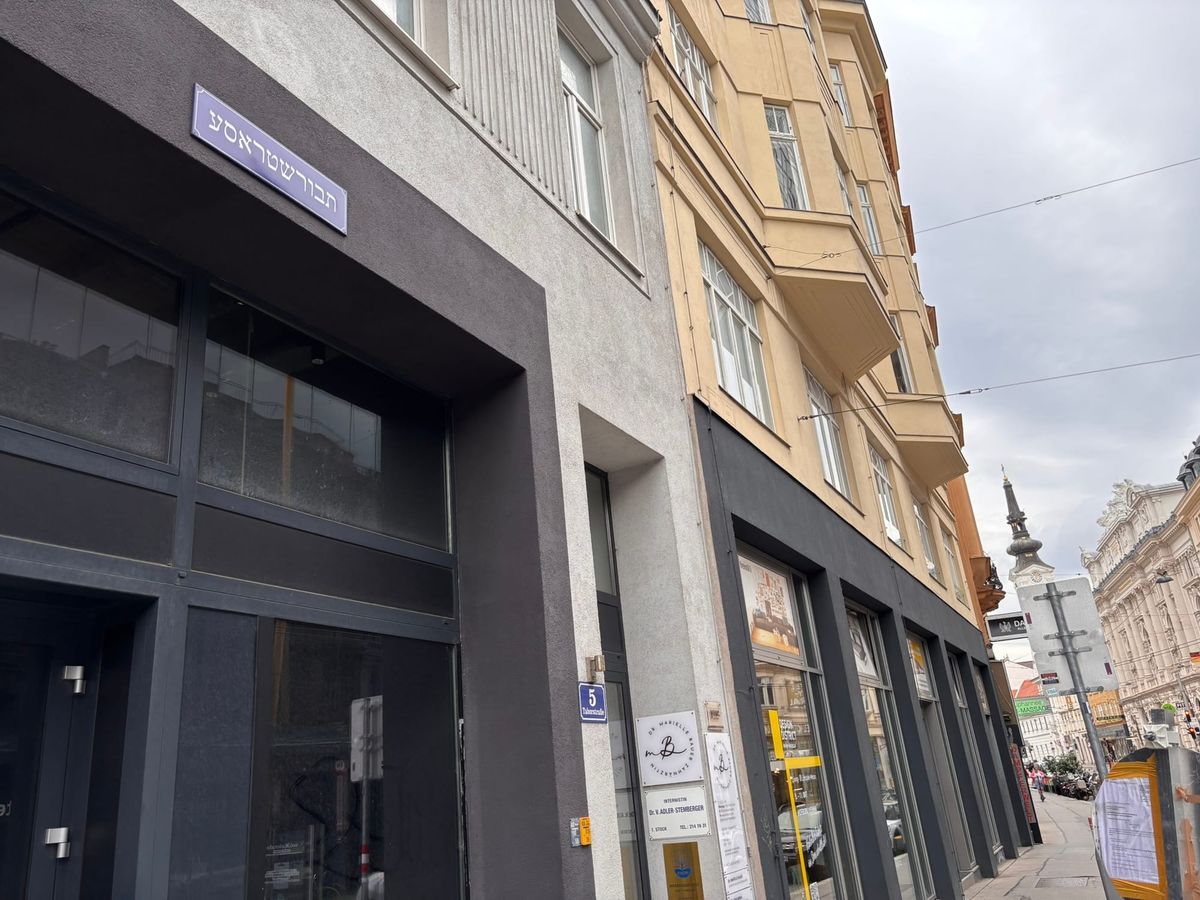
LEFT: Lilienbrunngasse, the Chassidic street with a Synagogue and Bakery in the distance. Yung Yidish Wien is also on this street. RIGHT: A large sign warning against Lashon Hara on Taborstrasse. Photos by Zach Mojsze.
There are two main factors that have led to the development of the community. Firstly, Vienna was a major transport hub for the various waves of Jewish emigration from “East” to “West” after the Second World War. This led to a significant investment from abroad and the need for the development of institutions catering to the needs of every community, while still maintaining a united communal organisation (the IKG). While the majority of those arriving in Vienna were only passing by, a section of each community decided to stay and still largely maintain distinct identities, whether they be Hungarian Jews in the 1950s, Iranian Jews in the 1970s, or the diverse communities immigrating from the Soviet Union, most notably Jews from Bukhara in modern Uzbekistan.
Secondly, while nowhere near as strong as during its glory days in the interwar period, the legacy of Red Vienna runs deep. The city continues to rank highly in rankings of liveability, with (relatively) strong housing and welfare policies. Despite the traditional image of imposing buildings (Gemeindebauen) such as Karl-Marx-Hof concentrated in the outlying districts, the city attempts to keep its public housing relatively dispersed across all twenty-three districts, including on Mazzesinsel. Large-family benefits make a significant difference in particular to the 200 or so Hasidic families which call Vienna their home. Other aspects that are worth citing include the massive Augarten public park in the heart of Leopoldstadt, the public transport system, or Jewish institutions that form part of the historic Social Democratic movement ecosystem, such as the Jewish Institute for Adult Education (JIFE).
None of this is to say that Vienna does not have significant challenges of its own, such as the creeping gentrification of the 2nd district, the militaristic aspect of security culture around synagogues (not completely unjustified given the community’s history) or the lack of uplifting Jewish art and visibility in the public space — something that Vienna could learn from Kraków, for example. But the current values of Vienna for its Jewish and non-Jewish inhabitants, drawing from its history, are evident for those who live in it and those who don’t. It’s no surprise that Zohran Mamdani has treated Red Vienna as an inspiration.
Conclusion
The challenges to the liveability of Jewish streets and neighbourhoods are not metaphysical. Rather, they are deeply rooted in contemporary socioeconomic realities, and thus can only be solved with systemic socioeconomic policies.
Wherever they might live, Bundists should strive to channel the principle of doikayt by resisting social atomisation significantly worsened in recent decades by inhuman urban design, car culture, a hostile housing market, and the destruction of the environment. (After all, these factors make Bundist and Jewish labor organising much more difficult.) Specific municipal policies — be they the creation of affordable housing, a wide public transport network, urban greening and densification efforts — are all general issues that will specifically work to the benefit of our communities, whether they be more concentrated in a certain neighbourhood or more dispersed.
Just as the Bundist model of Jewish self-determination is not rooted in territorial exclusivism, neither is the Bundist model of Jewish urban communal life. A Jewish street may be a Jewish street while at the same time also functioning as an Italian street. A Jewish neighbourhood can thus also be an Arab or Turkish neighbourhood, without obsessing over demographic majorities or pluralities. And of course, the issues at hand do not impact the Jewish community alone — they impact everyone. Thus in order to achieve a transformation of society that is needed in so many ways, or even just make nice changes in our cities, we will need to build coalitions. But on what basis will those coalitions be made? How do we stand in solidarity, together?
More on that in the next part of this series.