German Catechism Versus Memory Culture
Germany’s scapegoating of the racialised Other is the end result of the absence of a critical memory culture that seeks to confront the past in all its ugliness.
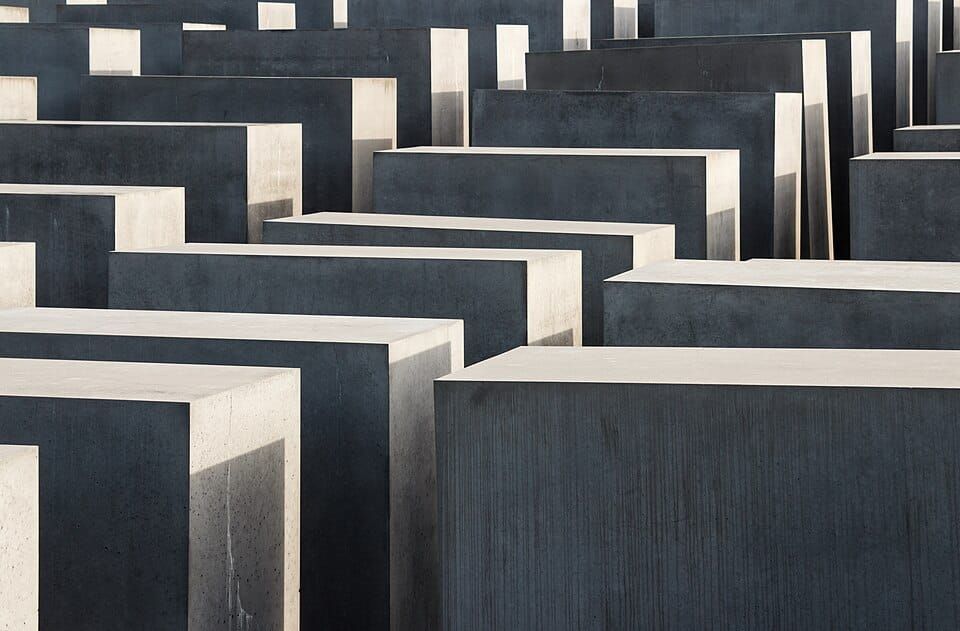
In 2021, the genocide scholar Dirk Moses coined the term “the German Catechism” in which he described German memory culture as implying “a redemptive story in which the sacrifice of Jews in the Holocaust by Nazis is the premise for the Federal Republic’s legitimacy.” “That is why,” he continues, “the Holocaust is more than an important historical event,” one which should be remembered and understood, but also “a sacred trauma that cannot be contaminated by profane ones — meaning non-Jewish victims and other genocides — that would vitiate its sacrificial function.”
Moses wrote this before the beginning of the ongoing Gaza genocide. He was referring to a broader trend in German mainstream memory culture — which is another way of saying state-sanctioned remembrance — that is often used to scapegoat racialised Others today, including German and non-German Jews who dissent from it. Part of the argument was pointing out how Germany waited until 2021 to recognise the German genocide against the Herero and Nama people between 1904 and 1908, a recognition that did not come with meaningful reparations to descendants of their victims. This remains true today, but what has become even more obvious is the racialised treatment of anything related to Palestine, even or especially when expressed by Jews in Germany today.
As the editorial board of Jewish Currents put it months before the beginning of the Gaza genocide, in today’s Germany “migrants and racialized minorities are expected to assume the perpetrators’ legacy” while “a questionably conceived anti-antisemitism has become the mechanism for keeping Germanness Aryan.” These dynamics, they add, are “largely absent from the mainstream story about memory culture in Germany.” The performativity of remembering in Germany is deployed to forget: to forget the root causes of the Holocaust and to favour instead a translocation of White supremacist Nazism unto the racialised Other today. There has been no room in the mainstream, for example, for understanding the resurgence of the far-right AfD which itself followed the February 2020 massacre against racialised people in the city of Hanau, when nine people were killed by a man who explicitly called for the “complete extermination” of “many races or cultures in our midst.” Instead, what we have been seeing in the past few years, and especially since the start of the Gaza genocide, is an increase in repression against any and all symbols of the inconvenient Other, particularly Muslims and Arabs and anyone who supports Palestine. No one made it clearer than the German chancellor Friedrich Merz himself who, in a 2025 interview with the defacto propaganda arm of the current American regime Fox News, blamed rising antisemitism in Germany on “imported antisemitism with the big numbers of migrants we have within the last 10 years.” This is despite the fact that the overwhelming majority of antisemitic attacks in Germany today are committed by the local Far Right.
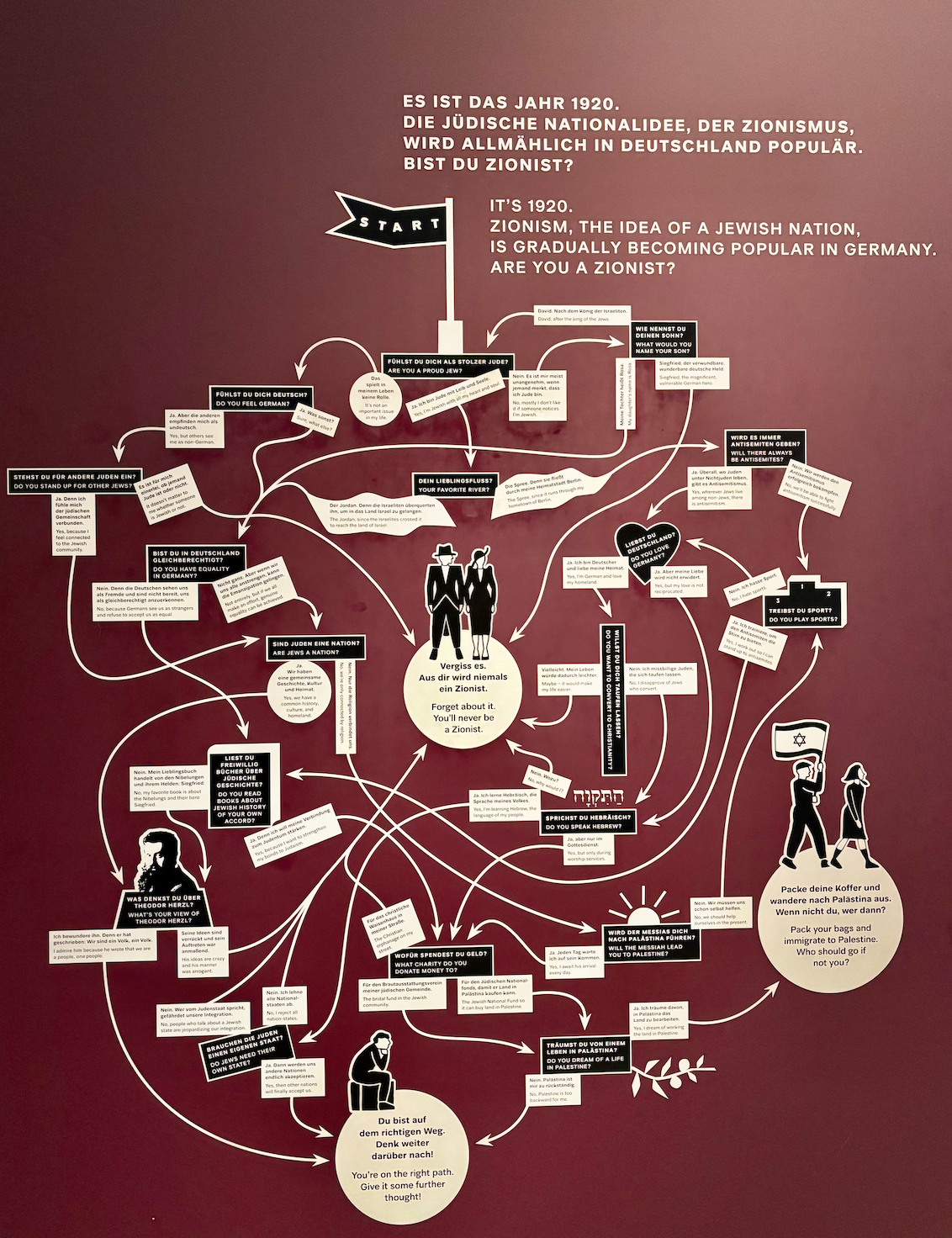
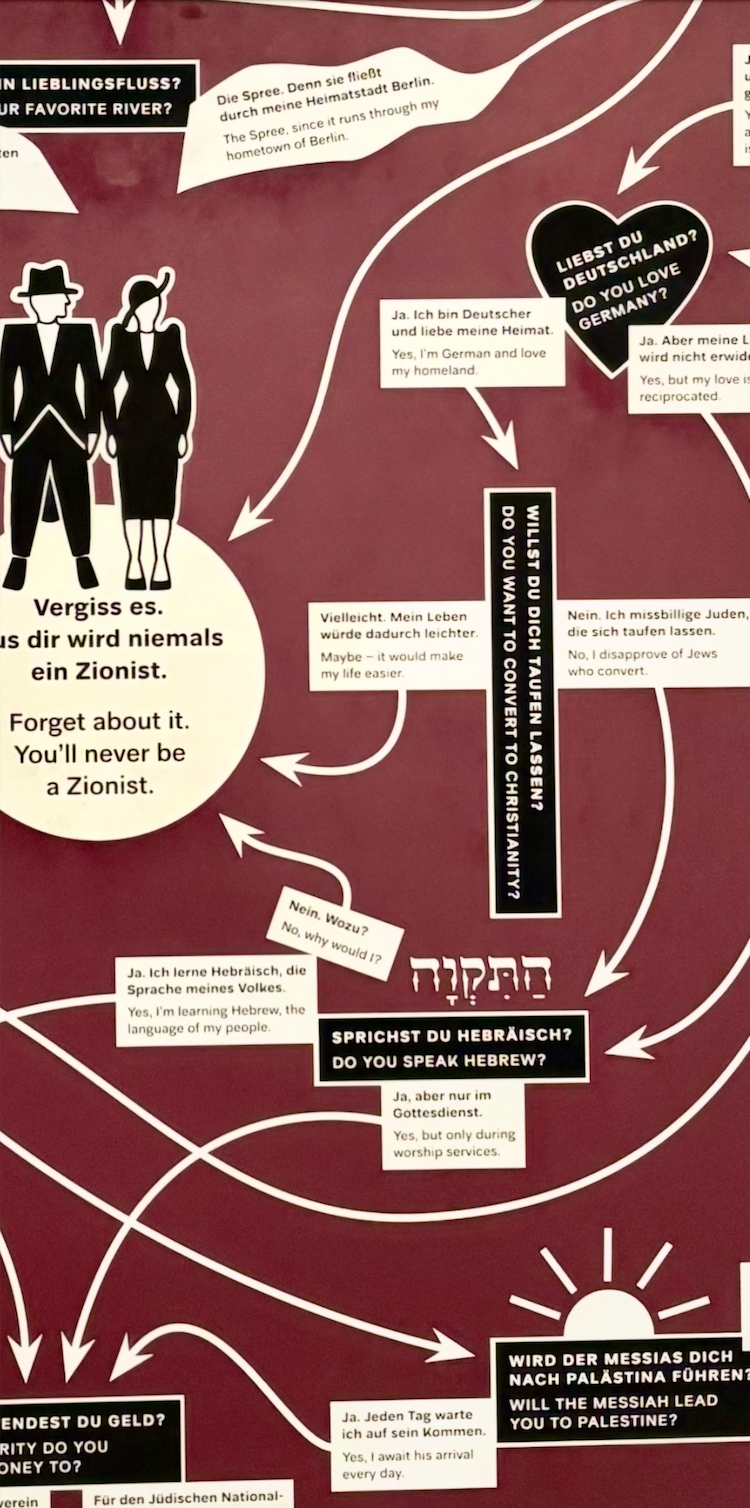
Display on Zionism in Berlin’s Jewish Museum, 2026. Image: Malka Leah, Der Spekter.
This scapegoating of the racialised Other is the end result of the absence of a critical memory culture that seeks to confront the past in all its ugliness. Antisemitic tropes are being revived under the pretense of Islamophobia, which cannot be understood as merely part of a wider xenophobic and racist European phenomenon — although it is also that — but rather a specifically German response that can be traced to its particular brand of memory culture. The Muslim, in this case, is not an individual at all, but merely the unwilling embodiment of Germany’s latest Othering obsession, a recycling of the 20th century rootless Jew for a modern Germany.
To understand this, we need to explore why German memory culture as we know it today did not immediately follow the Holocaust itself, but rather came about especially in the 1980s with the rise of memory studies and with, soon later, a newly reunited Germany’s desire to — and here I’m quoting Jewish Currents again — “show itself fit to enter the community of Western European nations.” The victims of the Nazi genocide were instrumentalised postmortem as proof of the viability of German nationalism, one which is different from the historical associations with the Third Reich. To do that, the German state decided to support the state of Israel at all costs, ironically proving that memory culture is a state-sanctioned affair rather than one which ought to be critically embraced by the wider population. Angela Merkel’s declaration of Staatsraison (reason of state) in her 2008 speech at the Knesset — delivered six months before Israel’s first major war on Gaza since the occupation began — further cemented this, and it is this new arrangement that is threatened by the mere presence of racialised Others on German soil, a repurposing of Nazi blood and soil rhetoric for the 21st century.
Under this logic, there is only one way to be a Good Jew, and that is one who supports the state of Israel’s right to kill as many Palestinians as it wants. This is what led George Prochnik, Eyal Weizman, and Emily Dische-Becker to write a month into the Gaza genocide that “once again, Germany defines who is a Jew.” By then, the brutal German response to pro-Palestine protests, including those organised by German and non-German Jews, was apparent for all to see. The state that spent decades telling the world that it has moved on from its violent past was producing a police force that now looks for any signs of Palestinian-ness such as the Keffiyeh or colours of the Palestinian flag to label all participants in a given protest, including Jews, as antisemitic. To put it differently, a largely non-Jewish political establishment has deployed a largely non-Jewish police force to crackdown against Jews and non-Jews who reject the only permissible way to remember the Holocaust. Those Jews who have declared “Not in Our Name” and “Never Again” are painted as either naive or traitors or both.
There is only one way to honour the past in Germany today, and it is through its denial. The German state is vindicated of its historical crimes because it unconditionally supports Israel. The unconditional support of Israel has become a core part of postwar German identity, and the Palestinian — or Arab, or Muslim, or inconvenient Jew — is a threat to that identity. Germany has embedded the occlusion denial of the past as part of its remembrance, reorienting the focus away from their past victims onto themselves. It is as if by acknowledging the Holocaust, the German state has given itself unprecedented authority over the very idea of a genocide, one which can never be compared to the Holocaust simply because it was Germans who committed it, and therefore they — and they alone — are the ones who can identify it. To quote Jewish Currents again:
In a perverse twist, the fact that the Germans were the most successful antisemites in history has here become a credential. By becoming the Jews’ consummate protectors, Germans have so thoroughly absorbed the moral lessons bestowed by Jewish martyrdom that they have no more need for the Jew except as symbol; by the logic of this strange supersessionism, Germans have become the new Jews. This is not only a matter of rhetorical authority on Jewish matters but is also often literal, as this self-reflexive philosemitism has led to a wave of German converts to Judaism.
This is why the notion that Germany is complicit in yet another genocide is blasphemous in German political culture today, and anyone who dares to suggest otherwise is treated with hostility or worse. For that same reason, anyone who compares modern Israel to Apartheid South Africa, let alone to Nazi Germany itself, is accused of antisemitism, an accusation largely made by non-Jewish Germans against anyone, including Jews. The aforementioned German Catechism coined by Dirk Moses was also in response to Germany’s antisemitism commissioner disinviting Achille Mbembe in 2020 for the comparison to Apartheid South Africa. Mbembe had also committed a grave sin when he compared the Holocaust to colonial violence, including German colonial violence,despite the fact that the colonial roots of the Holocaust are well-established. Felix Klein, the Federal Government Commissioner for Jewish Life in Germany and the Fight against Antisemitism, called Mbembe antisemitic, an accusation he never withdrew despite Jewish, including Israeli, Holocaust scholars coming to the defense of Mbembe. Klein, I should add, is on record supporting Trump’s Gaza plan which includes the ethnic cleansing of large parts of the Palestinian population of Gaza. Despite this, he remains Germany’s commissioner for Jewish Life in Germany and the fight against Antisemitism, serving as evidence that German so-called anti-antisemitism is indistinguishable today from the state’s complicity in the Gaza genocide.
Using a religious term such as catechism is not incidental or merely provocative. Moses cites a historian who couldn’t have made it more blatant:
The historian Dan Diner even takes the Holocaust, as civilizational rupture, as substituting the place occupied by God before the Enlightenment. The evidence lies in how the universal significant of the suffering of Jews in this genocide becomes the basis of a new world; but that, according to Diner, remains closed to those who through their “sacred temporal blockage” (he refers to Arabs) remain caught in the past before the “sacrifice.
Moses concludes from this that modern Germany negated Nazi morality by simply reversing “redemptive antisemitism” (Saul Friedländer) into “redemptive philosemitism.” Crucially, neither are actually about Jews as individuals but rather a particularly German projection onto a group of people called “the Jews” who can only be homogenous in thinking and in line with pro-Israel German Staatsraison. The German projection is what Bosnian-German writer Adnan Delalić termed “German Redemption Theology.”
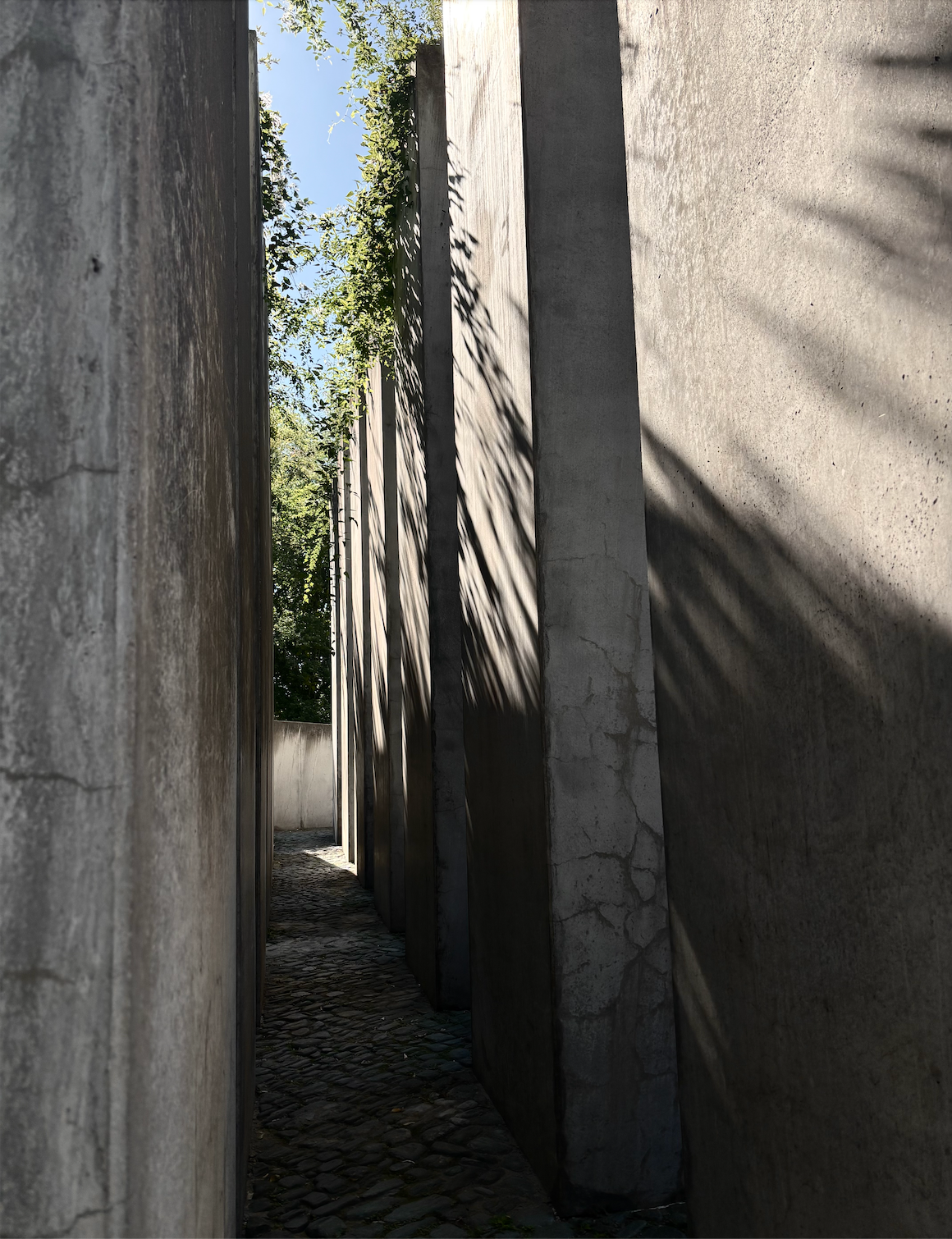
In fact, whatever guilt there may have been has run its course. It’s no longer The Question of German Guilt — the title of the German-Swiss psychologist and philosopher Karl Jaspers’s foundational philosophical 1946 text for what belatedly would become modern, Habermasian Germany’s self-image. It is now the German question. What is unfolding is not how guilt in any meaningful sense of the term looks, let alone understanding or humility. “Instead,” Talal Asad writes, “there is a readiness to cause pain to those who are to be saved by being humanised.” If anything, we’re witnessing an unrestrained national jouissance, vicarious or not, of liberating the nation from the burden of the past, entitled to finally again indulge in racist panic, denunciation, authoritarianism, and murderous militarism with impunity. Put another way, it is the season of guilt-free nationalist excesses. Verily, this is not about guilt but the purified white German soul projecting itself onto the world. In other words, it is about white German identity politics and the making of a new German nationalism, one that, in Asad’s words, “must dominate the unredeemed world – if not by reason then, alas, by force – in order to survive.” In German redemption theology, Germany imagines itself as emerging from the Holocaust as purified from Nazism and antisemitism.
To put it differently, German redemption requires the genocide of Palestinians. Instead of finally dealing with the Jewish Question, i.e., the question of European antisemitism, through a universal rejection of all forms of supremacy, modern Germany has instead created a German Question, namely how German political culture has once again found itself directly complicit in another genocide. This is not a negation of the Jewish Question but its latest manifestation, one which is now joined by the Palestinian Question, which — following the Palestinian scholar Raef Zreik’s formulation in May 2023 — is itself a Jewish Question. In Zreik’s words, the Palestinian Question is a Jewish Question in “the fact that Israel was an attempt to solve the Jewish question. So it’s transferred the question from Europe into the Middle East, and it still thinks that it’s solved the problem.”
"Under this logic, there is only one way to be a Good Jew, and that is one who supports the state of Israel’s right to kill as many Palestinians as it wants."
Since the Mbembe affair, multiple intellectuals, and most notably Jewish ones such as Deborah Feldman, Masha Gessen and Judith Butler, have all been targeted by Germany’s media and political establishment for their rejection of German Catechism and Redemption Theology. Germany’s many antisemitism commissioners, who are now part of a highly bureaucratized function, have accused multiple Jews of antisemitism including German Israeli sociologist Moshe Zuckermann and Jewish South African photographer Adam Broomberg. To go back to my earlier point about this being a primarily non-Jewish German affair, “none of the antisemitism commissioners for either the German Federal Government or its Bundesländer, or states, is ethnically Jewish,” which Klein himself told Jewish Currents in 2023 is by design. Schüler-Springorum, the director of the Center for Research on Antisemitism at the Technical University of Berlin, noted that “it’s amazing how little they know about National Socialism,” referring to the commissioners. However, as we’ve seen, this is understandable within the logic of German Catechism and Redemption Theology. Jews in Germany are to be rendered into an abstraction that serves a state purpose. They are not to have individual thoughts and beliefs of their own. Klein even argued that Israeli Jewish leftists in Berlin who oppose the Israeli state’s actions should “be sensitive to Germany’s special historical responsibility.” They must fall in line to make way for the purification of the “white German soul,” to use Delalić’s framing again.