A Daloy Politsey Against ICE
If my Jewish grandparents were detained by ICE today, they’d be portrayed as poor people with too many kids who don’t “deserve” to be here.

My whole life, my grandparents were spoken of like a fairytale. My grandmother, the tragedy, who was kind and funny, a talented violinist that had a Stradivarius which was sold so they could come to this country; a woman who loved her children, but did not know how to care for them or herself and would die by the time my own mother was eight due to poverty and lack of medical care. My grandfather, the villain — a man of myth who sold apples in the Bronx and trained horses, but never had enough money to care for his children, let alone bury them, but had enough for a mistress. And the real legend, the one who rose above it all, my mother, who survived, despite being kept in a basement after her mother died and becoming a runaway at fifteen. If my Jewish grandparents were detained by ICE today, they’d be portrayed as poor people with too many kids who don’t “deserve” to be here. And yet, they created my mother who has always built community wherever she is. She connects with people constantly whether it is in line at the grocery store or in the waiting room of a doctor’s office. A gift that comes from going too long without true connections.
My mother has always felt like an outsider and because of that she has always worked to bring people into her circle. She felt, because of her poverty, that she was an outsider in the Jewish community in the Bronx where she grew up. When she ran away to the Hudson Valley and moved in with my father’s family, there was no mistaking she was an outsider in the small rural, predominately Italian-American town — the town I would be raised in. Unlike my Italian-American grandparents, my Jewish grandparents didn’t have the reverence of people who moved here for the American dream and achieved it. They were not the exceptional immigrants. Our history was one shrouded in death and shame.
For a long time, I didn’t know how to grapple with my family history, one that caused my mother so much pain, but I see now that there were systems in place and a trauma that comes from having no choice in leaving your home. I always felt I wasn’t Jewish enough to speak on these issues; I wasn’t religious enough; I wasn’t a Zionist. And yet, I have never wanted my Jewishness to just be a story of trauma.
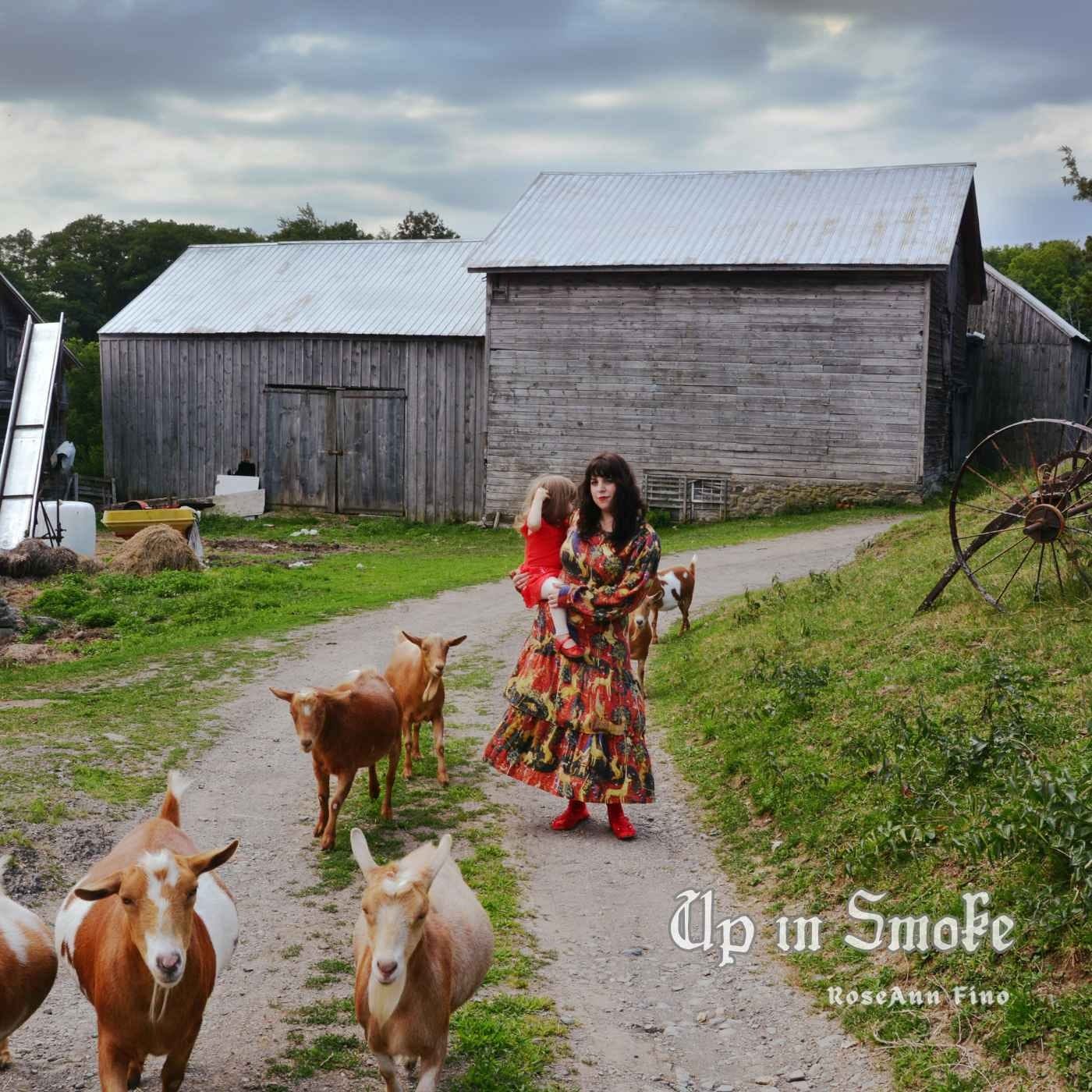
Growing up in the Hudson Valley, I was raised on folk music that taught me to speak out against injustice. Pete Seeger, The Band, and Bob Dylan informed who I was and my politics in a conservative town. Years ago, when I stumbled upon an old Pete Seeger video with Ruth Rubin, where she sings “Tumbalaika,” a light bulb went off. There were my two worlds colliding together: Pete Seeger, a Hudson Valley resident, sitting alongside Ruth Rubin, the first person to record Yiddish music on tape and who worked tirelessly, from 1947 on, to keep Yiddish folk music alive by meeting with Jewish immigrants. I realized I could have a connection to my heritage the same way I have always been connected to my grandmother, despite us never meeting, through music. I began performing “Tumbalalaika” at shows and singing it to my daughter when she went to sleep. A way for us to connect to our heritage that has nothing to do with pain, but everything to do with joy and defiance. It, too, like “Daloy Politsey,” is on my upcoming EP “Up in Smoke” that will be released October 23rd.
The last few years I’ve found writing like that in Der Spekter, creator Zohare Jacobi’s “Jewitches,” and Molly Crabapple’s Here Where We Live is Our Country, that has resonated with so many of us whose Jewish values and history pushes them to use their privilege to speak out against injustice. The idea of doikayt, that Jews have the right to exist wherever they are, rings so true in this moment of history because it is something that we all deserve. We all deserve to live in a place where we can be part of a community and embrace our culture without barriers of wealth and systemic oppression.
When ICE began murdering our fellow Americans in Minnesota, the only thing I knew to do with my anger was channel it into music. My music has always been a way for me to process the world and remain optimistic, whether it was using my voice to sing about working class issues, or putting on events in New York like “Not My President/A Monthly Show of Resistance,” from 2016-2019 and my current concert series “Love is the Message” which brings artists together to raise money for food banks or organizations like Trans Lifeline and Planned Parenthood. I was having trouble finding the words to sing about such a tragedy until I once again went back to Yiddish and klezmer music, a music that came out of defiance and joy and resilience.
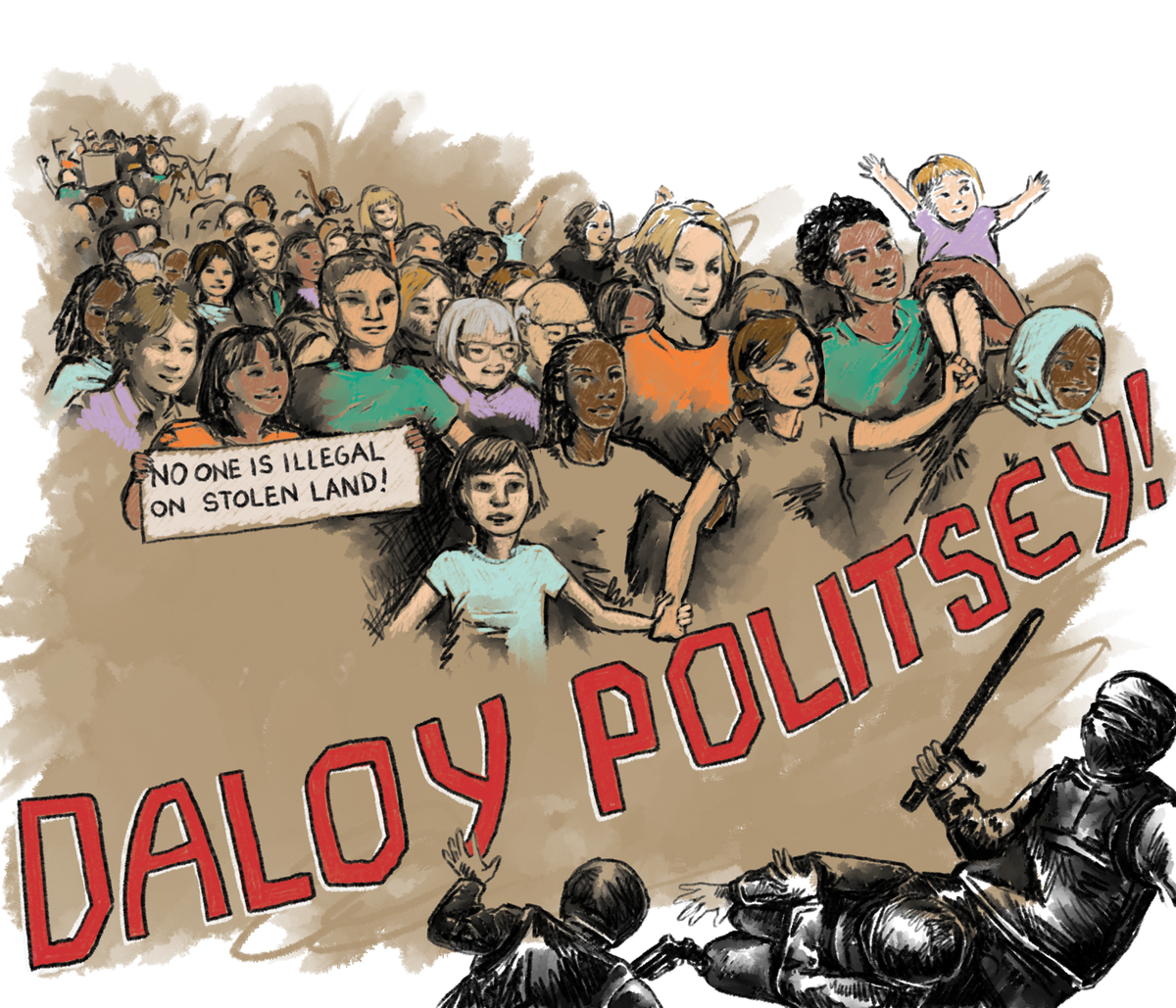
“Daloy Politsey,” a Bundist labor song, (usually performed as a mash up as both “Hey Hey Daloy Politsey” and “In Ale Gasn”) resonated deeply. It is said to have been first transcribed during the 1905 Russian Revolution, when my own family was still in Russia trying to escape to the United States. I couldn’t help playing it over and over, whether it was Isabel Frey’s gorgeous rendition or Rajtaraj’s rowdy, fiery call to action. It was Geoff Berner’s version though that inspired me to write a version with lyrics in English about what was going on with ICE. Geoff Berner’s “Daloy Polizei” discusses police brutality in Canada with the addition of “It means the same thing now as yesterday. Out of your houses into the streets, everybody say, ‘fuck the police!’” I began playing around with this version and within the span of an afternoon was able to write about ICE’s brutality in a way I hadn’t had the words to before.
My own reinterpretation will be released on September 4th via Bandcamp. All proceeds will go to Columbia Sanctuary Movement, which works to “organize with immigrants and allies to collectively support, empower, and defend our communities” here in the Hudson Valley. They work to provide community organizing, legal support, deportation defense, accompaniment and family support, and community building. I’ve worked in public-facing jobs my entire life whether it was behind the bar in New York City or in the front of a classroom. I’ve seen the overcomplicated barriers that keep new immigrants from becoming citizens, the fear of going to school or work, but more importantly the way they are a part of this community as anyone else. We have one of the largest populations of undocumented immigrants here in New York, and they belong here. Doikayt is for us all.
It is infuriating that an anti-authoritarian protest song from 1905 can resonate so effectively today, but there is a comfort in knowing that these institutions, like so many of the past, will fall. It benefits people in power to have us divided and fearful of each other. That fear is constantly used by those in power to convince us to be hateful, but there is so much to be found in our histories that reminds us we are stronger together, united, against propaganda.