Doikayt as a Doorway to Mindfulness
How can we respond with care to global events when our ability to directly make a difference may be limited? Ramsey Margolis suggests that political activists use doikayt to bring themselves back to the present moment, strengthening the effectiveness of their activism.
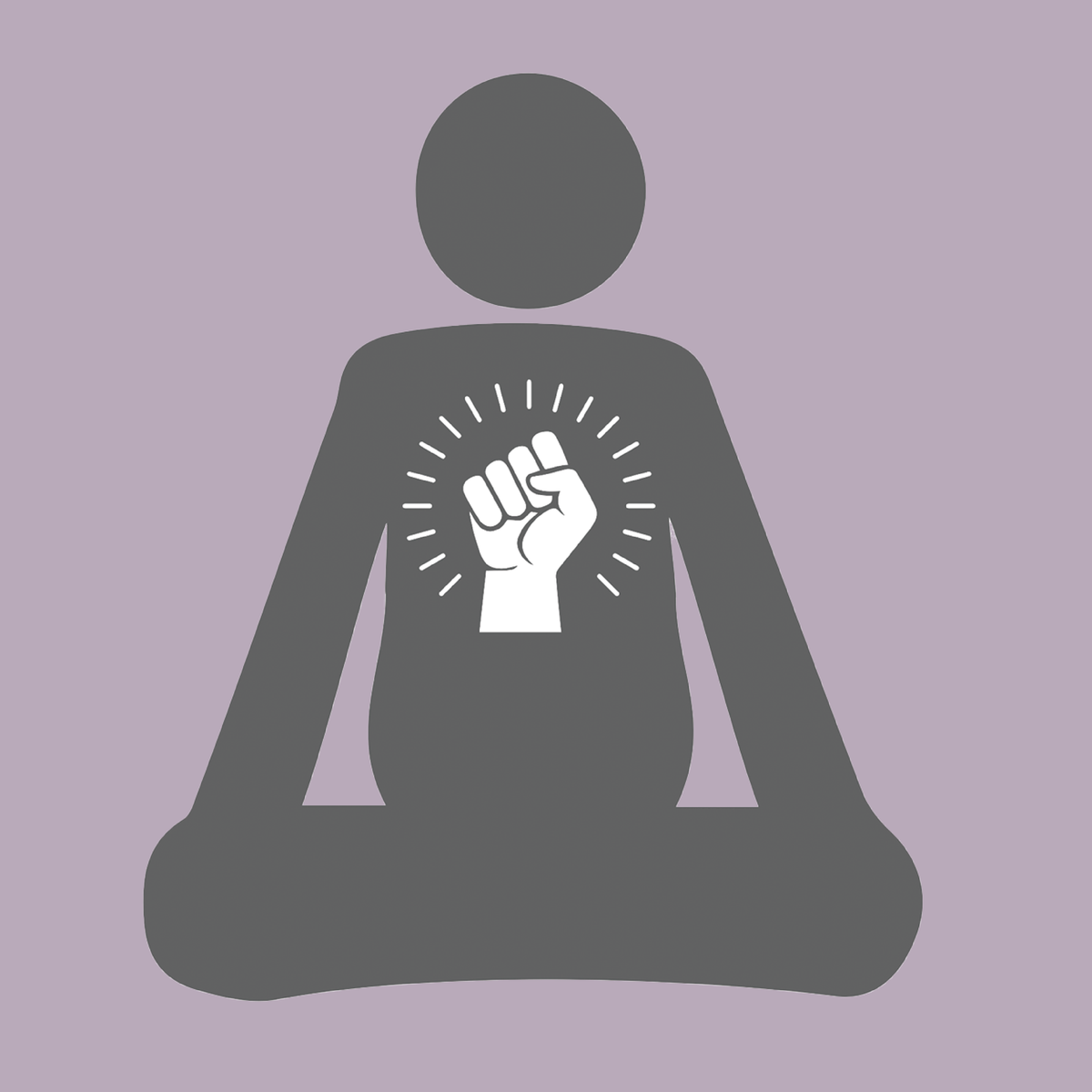
One observation made of political activists, which you may well agree with, contains some truth: we tend to shout at people we disagree with. Not only that, but we shout at each other as well. Could this be because we don’t really know how to listen to each other? This question gives rise to others. Can we become more effective political activists by cultivating a meditation practice? After all, as we meditate, we’re listening to ourselves, so when we get better at listening to ourselves, will we be better able to listen to those difficult people who don’t agree with us?
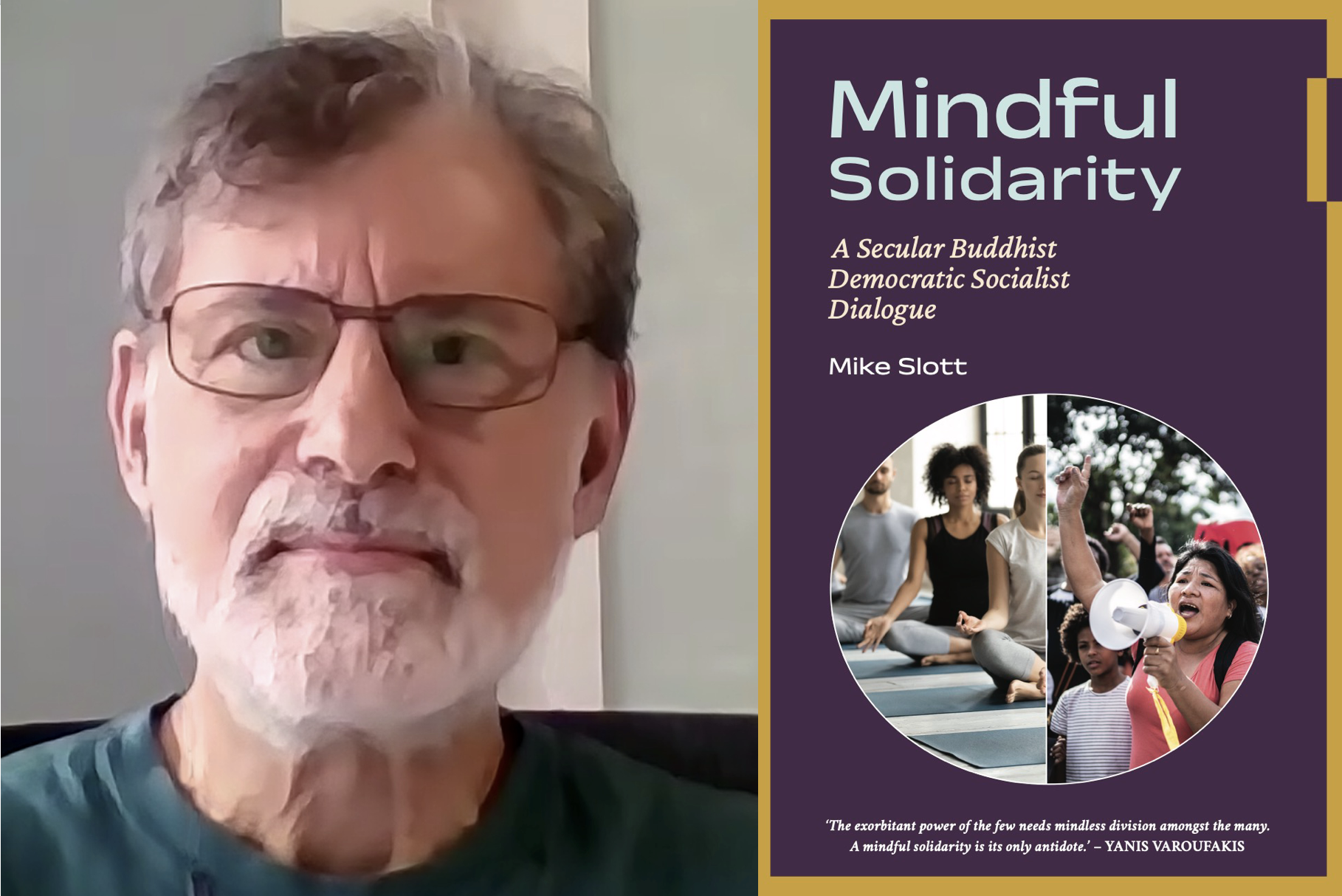
Mike Slott explores issues such as these in his book Mindful Solidarity. He suggests that activists need to engage at once in both social and individual transformation: in political movements and meditative practices. Democratic socialist politics along with a secular form of Buddhism are both essential, he tells us, if we want to create a non-exploitative and just society in which everyone has the opportunity to flourish.
Slott points out that these two processes interact and support each other. An ethically-informed secular Buddhist meditation practice is an essential tool for social and political activists as we work to transform oppressive social institutions, the source of so much human suffering. According to Slott, our political movements will become more sustainable and fruitful when we incorporate the Buddhist virtues of care, compassion and mindfulness into our campaigns and projects.
Buddhist Bundism, or Bundist Buddhism?
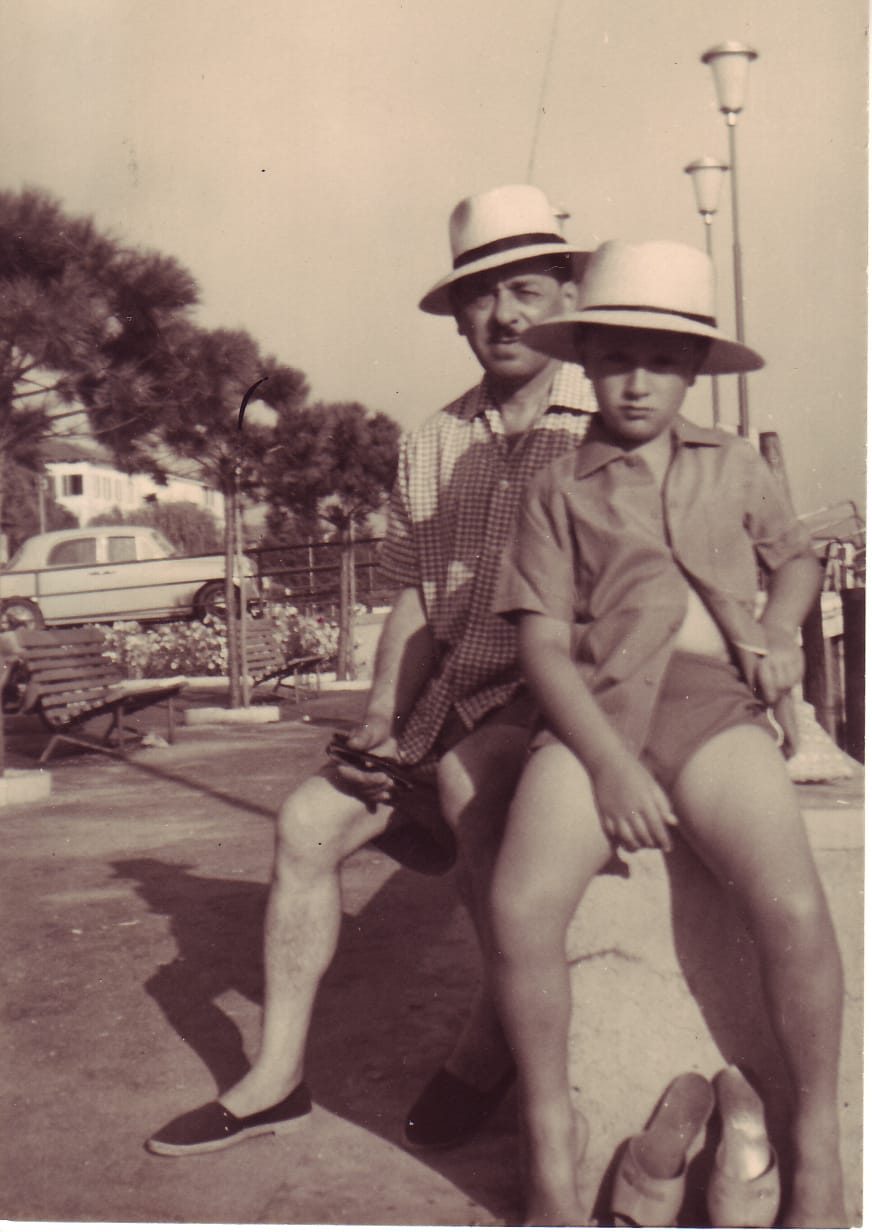
Yiddish was the language spoken around me when I was young. My father, who was born in 1906, had a lot of sympathy for the Jewish Labor Bund, an organisation which emerged just nine years before he was born. He had the socialist Sunday newspaper, Reynold’s News, delivered to our London home each week, and spoke of taking part as a 30-year-old in the Battle of Cable Street with Bundist friends.
I absorbed his compassion for those who were less well off as I grew up. Initially I found my understanding of human actions and relationships in the world of anthropology. I was really puzzled, though, by what other Jews had been inflicting upon the Palestinian people since 1917. Their actions have horrified me. So what can I do? How can I respond effectively, with care?
Since you’re looking at the website of Der Spekter, you may be familiar with the Bundist principle of doikayt or ‘hereness’. You will of course know doikayt as a political principle; we might even call it a slogan. You won’t find mention of doikayt in any Buddhist book – yet. However, I am finding it helpful to use doikayt in my meditation practice. Sitting in meditation, we soon realise the mind has been wandering into areas we’d rather not go, so we may pop a thought into the mind. Breathing in, you might say to yourself, ‘doikayt’ or ‘hereness’. Wherever you are, and whatever you are doing, I encourage you to bring yourself back to present moment awareness by silently introducing the word doikayt into the mind.
I’ve been meditating for more than 30 years, and what has kept me doing it every day is having a creative practice, for example a reflective meditation practice in which at the end of each session I recollect what happened while I was meditating, write down what I can recall in a journal, and then at the end of the month read through all the journal entries. There are teachers who will tell you that their one practice is the only one that “works.” The thing is, the way we practice changes over the years, it doesn’t stay the same. The way we start meditating isn’t necessarily going to be useful forever. We all have to start somewhere, and introducing the notion of doikayt into the mind to bring us back to the present moment works well. We are here, now, and we are Bundists, now.
Above all, I am not trying to stop thoughts, but notice them. And over the years, as someone who is socially and politically engaged, I’ve noticed lots of political observations, disagreements, and debates popping into the mind, which is fine.
Bringing the notion of doikayt or hereness into a daily meditation practice is a creative way to remind ourselves of our intention to become fully present, wherever we are, whatever is happening, even thinking as such. Doing this, we can then respond with care to whatever arises.
We are all looking for practical solutions to issues in the mind and in the world. I encourage you to try exploring what hereness means for you in meditation as well as in everyday life. Those who meditate regularly will have registered that paying attention is an art form, not a science. If we can change our mind, we can change the world. The historian Rutger Bregman has stated that the inability to imagine a world in which things are different is evidence only of an untrained imagination, not of the impossibility of change.
But for those of you who haven’t yet tried to meditate, I recommend that you give it a go. What happens when we sit in meditation? We become aware of having a mind full of thought, a mind that wanders off into some really odd places, again and again. A lot of people do this practice to deal with something going on in the mind they find unsettling. This is part of being a human – a mind that wanders is a condition that comes with having a brain. There’s nothing wrong with you. The question we need to ask is: what do we do when we notice these odd thoughts, these unpleasant thoughts, these repetitive thoughts? How do we respond?
When I sat in meditation for a number of days at a retreat centre, or at home, I would often find myself ruminating. The same thoughts would go round and round. They may, for instance, be about sex, and often what would go through my mind were thoughts that, actually, I wouldn’t dream of recreating in everyday life. So I began to wonder: if none of these stories were real life interests, what was actually going on?
Using this reflective approach to meditation, I was able to see that the mind was preventing me from dealing with memories and observations that were bubbling up from the unconscious. It was drowning out the possibility of effecting change, keeping me stuck. I saw glimpses of self-doubt, memories of difficult childhood events, as well as awareness of my harmful and addictive behaviour patterns.
Like most people, I’ve had a fair few addictions, none of which were life-threatening, or even truly wallet-challenging, thank goodness. The physician Gabor Maté writes excellent books on addiction and the trauma he believes is the root cause of so much addiction. In one of his books he admitted to having had an addiction to buying opera CDs. I’m not an opera buff, but I do recall one Saturday in the 1980s going into the centre of London, wandering around music stores, and getting back to my car with 14 new CDs. I remember how I felt, and the cold sweat which came over me that day. Sure, I like music a lot, and yes, I still have all those CDs, but I’d spent £200; a huge amount of money.
So, when we meditate, how do we deal with issues like these when they arise? We come back to the present moment using an anchor. For most people it’s the breath, or sounds perhaps, or asking a question such as, ‘What is this?’ Or maybe a loving kindness meditation. This is what we do; we anchor ourselves. I’m suggesting that doikayt can do this for us.
But when we’re not present, where are we? A Yiddish word we might use is dort, hence dortikayt (or ‘thereness’). So…doikayt…dortikayt. These approaches are diametric opposites. From what I can see, doikayt is not a truth claim to believe, nor is it something to identify with. The secular approach to Buddhism that I’m involved in doesn’t ask anyone to believe anything, or identify as anything. I find it really helpful to drop the word doikayt into the mind as a tool when sitting in meditation. Doing this brings me back to present moment awareness and, I have found,helps me to skilfully engage with people I don’t agree with politically.
...
In essence, the Bund is a socialist party for Jewish people. My father made it clear to me that the Bund saw the dream of the Zionists as escaping the rigours of life in Europe and setting up a new, Jewish-only state in part of what had been the Turkish colony of Ottoman Syria. Over there. Having been conscripted into the British army in the second world war, my father had served there when that land was still known as Palestine. And at home that was what we called that land.
You may have come across the American spiritual teacher Ram Dass. He was born Richard Alpert to a Jewish family in 1931. During a talk at Berkeley Community Theater in 1973, he told the audience that, “my Jewish trip was primarily political Judaism.” The title of his 1971 book – Be Here Now – could be an extension of the concept of hereness, of doikayt.
His book has sold more than two million copies, and it has nothing to do with politics, Jewish or otherwise. Or did it? If you read Be Here Now, you may well find, as I did in the 1970s, that the author’s metaphysical views don’t sit well with you. In fact, the kind of metaphysical truth claims that Ram Dass propounded – such as that the physical world is an illusion where we are all expressions of the divine – raised a barrier that effectively stopped me, as a political activist, from meditating. I feel way more comfortable using doikayt.
But don’t let Ram Dass and his kind put you off. I leave you with the words of Yanis Varoufakis, author of Technofeudalism: What Killed Capitalism: ‘The exorbitant power of the few needs mindless division amongst the many. A mindful solidarity is its only antidote.’
Ka nui tenei, he kona ra, mā te wā.
This article has been updated from a talk given on 23 July 2025 in Wellington, Aotearoa New Zealand, to One Mindful Breath, a secular Buddhist community.
About the author:
Raised in Golders Green, NW London, I am the Publisher at Tuwhiri, a secular Buddhist imprint (unpaid). My last paid role before ‘retirement’ was Executive Director, Cooperative Business New Zealand. My passions are typography & farshteyn doikayt.