An Open Letter to Dr. Nissim Yaakov Malul
Once, your advocacy for Arabic and rejection of separatism inspired me to discover my Arabness and commit to Palestinian liberation. Now, your history is a reminder that true solidarity with Palestinians means co-resistance, not coexistence.


Eds. Note: Source citations in this piece have been changed to links for easier reading. For full citations, please visit this article in the Spring 2026 issue of Gazoz De Frambuaz.
May 30, 2026
Emanuel Ovadia
Miami, Florida
Dr. Nissim Yaakov Malul
Jaffa, Palestine
Estimado doktor:
In June 1913, you wrote an article warning that if the Jewish residents of Palestine failed to learn Arabic they would become “an isolated nation, separated from all other nations living under Ottoman rule.” (1) In your lifetime, you witnessed the redefinition of the diverse and often separated Jewish communities of Palestine as a single yishuv. Your article sought to address the danger of separatism that this change posed. Though advocating for Arabic, your article addressed your Jewish audience in Hebrew, reflecting the fact that 1913 Palestine was home to nearly as many Hebrew newspapers as all of Europe.
You might have difficulty imagining how revolutionary your article is for someone reading it over 100 years later. Time and again I’ve reflected on your call for the Jewish community to deepen its connections with the Palestinian people and the wider Ottoman world through Arabic.
Your article became a metaphor for an Arab Jewish world I desperately wished to inhabit. (2) You called on Jews to speak Arabic, whereas the Arabic of my ancestors had been hidden and forgotten. You wanted to stay connected to your non-Jewish neighbors. My family had long been separated from our Syrian, Kurdish, and Turkish communities. Your article challenged the Arab-Jewish binary. No one from my family ever questioned the idea that Jewishness and Arabness were diametrically opposed.
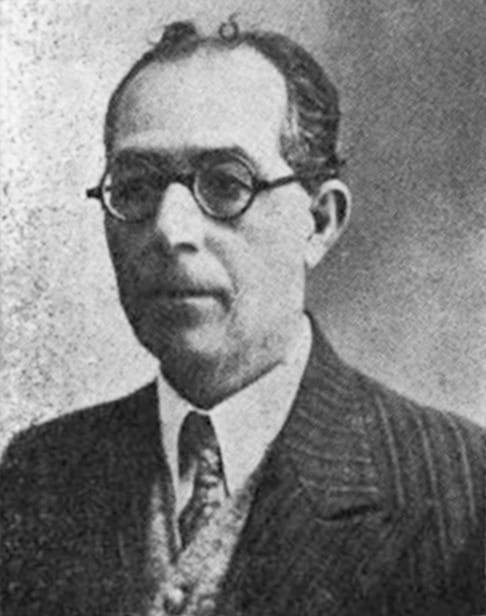
I soon found that you shared these ideas with a wider circle of SWANA Jewish intellectuals, such as Esther Azhari Moyal, Shimon Moyal, and Avraham Elmaliah. While you addressed Jewish readers in Hebrew, you connected with Arab intellectuals through the Nahda, the Arab renaissance. You and your colleagues translated books into Arabic, published Arabic plays, and contributed to the Arabic press. You wrote about literature, nationalism, religion, and feminism. Even without the Nahda, SWANA Jews could appreciate Arab culture. But through the Nahda, your circle acquired a more intimate experience with Arabic literature, the Arabic press, and Arab intellectual circles than other SWANA Jews.
Your Ottoman context was just as impactful. Your circle was animated by the promises of the 1908 Young Turk Revolution: ethnic and religious equality, cultural autonomy, a parliament, and a free press. We now know that the empire failed to keep these promises. And the relations between different communities were never as good as we would like to imagine. But in those early optimistic years, your circle envisioned Palestine as a “shared homeland” where all peoples could enjoy equality and cultural autonomy while contributing to the same future. Your circle rejected exclusion and separatism, though the Jewish community of Palestine and the wider Ottoman Empire would adopt ethnonationalism years later.
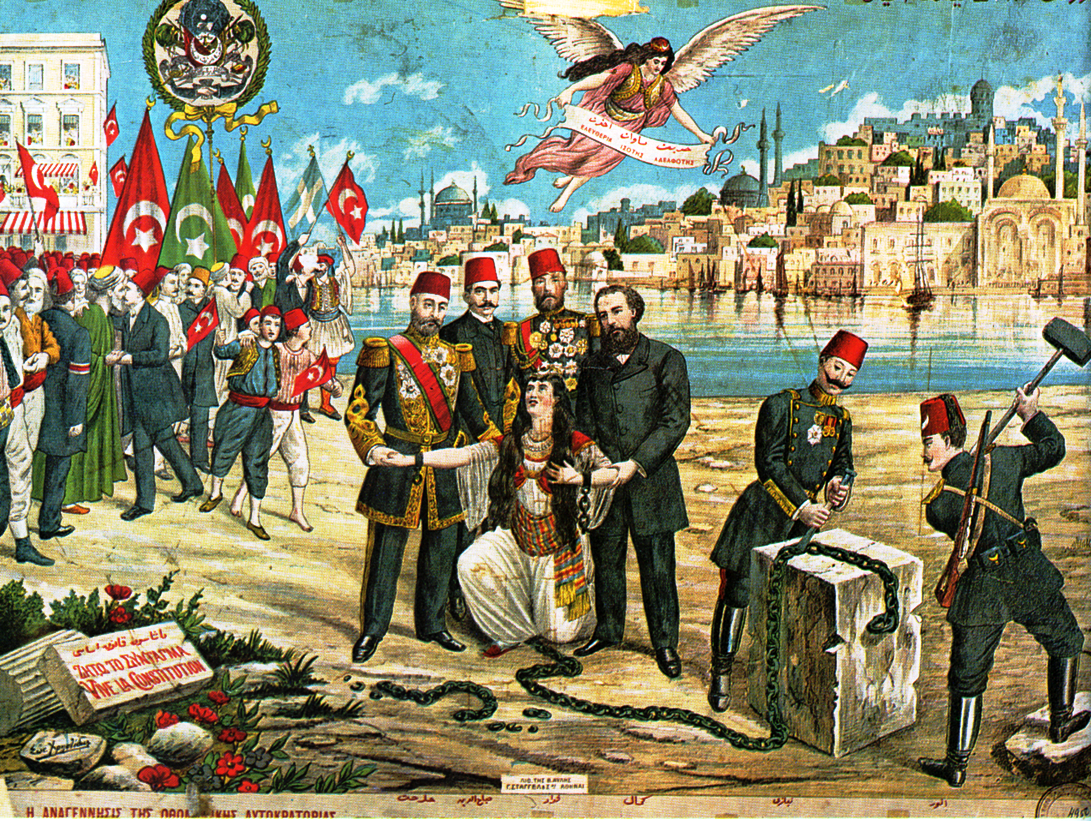
But even in the 1900s, when that future was not yet certain, your ideals of multilingualism, autonomy, and sharedness would spark outrage. And perhaps no issue better encapsulates this controversy than your circle’s plan for a Jewish Arabic newspaper.
First proposed in 1909, the idea of a Jewish Arabic newspaper offended the more militant milieu of European Zionists who would come to dominate the Jewish community of Palestine. They saw language as a zero-sum game which modern Hebrew needed to win. Communicating with their neighbors did not concern them. After all, they had no qualms with becoming an “isolated nation.” And so nearly each time that you or your colleagues proposed a Jewish Arabic newspaper, you faced immense backlash.
Crucially, these debates reveal the current of anti-Arab racism which undergirded Zionism then and now. A particularly illustrative example comes from a series of 1911 articles by Avraham Ludvipol, a writer who left what is today Ukraine for Palestine in 1890. While Ludvipol was not the most influential figure in Ottoman Palestine, his polemics exhibit how the proposal of a Jewish Arabic newspaper stirred European Zionists committed to Jewish-Arab binarism. Ludvipol dismissively wrote that “if the newspaper is Hebrew [Jewish], it will not be Arab; if it is Arab, it will not be a Hebrew newspaper.”* He did not stop at imposing an Arab-Jewish binary. He accused your circle of “preach[ing] for assimilation and merger with the Arabs [Palestinians],” and demeaned your colleagues as “importunate brainless assimilationists.”*
It was hardly novel for European Zionists to ridicule other Jews as “assimilationists.” Yiddish-speakers faced such issues countless times in the Zionist world. But your colleagues picked up on the anti-Arab racism unique to articles targeting SWANA Jews. As Shimon Moyal saw it, Ludvipol’s objections had nothing to do with the proposal, but rather that “I, the Sephardi Easterner, dare demonstrate that his European opinions and experiences are insufficient for the proper assessment of Eastern affairs.”*
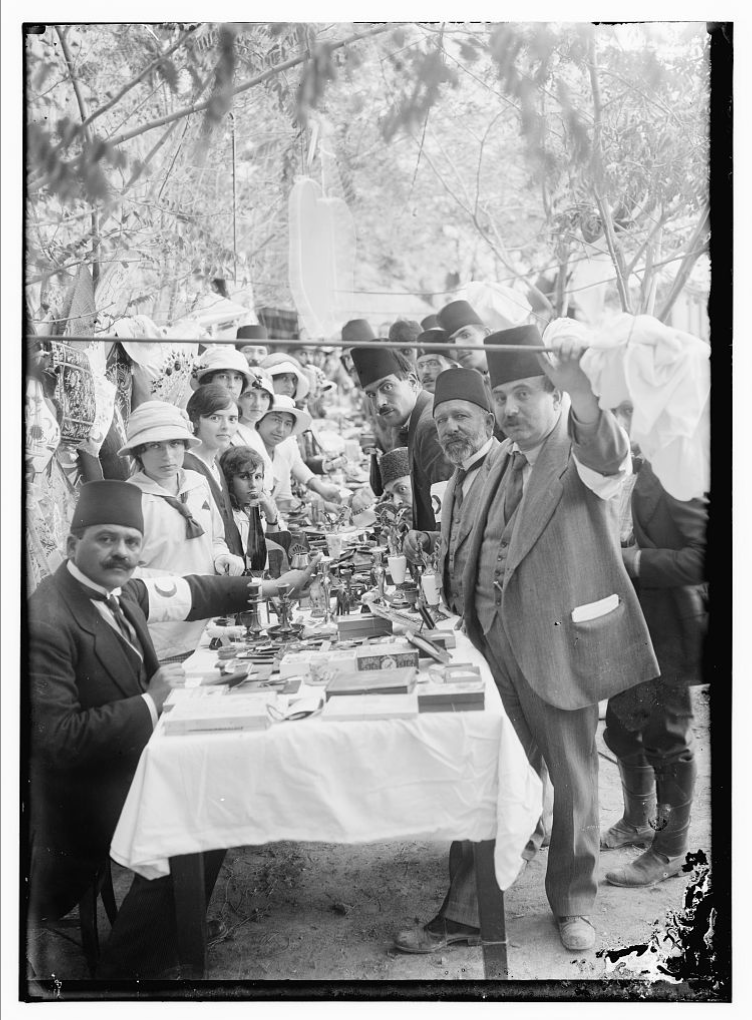
Your colleague Y.D. Maman also weighed in. He argued that “Ludvipol does not really think that [Jewish advocates of Arabic] are false nationalists but [rather] complete Arabs of the Jewish faith.” In other words, Maman believed that Ludvipol was not questioning the circle’s ideological loyalty, but their Jewishness entirely. Maman also wrote that once, when he had upset Ludvipol, the latter raged that “Sephardim are stupid Arabs, incapable of understanding the value of responsibility. […] If you crush a Sephardi the remains will be Arab.”*
Anti-Arab racism was not relegated to fringe European Zionist polemics. Arthur Ruppin, a eugenicist who led the World Zionist Organization’s Palestine Office in the 1900s, conceptualized SWANA Jews as inferior to European Jews. Ruppin argued that SWANA Jews had assimilated too deeply with non-Jewish Arabs and had too many “Semitic” genes to be useful for the purpose of restoring the Jewish genome and settling Palestine.
As Moyal and Maman made clear, your circle was well aware of the racist attitudes that European Zionists held. What might surprise you, however, is that Zionism’s anti-Arab racism would only intensify. Later Zionist leaders adopted Ruppin’s eugenicist approach. As the State of Israel absorbed hundreds of thousands of SWANA Jews in the mid-twentieth century, Zionist officials at all levels viewed them through racist taxonomies while discriminating against them in immigration, housing, education, employment, and policing. Likewise, decades after your trials in the Hebrew press, SWANA Jewish migrants faced oppression in the State of Israel for sharing the language, culture, traditions, and physical features of the Arab “enemy.”
Yet, despite the bigotry, it seems that your circle never questioned how anti-Arab racism relates to Zionism. While your colleagues criticized European Zionists for “viewing us paternalistically, looking down on us and alienating us,”* have you ever considered that their racism was an extension of their attitudes towards Palestinians?
You and your colleagues often claimed that you were the only Jews “who know the language of the country […,] who know the characteristics of the Arab people.” But your circle’s commitments to Zionism imply that you never questioned its view of Palestinians.
Your circle argued that Palestinian opposition to Zionism was all a big misunderstanding. You set up meetings and established organizations to convince Palestinians of the merits of Zionism. You argued that Palestinians would support Zionism if it were not for the Arabic press, branding Palestinian editors as “antisemites.” Your circle went so far as to convince the Ottoman government to shut down Palestinian newspapers. And you, Dr. Malul, worked for Ruppin himself, helping the World Zionist Organization monitor the Palestinian Arabic press. All the while, your circle never dealt substantively with Palestinian opposition to Zionism.
Palestinian Arabic newspapers consistently reported on Zionists buying up Palestinian land, displacing Palestinian farmers, and neglecting to adopt Ottoman citizenship. Unlike European Zionists, you and your colleagues believed their perspective could not be ignored. But rather than deal with the substance of their concerns, you believed the solution was an Arabic newspaper which could defend Zionism in the press. By acting as if Palestinians were unable to understand Zionism’s true nature, you and your colleagues treated them with as little seriousness as Ludvipol treated you.
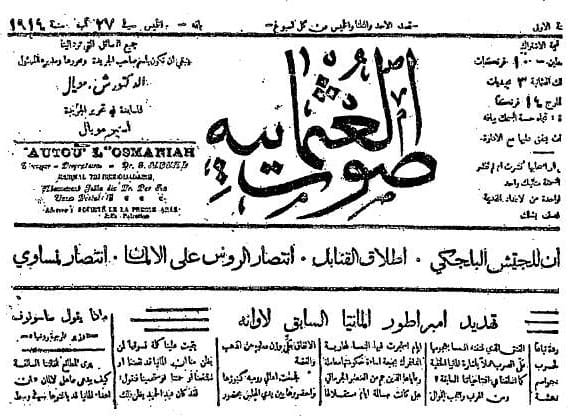
I recognize that I write with the privilege of hindsight. Historians have collected, analyzed, and translated the racist designs of Zionist officials. Books, interviews, and digitized maps testify to the countless Palestinian localities that the State of Israel destroyed. Even a simple search yields a throughline between Theodore Herzl and the forced displacement of Palestinians in Gaza today. I’m not asking you to predict the future with my clear view of the past. Instead, I’m calling on you to listen to the Palestinians of your present.
Since reading your 1913 article for the first time, I’ve learned from Iraqi and Egyptian Jewish organizers of the 1940s, Moroccan activists like Abraham Serfaty, and today’s generation of SWANA Jewish anti-Zionists. SWANA Jewish activists from the Damascus Association of Jewish Youth in the 1920s to the late Sion Assidon a century later also embodied your circle’s appreciation of Arabness. But they never failed to see Zionism from the viewpoint of Palestinians, and so they understood that a shared homeland was no replacement for real solidarity.
And yet, I’ve never forgotten your article even as I recognize your shortcomings. I haven’t forgotten your colleagues, even as their texts now leave me wishing that they would see the anti-Arab racism rooted in Zionism. I haven’t forgotten your vision either, a shared homeland that was never truly shared.
I remember you because, through these contradictions, I see traces of a solidarity you could have pursued: writing with rather than censoring the Palestinian press, leveraging your connections to prevent rather than facilitate land sales, and truly listening to the concerns of your neighbors. I cannot deny that these traces connected me to an Arab Jewish world. Ultimately, that world led me to the rich tradition of SWANA Jewish co-resistance. I see your shared homeland today. Desperate for an alternative, many have decided to fight for coexistence, perhaps unable to see Zionism for what it is. By listening to Palestinians and using the privilege of hindsight, I hope they will discover the solidarity that your circle envisioned but could not achieve.
Kon salud i beraha,
Emanuel Ovadia
Emanuel Ovadia is the editor of Gazoz de Frambuaz, the only Ladino-inspired raspberry-themed quarterly zine based in Miami. This article will also be published in its Spring 2026 edition, which will be available here.
(1) Literally, “a nation that dwells alone and separated from all the nations which are in Ottomania.”
(2) How we label ourselves is an ongoing discussion in our communities. “Mizrahi” is common but it is tied to racist, Eurocentrist, and Zionist conceptions of Jewish communities. “Sephardi” was once common but fails to capture communities who do not follow Sephardi rites or do not have Iberian heritage. “South West Asia and North Africa (SWANA)” attempts to use geographic terms to avoid the Eurocentrism of terms like “Middle East.” However, many have pointed out that its delineation of “North Africa” is problematic and racist. In this article, I use “Arab” when specifically talking about Arabness. I use SWANA when I want to be broader and refer to other communities with shared histories.
*English translations for these writings may be found in Moshe Behar’s 2017 article, “1911: The Birth of the Mizrahi–Ashkenazi Controversy,” in Journal of Modern Jewish Studies 16, no. 2 (312-331).