New Lessons for Old Truths: Molly Crabapple's "Here Where We Live Is Our Country"
By making the full and long-dormant history of the Bund readily accessible to lay readers both Jewish and not, Crabapple gives us another battering ram with which to demolish the hegemony of Zionist delusion.

Buried histories rarely stay buried. Sometimes they’re unearthed by intrepid historians digging into long-forgotten archives in pursuit of a notion that only makes sense to them. At other times their excavation comes from the inspiration of ancestors calling forth investigators from the grave, urging them to learn more about the world that shaped them and their descendants. Molly Crabapple’s “Here Where We Live Is Our Country: The Story of the Jewish Bund,” an intimate blend of biography, memoir, and history, is the latter. Narrated through the life of Sam Rothbort, a great-grandfather she never met, the book comes at an auspicious time amid the growing rejection by Jews, young and old, of the Zionist orthodoxies of their communal institutions. It comes during their search for a way forward amidst the rubble of Gaza. It comes as what we all thought was the long-dead monster of fascism rises again, brandished by a new generation of demagogues to kill and destroy at will.
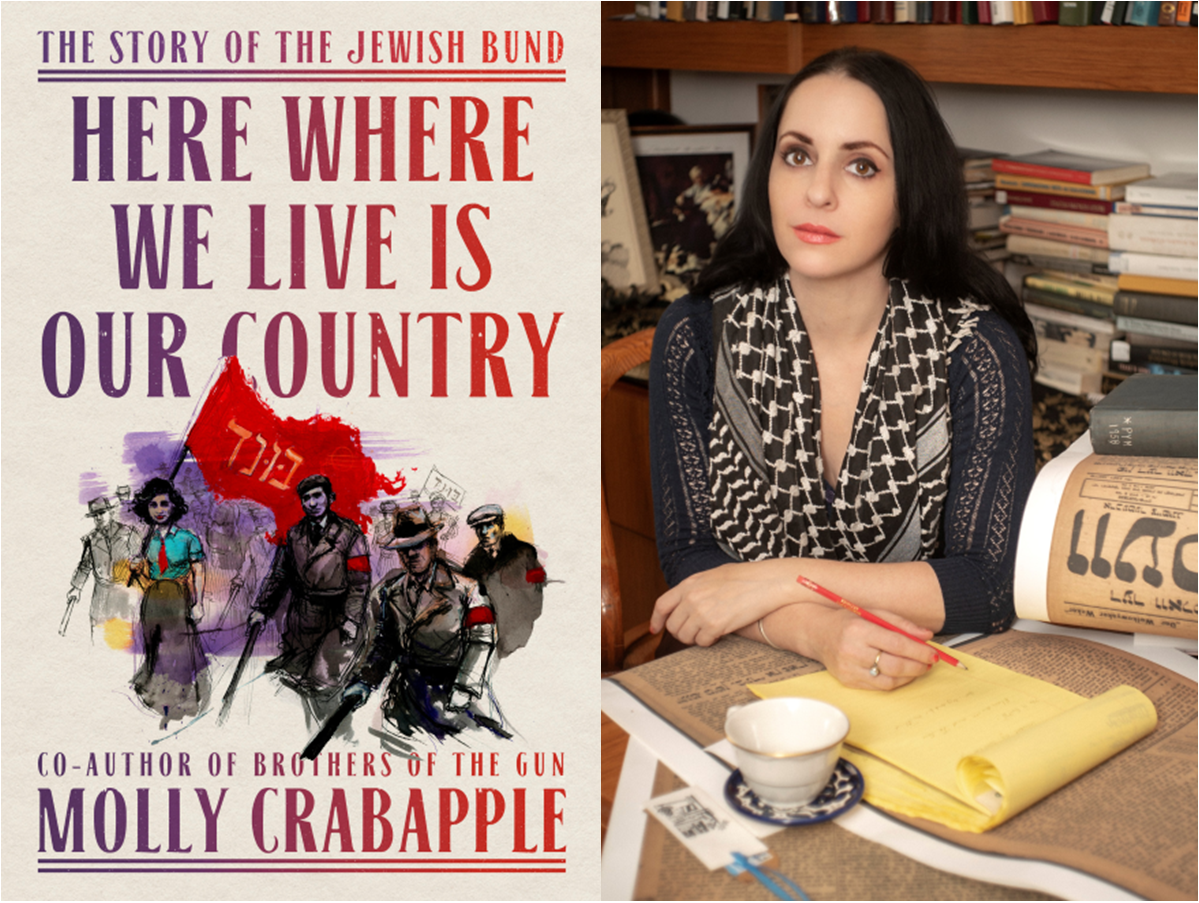
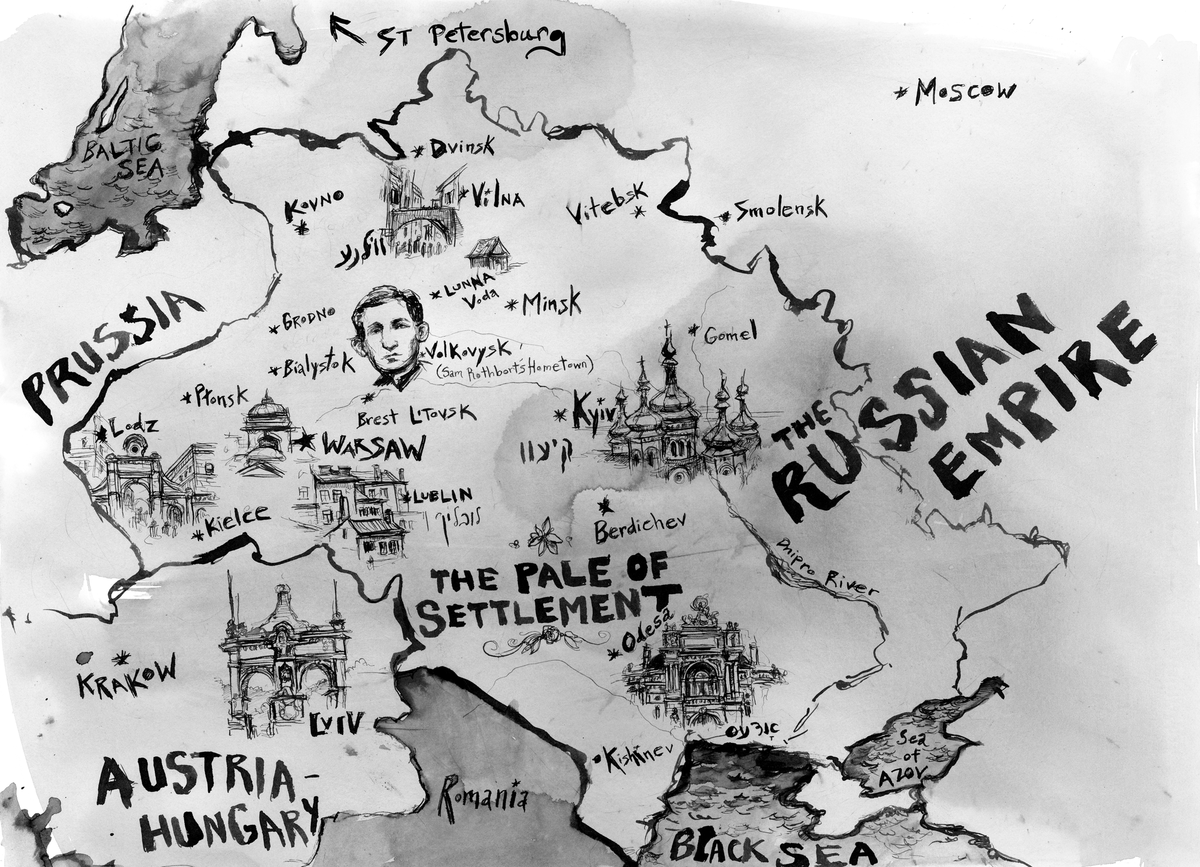
Crabapple’s book is a perfectly timed contribution to present-day Jewish discourse. It begins in 1772, when Russia, Prussia, and Austria dismantled the Polish-Lithuanian Commonwealth and absorbed millions of Jews into their respective empires. Moving quickly though the next 115 years of history, Crabapple introduces the Bund’s precursors, responding to the brutal racism meted out by their imperial rulers with agitation and revolutionary violence, and brings us to 1897, the year of the founding of two competing approaches to “the Jewish Question”. One was the Jewish Labor Bund. Started by a handful of Vilna (now Vilnius, Lithuania) socialists who believed Jewish liberation was bound up with the liberation of all workers and stood on the principle of hereness — doikayt in Yiddish — these Bundists held that 1,000 years of Jewish history in Eastern Europe gave them as legitimate a claim to those lands as that of any antisemitic gentile. The other, Zionism, became the Bund’s doppelganger. Born only a few weeks prior to the Bund, Zionists essentially agreed with Europe’s antisemites: their answer to the problem of Jewish unsafety in the diaspora was an embrace of the nationalist idea that Jews needed their own national territory somewhere outside of Europe, ideally in what was then Ottoman-controlled Palestine. From there, the story lays bare the rivalries, disagreements, and competing visions of the Jewish activists who imagined different lives — both “here” in Eastern Europe and “there” in Palestine — through the revolutionary currents of pre-WWII Europe and the apex of the Bund’s institutional power. The largest part of the book, the nine years between the Nazis' invasion of Poland and the creation of the Jewish nation-state, is a harrowing story of perseverance amidst the hell of a genocidal war, the consequences of which are still with us today.
I am not a historian; I am a descendant of Jews from the Pale, some of whom were lost to the Nazi fascism of the last century in the Holocaust. I am a socialist, an organizer, and a unionist who knew that Eastern European Jews had helped build the American labor movement, but had never learned of their organizational precursors. I became captivated by the history of the Bund years after my rejection of Zionism and jumped feet first into supporting its revival in 2023 with the co-creation of this publication. And it's not just me: the Western world has finally started to honestly assess its relationship with Israel. By making the full and long-dormant history of the Bund readily accessible to lay readers both Jewish and not, Crabapple gives us another battering ram with which to demolish the hegemony of Zionist delusion.
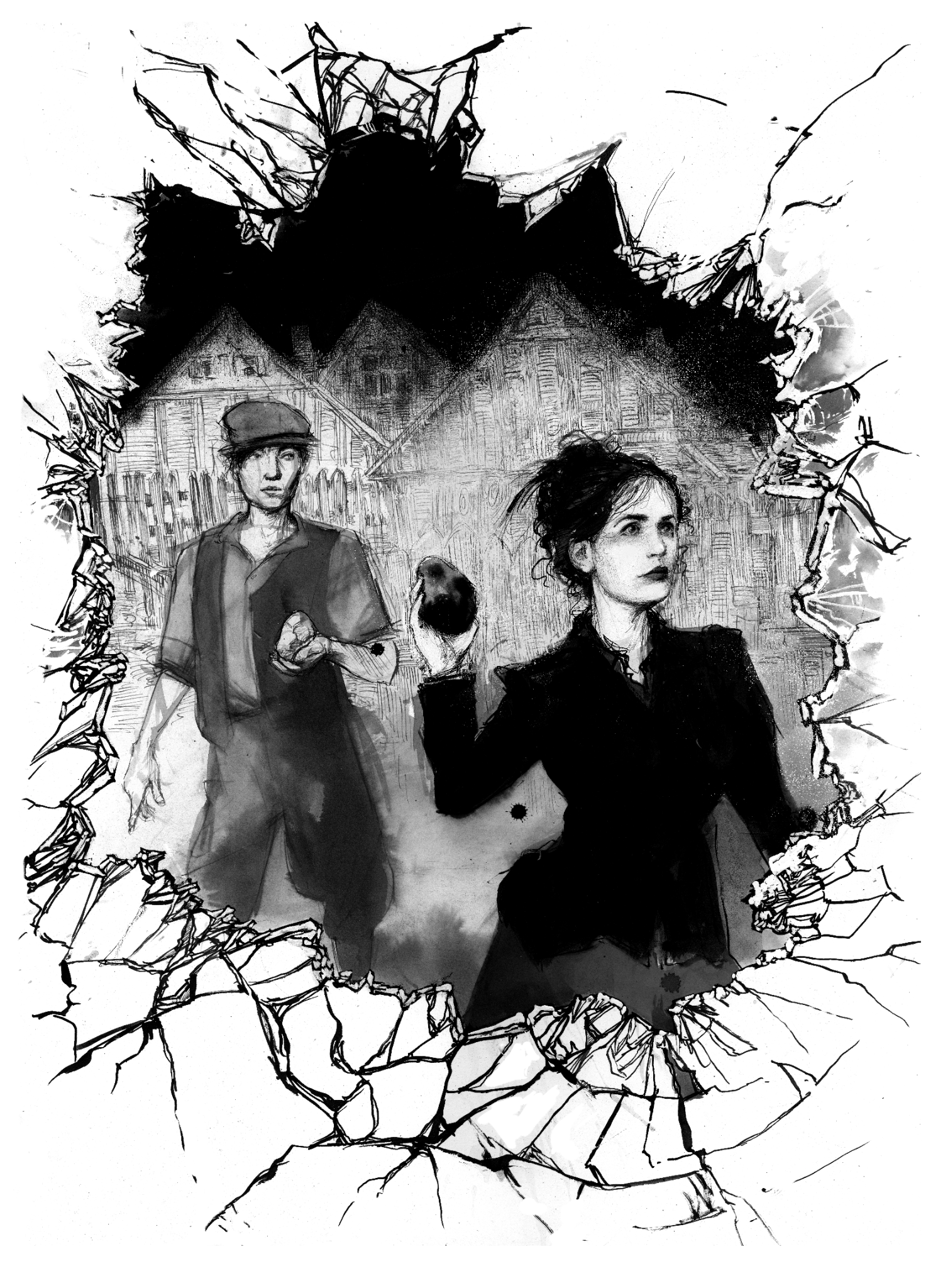
Perhaps the most uncomplicated way to look at the book is as a work of biography and memoir. Crabapple treats her subject, an ancestor who she never met but whose legacy is fundamental to her life’s work as a journalist and visual artist, with a deep reverence and curiosity. As Crabapple writes, “It was not just the thousands of his paintings, sculptures, watercolors, and mosaics that filled my great-aunt’s house in Brooklyn but the very presence of Grandpa Sam himself, as if his personality had been too vivid to allow him to be rendered a ghost.” His brief but visceral experience with revolutionary Bundism in the shtetl of Volkovysk marked such a turning point in his young life that he later memorialized it in a painting called “Itka the Bundist Breaking Windows,” the discovery of which launched Crabapple into the nearly decade-long globe-spanning research project that involved digging through musty archives, interviewing old Yiddish codgers, and waking the streets of the old world that became this book.
Sam’s biography paves the road through which we travel through the history of the Bund, organizing a world far across the Atlantic, both influencing and being influenced by what Crabapple calls the “Exile Galaxy” of early 20th-century New York. Her own memoir acts as the color commentary on that journey. Crabapple tells us that Sam’s “humanist," “all men were brothers” attitude influenced her development into “an incorrigible artist with a commitment to leftist politics.” She draws out observations as true of the Bundists in 1906 as they are in her experiences as an artist, journalist and activist in the 21st century. Her descriptions of her own memories — “the floor of a police cell, the boredom of a leftist meeting, the electric charge of passing a pamphlet to a stranger, the high of believing, rightly or wrongly, that you are about to change the world” — animate the stories of the Bundists who lived much harsher and more extreme versions of those same experiences a century before.
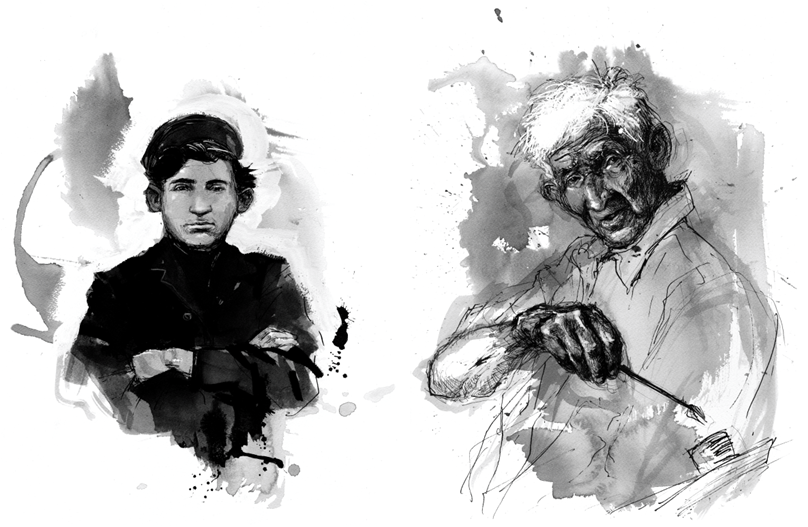
Biography and memoir may make the Bund’s struggles relatable to us, but history defines the landscape that Crabapple navigates with great care. She frequently consults the voices of the Bund’s formidable leaders — Henryk Erlich, Viktor Alter, Vladimir Medem, and Bernard Goldstein —and the many other tuers who made up the backbone of the Bund’s base. She paints vividly a world rife with poverty, repression, and violence. Perhaps most of all, amplifies the all too familiar emotions and dilemmas organizers and activists then and now share.
Hanging over the narrative is a fact every reader knows: Europe’s Jews could not outrun the fascist monster that would devour them. It was not just because of their own shortcomings or strategic mistakes, but because they were failed by the indifference and malicious neglect of Great Britain and the United States. Historians may point out some errors and simplifications, but Crabapple does not shy away from identifying the Bund's tactical failures stemming from “the fatal impulse to value principle over power, to leave the battlefield at the very moment they most needed to stay and fight” in both 1903 and 1917.
Historical details and varying interpretations of those details are of course important, and while I look forward to reading those critiques, they are unlikely to change the thrust of Crabapple’s tale of a Jewish revolutionary cadre that built a movement inspiring enough to win the support of the majority of Poland’s Jewish population on the eve of the Nazi invasion. A movement compelling enough to bring along others outside the community to overthrow a tyrant and consequential enough to define a sociopolitical legacy that reverberates and finds new life today can only be suppressed and maligned in the community from which it sprung for so long. Crabapple makes this history accessible, riveting, and real.
Three currents running through the book are particularly illuminating of our present moment. First are the decades of sectarian infighting: with Bolsheviks before and leading up to the October Revolution, with Communists afterwards, and with Zionists always. Second is the transnational character of Bundism and how this “rooted unrootedness” conversed and impacted activities at home. Third, and related to the second, is the Bundists’ headlong dive into building institutions that survive to this day.
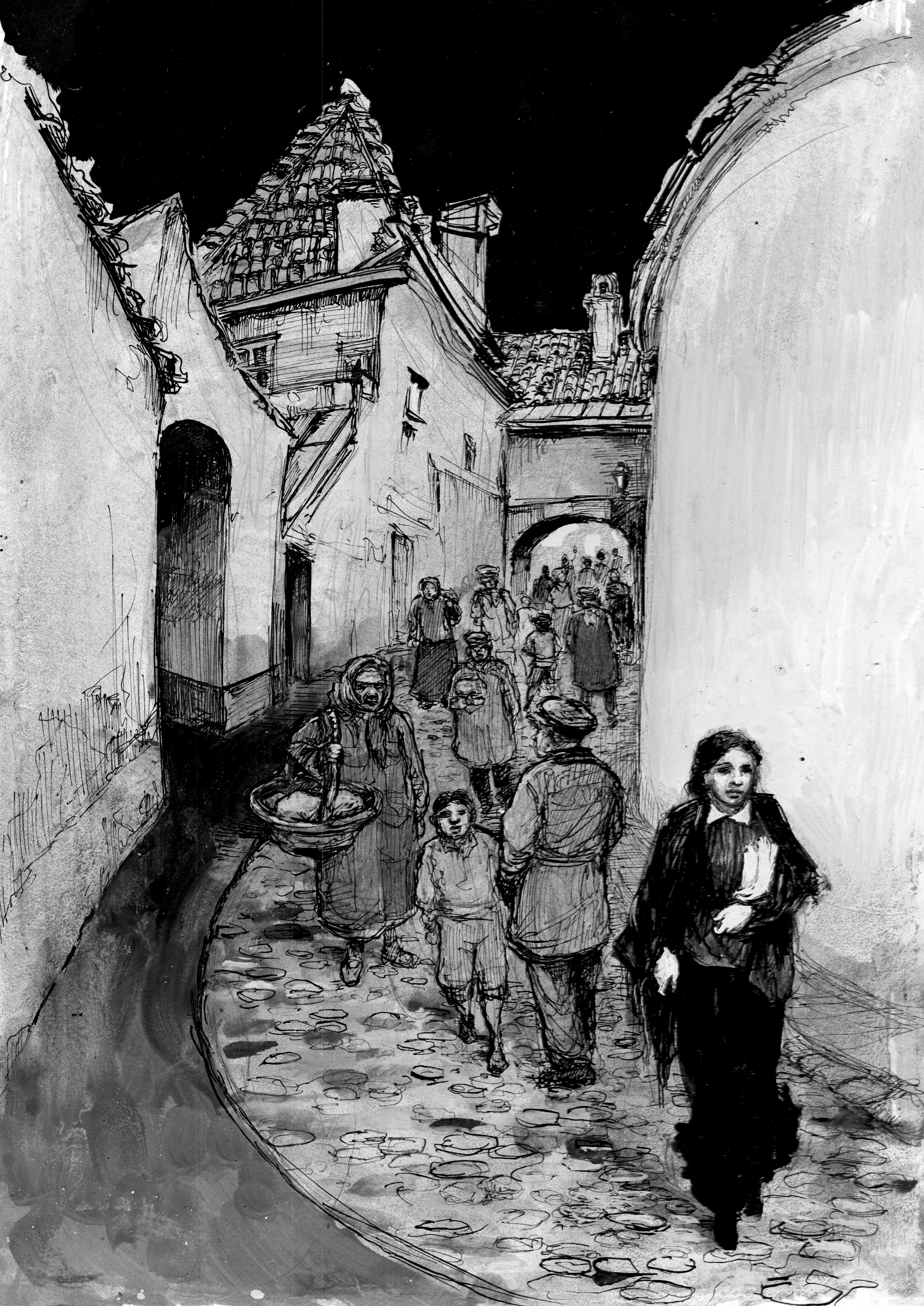
The years of enmity between Bundists and Bolsheviks, culminating in the Bund’s banishment from the Soviet Union and ultimately the murders of Alter and Erlich are deeply significant. For readers with minimal knowledge of this rich vein of history, Crabapple does an admirable job for surfacing those disagreements and stating her point of view clearly: that Lenin was wrong and Medem had him dead to rights as a budding authoritarian. A different book might investigate how, despite the Bund’s banishment in 1921, the specter of the Bund’s approach to national identity proved useful enough to organize the various national Soviet republics along national lines while melding with the USSR’s nominal class equality. And notwithstanding Stalin’s deep antisemitism, outlines of the now shattered Russian Bund’s goal of national cultural autonomy can be seen in his establishment of the Jewish Autonomous Oblast (JAO) in 1928 as a means of blunting Zionist yearnings among the Soviet Union’s Jewish population (along with military considerations). The JAO may have ultimately failed to attract a significant number of Jews and exists today as an ersatz artifact of what never really was, a fact that should be ascribed to its inorganic origin akin to Herzl’s Uganda option.
American Jewishness of the past 60 years may be plagued by a Zionist affinity culture, but a growing number of American Jews continue to identify with Bundist pluralism rather than Zionist chauvinism.
The book also vividly shows how the Bund was a transnational — not just an Eastern European — movement that lived by its value of doikayt whether in the “old” country or in the “new.” Crabapple writes, “New York was the world capital of radical diasporas at the turn of the century...Forget Exileland. New York was Exile Galaxy.” That revolutionary movements maintain links to exiled leaders and activists is not new; Leon Trotsky, Jose Marti, Antonio Mattei Lluberas, Sun Yat-sen, and others all spent time in exile before returning “home.” What seems different about Bundist leaders, however, is that these exiles and refugees re-built lives and activist careers in their new homes to advance the same principles that originally drove them from their old ones. Many threw themselves into the American Labor movement and rose to positions of leadership — such as David Dubinsky, Sydney Hillman, Baruch Charney Vladeck, and Joseph Baskin — even if they shaved off the sharp edges of their revolutionary pasts. Some, like Sophia Dubnova, saw shadows of their own oppression in Black Americans’ struggle for civil rights, equality, and dignity, and joined new liberation movements. They were affirmatively Jewish in a world where they were no longer “prime targets for state persecution...merely discriminated against and disdained.”
Perhaps the Bund’s most consequential impact is how its organizing ethos built cultural, social, and political institutions like the Workers’ Circle and the Jewish Labor Committee. They survive to this day, even if their politics have drifted from the socialist internationalism of their roots. Similarly, the Forward, or Forverts, founded by Abe Cahan in the same year as Zionism and the Bund and later headed by Vladeck, continues to be a vital voice for the American Jewish community even as it platforms columnists conflating antisemitism and anti-Zionism and obscuring Israel’s crimes in Gaza. American Jewishness of the past 60 years may be plagued by a Zionist affinity culture, but a growing number of American Jews continue to identify with Bundist pluralism rather than Zionist chauvinism. Jewish communal institutions are fighting an increasingly unsuccessful war to purge their staff of anti-Zionists as American Jewish support for Israel rapidly deteriorates. Growing interest in the Bund and Bundist philosophy gives life to the phrase, “They tried to bury us. They didn’t know we were landmines.”
Across the United States and Europe, whether in formal Bund chapters or Bund-inspired groups, neo-Bundists are reanimating nearly forgotten Jewish diasporic languages, creating new diasporic culture, building mutual aid networks, and organizing alongside their neighbors in the fight for justice.
The Bund built power strong enough to overthrow tyrants. It commanded a level of support from the Jewish street that modern socialists and Jewish communal organizations can only dream of. Though the Bund was not powerful enough to defeat the fascist war machine that murdered its people and laid waste to its home, its legacy should provide today’s socialist organizers — Jewish and gentile alike — with both hope and lessons for their own work.
The first lesson is commitment. The activists who resisted the Romanovs persevered despite tremendous odds. They fomented revolution against them, defended their communities from state violence, and governed territory ruled by a hostile Polish state. They committed to not just “pray to God, not to lead them again out of Egypt, but to help them to free Egypt,” as shouted by Meyer London in a rally to raise funds for the 1905 revolutionaries. They held fast to it, despite the oppression of the Czar’s Okhrana, through jail and exile, and under fire from Nazis. Nothing shook from it.
The second lesson is doikayt as practice, not slogan. Attention to cultural development, education, and mutual aid made the Bund an integral social institution, not just a political project, that sustained Jews through bouts of racial terror and poverty, and even followed them through emigration when they had to flee. While Zionist critics spill fountains of ink criticizing today’s neo-Bundists for being nothing more than a practice in nostalgic sloganeering, one proves this assumption incorrect simply by looking around: across the United States and Europe, whether in formal Bund chapters or Bund-inspired groups, neo-Bundists are reanimating nearly forgotten Jewish diasporic languages, creating new diasporic culture, building mutual aid networks, and organizing alongside their neighbors in the fight for justice. Der Spekter not only uplifts those efforts, but shows how Bundist values can be applied in a multiplicity of ways and as an analytical frame in a world that is in desperate need of tools to fight the inhumanity of what Naomi Klein and Astra Taylor refer to as end-times fascism.
The final lesson — which is related to both of the former — is the consistency of the Bund's political work through thick and thin. Some may dismiss as naivete Erlich’s refusal to write off the gentiles who mouthed words of support at one moment then allowed their submerged antisemitism to explode violently. Perhaps it was. But it was borne of a grounded understanding that inter-communal hate is learned and can be unlearned as shown in the example of the Polish Socialist Party. As Crabapple writes,
“The Polish Socialist Party and the Bund were comrades. They had gone to jail together, marched together, struck together, punched fascists together, and manned the barricades together during the siege of Warsaw. When the Germans occupied their country, Polish socialists forged documents for Bundists, rescued their kids, hid their fighters, even went to Auschwitz for distributing their party press. After the great deportation had ended, Polish socialists helped found Zegota, the only official council to aid Jews that would ever exist in occupied Europe. As the ghetto burned, Zegota’s Polish socialist chairman, Julian Grobelny, searched its perimeter for fugitives to help, all while weeping for his valiant friends who fought inside.”
Reggae singer Peter Tosh sang, “I’m a man of the past, living in the present, and walking in the future.” Crabapple’s history helps ground the Jewish left in a past that has been hidden from many of us and offers the raw material for a way forward. The working class Jewish culture of the Pale may no longer exist, but we continue to hear echoes of its milieu. Today’s neo-Bundists are working to rebuild it amidst a radically different landscape where Western Jews are often at least comfortably middle class, where Ashkenazim are beneficiaries of provisional whiteness, and where there exists a Jewish nation-state run by the political heirs of a “fascist clown” (Jabotinsky) whose “soldiers are nothing more than tragicomic caricature of Hitler’s SA....the same beasts [with] some muscle strength, some territory, and a political opportunity.” Neo-Bundists are doing so by learning from the victories and defeats of the past. They are building the future that we will walk in.