
Jews in the American Labor Movement: The Bundist Legacy
What Bundist influence on American labor history can teach a new generation of Jewish workers

Which Way Jewish Labor?
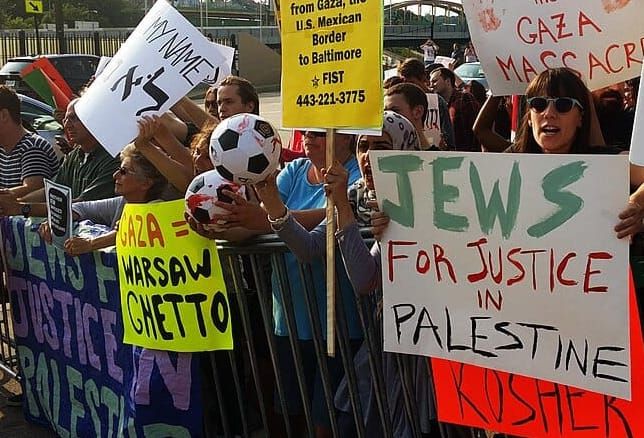
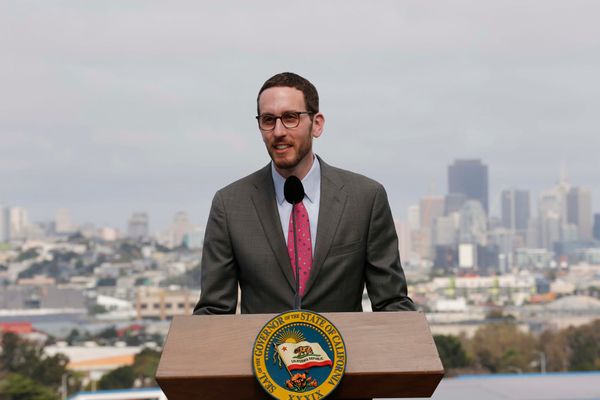
Last month, I saw an ad on Instagram announcing the convening of a Northern California chapter of the Jewish Labor Committee and immediately became intrigued by this re-formation of a labor organization founded in part by Bundists. One of the featured guests was the venerable labor historian Professor Nelson Lichtenstein, author of 20 books and countless articles on all facets of the American labor movement. The other, however, was a member of the State Assembly who has been at the forefront of efforts to silence the Palestinian justice movement across California’s educational institutions. As author of AB 715, a bill targeting anti-Zionist views and criticism of Israel and expanding state oversight of education through new enforcement mechanisms and appointed officials, the Assemblywoman opened the door to censorship of teachers, students, and curricula in matters of U.S. foreign policy and the war in Gaza in schools and universities. Despite strong opposition from organized educators and civil liberties groups, the bill passed unanimously.
I found it curious that an organization founded and originally led by a Bundist was now raising its voice to defend a law restricting academic criticism of Zionism and Israel’s open genocidal violence, even notwithstanding its long connections to the Workingman’s Party of California-like chauvinism of the Histadrut under the pretense of labor solidarity. Having been broadly familiar with Professor Lichtenstein’s politics, I was surprised to see him invited to speak at the event and so thought to reach out and ask for his thoughts on the matter. While he didn’t give away the content of his talk, he did note that the publication of Molly Crabapple’s “Here Where We Live Is Our Country” was a well-timed opportunity to discuss the Bund’s foundational role to much Jewish engagement with the American labor movement. I registered to attend as a member of the labor movement, a new member of the JLC, and as an editor with Der Spekter.
Today’s labor movement is broadly known for its support of immigrant rights and historic opposition to Apartheid in South Africa, but the AFL-CIO only arrived at those positions after years of struggle. As a long-time labor bureaucrat in Northern California, I am keenly aware of Jewish participation at all levels of the movement, from rank and file teachers, nurses, and scientists who participate in their unions, to the organizers, lobbyists, researchers, and lawyers who help unions conduct their daily business. Israel’s escalation of the Palestinian genocide in Gaza and the West Bank since October 2023, its wars on Yemen, Syria, Iraq, Iran, and most recently Lebanon, and its embrace of (and by) far-right antisemitic governments, plutocrats, and movements across the globe has become clarifying for Americans across the political spectrum, including within the labor movement. It has perhaps been even more so for Jews in labor who have been attacked and disciplined for speaking out to oppose these actions and stand with solidarity with coworkers slandered as antisemites.
I was unable to join the online convening — let's chalk it up to “technical difficulties.” Nonetheless, Professor Lichtenstein was kind enough to share and allow Der Spekter to publish his remarks, which we’ve edited slightly for clarity and to provide our readers with citations for further reading. He closes by noting that the Jewish working class is undergoing a transformation as the once privileged occupations many of us were drawn to are being degraded and proletarianized. Jewish workers, both rank and file members and union staff, are confronting this moment through action. How Jewish labor does so at the level of its institutions remains to be seen.
– Alex Lantsberg, Editor
Remarks by Dr. Nelson Lichtenstein to the Convening of the Northern California Jewish Labor Committee, May 17, 2026
In this all-too-brief survey of Jews and the American labor movement, I want to highlight the remarkable and remarkably long-lasting influence of the Bund, the radical Jewish working-class organization founded in the Russian Empire in 1897, the same year that saw an organized Zionist movement cohere.
In the United States the Bund’s influence, organizational and ideological, was most evident early in the 20th century with the mass migration of Eastern European Jews into the industries and occupations that seemed, at the time, almost organically Jewish. Between 1880 and 1920, two million migrated to the U.S., two thirds of them after 1900. They entered the garment trades and worked as furriers and millinery workers. Many were employed as kosher butchers, pharmacists, and salesmen and women in urban department stores. After World War I we can add urban schoolteachers, a lot of working journalists, entertainers, and in Hollywood and New York, broadcasting technicians, screenwriters, scriptwriters, and various entertainers. Irving Howe’s half-century old “The World of Our Fathers: The Journey of Eastern European Jews to America and the World They Made” remains the most evocative history of this epic story.
By far the most important unions formed in this era were the International Ladies Garment Workers Union (ILGWU), the Amalgamated Clothing Workers of America (ACWA), the United Hat, Cap and Millinery Workers, and in the 1930s, Local 1199 which was composed and led by Jewish pharmacists. The ILG and the ACWA together had organized over a million workers at their height in the 1940s and 1950s.
The leaders of these unions often came out of the Bund, or General Jewish Labor Bund in Lithuania, Poland and Russia, especially those who had been active in the revolution of 1905, in which the Bund had been a major presence. David Dubinsky, president of the ILGWU (1932-1966) and Sidney Hillman, founder and president of the ACWA (1914-1946) had been rank and file Bundists in the Pale of Settlement, so it is not surprising that they deployed Bundist ideas and institutions when they and a whole cohort of equally energetic radical immigrants built a garment-centered trade union movement in New York and other urban centers. The Bund was socialist, even revolutionary, and so too were most early Jewish labor leaders in the US.
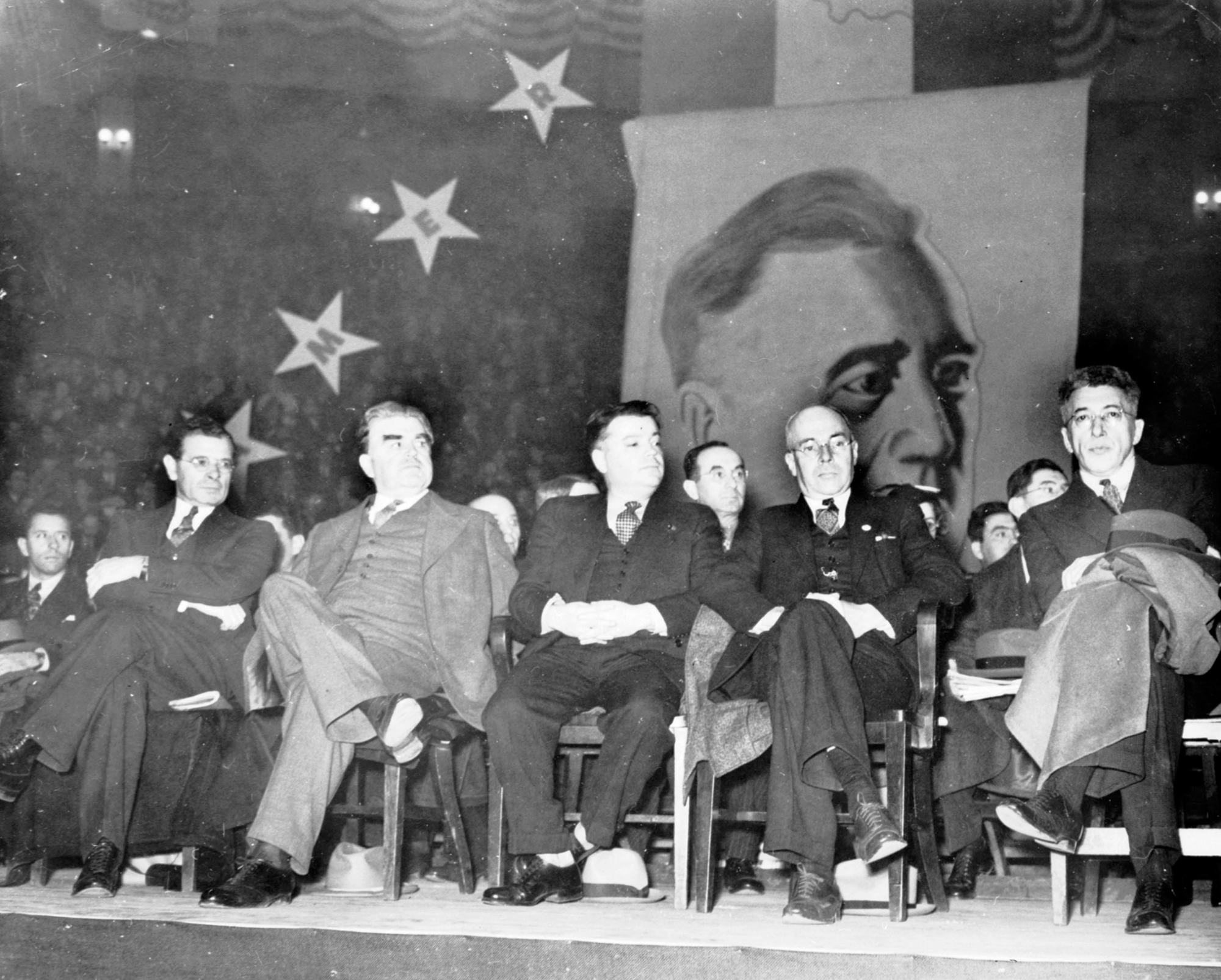
Bundist unions were not only militant in the workplace, but quickly built a whole set of associated institutions that flourished in America: schools and lecture series, banks and insurance companies, cooperative housing, theater and dance groups, orchestras and choirs, athletic leagues, and summer camps. These unions supported the Workman’s Circle, a largely Jewish fraternal society. By the 1930s and 1940s non-Jewish unions adopted some of these ideas, with the “lighted union hall” becoming a metaphor for an all-inclusive working-class experience.
The Bundist influence extended to the ethnic and racial organization of the unions as well. Just as the Bund in Russia wanted to maintain a radical Jewish working-class organization in alliance with the rest of the working-class, so too in the U.S. did Bundist-influenced trade union leaders understand that other immigrant workers might want their own separate organizations or seek to enhance and celebrate distinctive national cultures. So, there were Italian and Yiddish speaking ILGWU locals, as well as internal union organizations that advanced the interests of African Americans, Puerto Ricans, and West Indians. The ILGWU called itself “a union of many cultures,” and this at a time in the 1930s when Hollywood, the WASP establishment, and most on the American left were advancing a monocultural Americanism, sometimes in a Popular Front guise. Historian Daniel Katz, author of “All Together Different: Yiddish Socialists, Garment Workers, and the Labor Roots of Multiculturalism,” writes that in the 1930s “tens of thousands of garment workers in several key local unions participated in an extraordinary experiment in multicultural unionism.”
A decade and more before the rise of the post-World War II civil rights movement, these Bundist-inflected trade unionists pushed forward the idea that the working class, indeed the entire society, should be composed of citizens who were equal under the law or contract, while at the same time maintaining a distinct ethnic or racial identity. Reflecting the language of anti-Czarism, ILGWU leaders often used the term “nationalities” to denote the various ethnicities within the union membership. These Jewish-led garment unions were therefore “intersectional,” in today’s language, recognizing that their membership had multiple identities as workers, immigrants, ethnics, and even those strivers who sought to educate themselves out of the working class.
Such unions were at the same time intensely American, patriotic not in a jingoistic sense, but in their identification with the new homeland of so many Eastern European immigrants. The title of Molly Crabapple’s best-selling book on the Bund, “Here Where We Live is Our Country,” captures the spirit of the Jewish working-class, an ethnic group whose members were far less likely to return to – or even visit – their European homelands than the Irish, the Poles or the Italians. A murderous antisemitism abroad was one reason for this American rootedness, but the revolutionary sentiment, that a new Jerusalem could be built in any part of the world, was also strongly apparent, even as their socialist – or just their cosmopolitan – ideology mandated an internationalist outlook. Until the 1940s, Jewish labor, both leaders and rank and file members, were positively hostile to Zionism or at best indifferent.
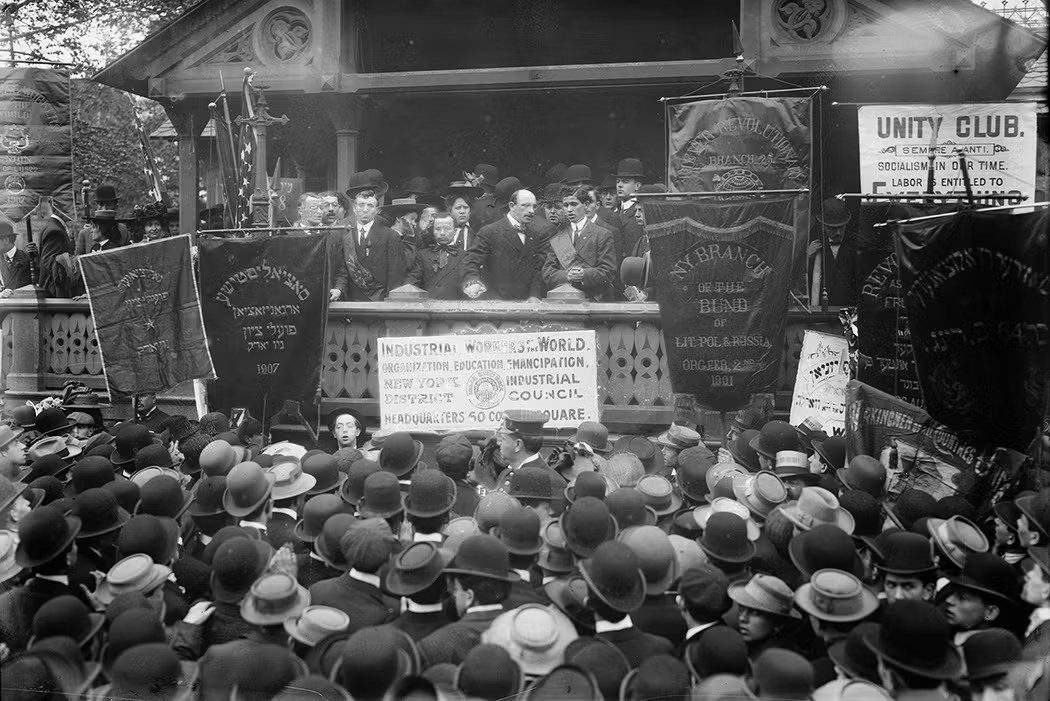
And one more thing: unlike the German Jewish bourgeoise, which was often fearful that the advancement of a distinctly Jewish cultural and political outlook might spark an antisemitic response, the Eastern European Jews were far more outspoken. They spoke and wrote Yiddish, were often street activists, and tilted toward the left. This was the context in 1934 for the lead they took in the formation of the Jewish Labor Committee when fascism reared its head, and not only in Germany, but in the US as well. Baruch Charney Vladeck, the most important figure in the formation and leadership of the JLC, had been a thrice imprisoned Bundist before his immigration to the U.S., where he edited the Yiddish language “Jewish Daily Forward” for two decades. He was joined by David Dubinsky, Sidney Hillman, and other Eastern Europeans in the early leadership of the JLC. Some of the tensions between the older and more prosperous generation of German Jews and the Eastern European immigrants can be found in Emmaia Gelman’s recent “The Anti-Defamation League and The Racial State.”
It has been said of Jewish factory workers in the U.S. that they were "neither the sons nor the fathers of workers." And certainly, what Will Herberg in 1955 called “the diplo-mania” for education and self-improvement, quickly de-proletarianized the Jewish population in the middle decades of the 20th century. Over 80 percent of the men's clothing workers in 1913 were Jewish. But by 1950 only about a quarter of the membership of the ACWA were Jews. Yiddish speaking locals, once the rule, disappeared. But the main factor, combined with the virtual cessation of the stream of immigration in the 1920s, was unquestionably the deep-seated reluctance of Jewish workers to have their children follow them into manual occupations. This naturally led to a continuous and accelerating shrinkage, both absolute and relative, of Jewish blue-collar labor. Viewed simply in terms of demography, there was no longer much of a Jewish labor movement in this country after World War II.
But that hardly tells the whole tale. In some ways the entire American labor movement became more Jewish in the years after World War II. This took place in two ways. First, the big industrial unions, like the UAW and the Steelworkers, whose membership was almost entirely non-Jewish, became what I would call “soft Zionist.” They validated and celebrated the laborite character of Israel and in particular the power and influence of the Histadrut trade union center. To non-Jewish labor leaders, Israel was not unlike Sweden, a semi-socialist society where the labor movement played a role of which they could only dream in the US. Said the UAW’s Walter Reuther in the late 1950s, “We think the country in the free world nearest to Democratic Socialism is Israel.” That viewpoint would rapidly fade after 1967, but for the moment it explained why there is a Philip Murray Cultural Center in Eilat and a Reuther child care facility in Tel Aviv. (Murray was president of the CIO, 1940-1952) This story is well told in Jeff Schuhrke’s “No Neutrals There: U.S. Labor, Zionism, and the Struggle for Palestine.”
But far more important than any sense of envy toward a social democratic Israel was another way in which Jews played key roles in those unions whose membership was overwhelmingly non-Jewish. While the leadership of the garment trades, as well as that of the retail clerks and teachers still remained heavily Jewish, a corps of Jewish lawyers and other professionals became essential to a mid-20th century labor movement whose existence was deeply enmeshed with the state, with politics, and with a managerial elite whose hostility toward a newly enlarged union movement became increasingly militant and confrontational in the years after 1947 [ed note: which saw the passage of the Taft-Hartley Act severely restricting union power].
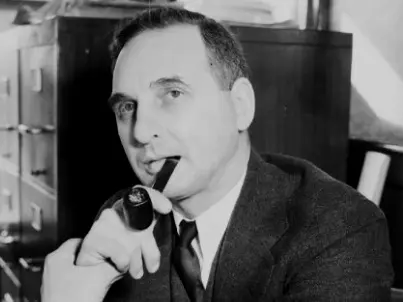
From the 1920s through the 1960s, a substantial majority of all labor lawyers in America were Jewish, and in the early years most were either Communists or Socialists as well, especially if they worked for some of the new CIO unions. And Jews, almost always second or third generation, were also heavily represented among the economists and publicists employed by the big unions. This was very much par for the course, since being a legal champion for labor during most of this era spoke to both their own social marginality, their exclusion from the WASP institutions of law and politics, and perhaps also to their “people of the book” facility with words, argument, and textual mastery. Like Talmudic scholars and contemporary rabbis searching for a useful meaning in an ancient text, these lawyers sought to probe and manipulate labor law to working-class advantage. As Maurice Sugar, the UAW legal counsel during the 1930s and 1940s, once put it, “a sharp pencil” and clever argument could buy time in a hostile court for the union to make its weight felt in the factory, the streets or at the ballot box. Sugar was close to both the Communists and also Lee Pressman, the CIO’s first counsel, but their approach was not all that different from that of Arthur Goldberg, the Steelworker lawyer who became Secretary of Labor and a Supreme Court justice; or Joseph Rauh, the German-Jewish liberal who replaced Sugar at the UAW but then clashed with most AFL-CIO leaders when he opposed the Vietnam war and championed a set of union insurgents in the Mineworkers, the Steelworkers, and the UAW itself. Catherine Fisk’s “There Are No Neutrals There: A History of Union Lawyers in the Twentieth Century” (forthcoming) offers a highly insightful study of how such lawyers sought to use an innovative set of stratagems to defend the new industrial unions against a set of hostile courts and companies, not to mention the White House, Congress, and their state-level equivalents.
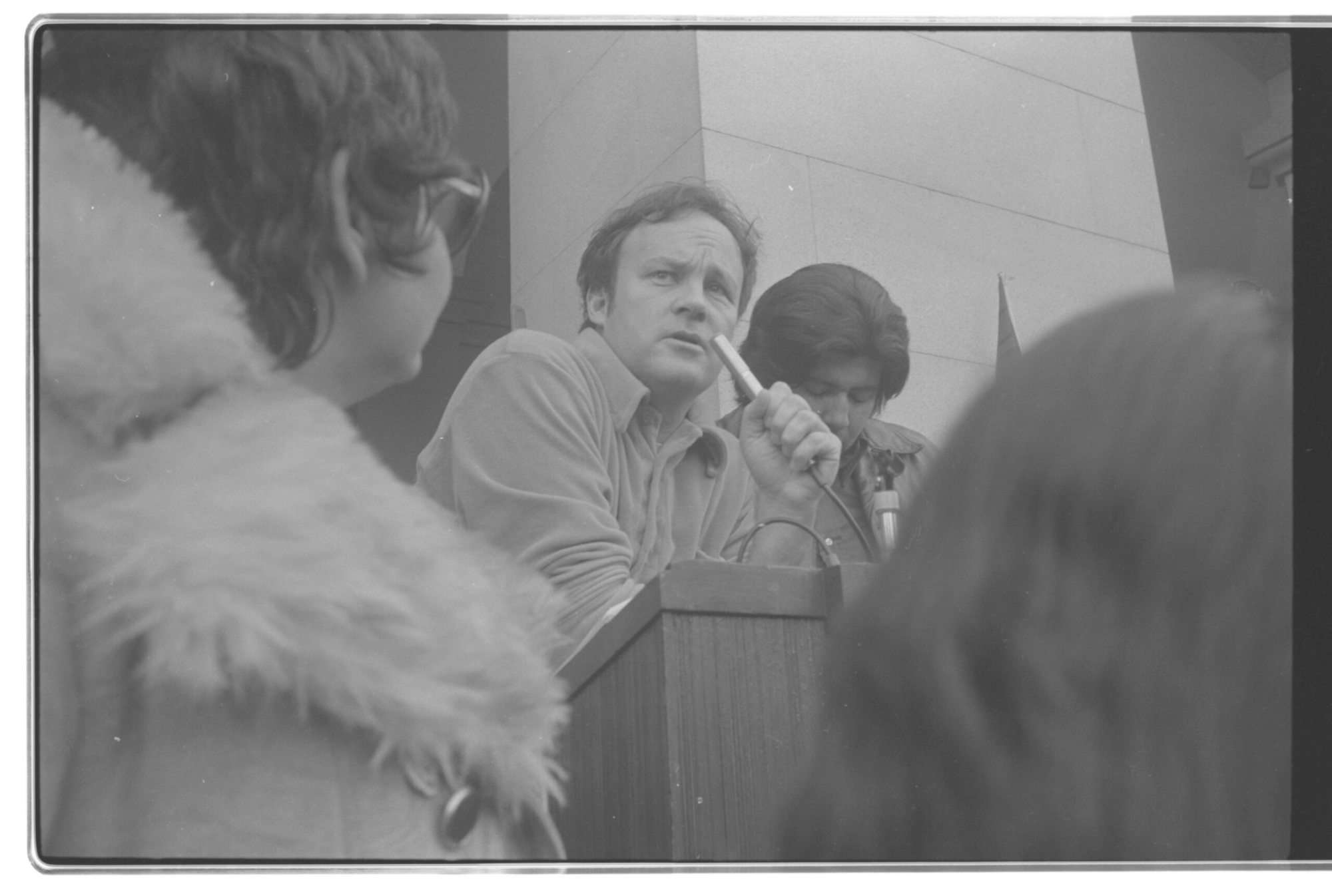
The Jewish labor lawyer who may have best exemplified that combination of courtroom skill and in-your-face activism was Jerry Cohen, who led the United Farm Worker legal team during the heroic and successful decade when Cesar Chavez was at the top of his game. Unlike other more established labor lawyers, whose legal advice was often far too cautious for farmworker militants, Cohen saw eye to eye with Chavez: the law was but an instrument and a metaphor, as useful when violated as when it served the union’s purpose. Earning but $5 a week, Cohen led a team of some 15 UFW lawyers, virtually everyone a Jew and all New Leftists fresh out of law school. Cohen and his legal team helped build the entirely innovative and highly progressive legal architecture that enabled the UFW to organize nearly 60,000 California farmworkers. But as we have come to learn, Chavez was an autocratic leader, hostile to the trade union idea itself, especially if that entailed a set of democratic structures that might have constrained his charismatic power. So Cohen and his team were forced out late in the 1970s and early 1980s.
"The era of Jewish de-proletarianization is over. A new Jewish working class is now in the making."
I should make clear here that these lawyers, whether working for a million member industrial union or the fledgling UFW, saw their work as building a social democratic, culturally pluralistic social movement, in which an expansion of democratic rights and power for a multiethnic working class was the most effective and moral way to protect and advance specifically Jewish life and interests. That was baked into their DNA, but it has weakened of late among some elements of the Jewish world.
And now for just a speculative conclusion: the era of Jewish de-proletarianization is over. A new Jewish working class is now in the making. Those occupations that once served Jews as a pathway out of the working-class have become subject to exploitation, precarity and all the deformities characteristic of an unfettered capitalism. So today, physicians, journalists, lawyers, academics, and cultural workers of all sorts are becoming union curious. At least a quarter of the UAW is today composed of teaching assistants, university researchers, public defenders, and publishing house editors. Many of them are Jewish. And like the Bund of a century and more ago, these new unionists tilt leftward, on economics and politics, and on the validity and centrality of Zionism to the meaning of their Jewish identity. When active in politics or organized into unions, this strata of the polity has been increasingly hostile to contemporary Israeli militarism while at the same time forceful advocates of a radical reconstruction of American democracy at home.
UC Santa Barbara’s Nelson Lichtenstein is the author of Why Labor Unions Matter, forthcoming from Yale University Press in October 2026.
Correction: A link to an incorrect obituary for attorney Jerry Cohen was provided in error and has been corrected. We regret the mistake.


.jpg?ref=derspekter.org)
